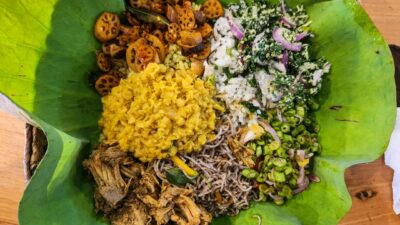
Bangladeshi cuisine (also called Bengali cuisine for cross-border similarities) emphasizes fish (Bangladesh has rich river/coastal heritage), rice as staple, lentils (daal), abundant vegetables, mustard oil, and distinctive spice combinations. Healthy components – fish (rui, katla, ilish/hilsa – omega-3 rich, pomfret, mackerel); lentils and pulses (daal, choler dal); vegetables (palong shak/spinach, lau/bottle gourd, kumra/pumpkin, begun/eggplant, alu/potato – moderate, dharosh/okra, fulkopi/cauliflower); mustard oil (omega-3 source, traditional); panch phoron (5 spice blend – cumin, fennel, fenugreek, mustard, nigella); ginger; garlic; green chili; turmeric. Concerns – white rice (bhat) staple at every meal, often very large portions; pithas (rice flour cakes – traditional sweet for occasions); mishti (Bengali sweets – rasgulla, sandesh, mishti doi); oil-heavy preparations; ghee in some dishes; sweetened beverages. Bangladesh has 9-10% adult diabetes prevalence. South Asian populations especially – 35-40% lifetime risk. Diabetes-friendly with smart selections. Best choices – machher jhol (light fish curry – very diabetes-friendly; light tomato-based broth); machher kalia (rich fish curry – smaller portion); fish bhuna (dry fish curry); doi maach (fish in yogurt sauce); shorshe maach (mustard fish – traditional); pabda machh (catfish curry); ilish/hilsa – prized fish; daal (lentil dishes – any variety: musur, mug, choler); shak (greens – palong, lal shak, kalmi); bhorta (mashed vegetables – alu bhorta with mustard oil, begun bhorta/eggplant; very diabetes-friendly without rice or with small rice); doi (plain yogurt); raita (yogurt with vegetables); chingri maach (shrimp curry); sabji (vegetable curries – dharosh, lau, kumra); soups; salad. Watch portions – white rice (bhat) main carb culprit; biryani; pulao; pithas (rice cake sweets); mishti (rasgulla, sandesh, mishti doi); luchi (deep-fried bread); paratha; jalebi; halwa; payesh (rice pudding); ghee-heavy dishes. Hilsa (ilish) – national fish; oil-rich; very high omega-3; excellent for diabetes – omega-3 reduces inflammation; cardiovascular benefits. Mustard oil traditional – moderate use reasonable; combine with other healthy oils. White rice (bhat) is at every meal; portions traditionally very large; single meal portion can exceed entire day’s recommended carb. Strategies – portion control (½ cup cooked rice per meal); brown rice substitute when possible; smaller plate; fill with vegetables and protein first; eat fiber and protein before rice; parboiled rice (lower GI); cauliflower rice for some dishes; eat daal first.
Typical Bangladeshi Foods
| Category | Examples |
|---|---|
| Fish | Hilsa (ilish), rui, katla, pabda, pomfret, mackerel |
| Lentils | Musur (red), mug (green/yellow), choler (chickpea) |
| Greens | Palong shak, lal shak, kalmi, methi |
| Vegetables | Lau, kumra, begun, alu, dharosh, fulkopi |
| Mashed (bhorta) | Alu bhorta, begun bhorta, dim bhorta (egg) |
| Spices | Panch phoron, cumin, turmeric, ginger, garlic, green chili |
| Carbs (limit) | White rice (bhat), biryani, pulao, pitha |
| Sweets (limit) | Rasgulla, sandesh, mishti doi, payesh, jalebi |
Best Diabetes-Friendly Choices
- Machher jhol (light fish curry) with small rice portion.
- Steamed fish (bhapa pitha-style or shorshe ilish).
- Daal (lentils – any variety).
- Shak (cooked greens – palong, lal).
- Bhorta (mashed vegetables – alu, begun, dim).
- Sabji (vegetable curries) with light oil.
- Doi (plain yogurt).
- Chingri maach (shrimp curry).
- Pabda machh (catfish curry).
- Cauliflower bharta and curries.
- Dharosh (okra) curry.
- Kumra (pumpkin) bharta.
- Simple salads (kosha).
- Light fish broth-based soups.
Foods to Limit
- White rice (bhat) – limit to ½ cup per meal.
- Biryani – very large portions; share or half portion.
- Pulao – similar concerns.
- Pithas – rice cake sweets (very high carb).
- Rasgulla, sandesh – syrupy Bengali sweets.
- Mishti doi – sweetened yogurt.
- Payesh – rice pudding with milk and sugar.
- Jalebi, halwa – syrup-soaked sweets.
- Luchi – deep-fried bread.
- Paratha (oily/ghee).
- Sweetened tea (cha).
- Ghee-heavy preparations.
- Begun bhaja (deep-fried eggplant).
- Alu chop (potato fritter).
Hilsa and Bangladeshi Fish Power
- Hilsa/ilish – national fish; very high omega-3.
- Per 3 oz – 20 g protein, 13-17 g fat (mostly healthy).
- Vitamin D, B12 abundant.
- Cardiovascular benefits.
- Anti-inflammatory effects.
- Cook with shorshe (mustard), light curry, steam in banana leaf.
- Rui/rohu – common carp variety; lean protein.
- Pabda – delicate catfish.
- Chingri (shrimp) – high protein, low fat.
- Pomfret – flaky white fish.
- Mackerel – oily fish; omega-3 rich.
- Fish 3-4x per week excellent for diabetes.
Rice Strategy
- Limit white rice to ½ cup per meal.
- Brown rice substitute when possible.
- Parboiled rice (sela chal) lower GI than regular white.
- Cauliflower rice for some dishes.
- Use smaller plates.
- Fill plate with vegetables and fish first.
- Eat daal and vegetables before rice.
- Mix rice with vegetables for volume without carbs.
- Skip rice some meals – have fish curry + extra vegetables.
- Pitha and rice sweets – very small portions only.
Mustard Oil and Other Fats
- Mustard oil (shorshe tel) – traditional; distinctive flavor.
- Moderate erucic acid content – historical concerns.
- FDA labels for “external use only” but widely used culturally.
- Omega-3 fatty acids and beneficial monounsaturated.
- High smoke point.
- Some research suggests cardiovascular benefits.
- Combine with olive oil or canola for diversity.
- Limit ghee in diabetes diet.
- Modern Bangladeshi cooking uses various oils.
The Bottom Line
Bangladeshi cuisine (also called Bengali cuisine for cross-border similarities) emphasizes fish, rice, lentils, abundant vegetables, mustard oil, and distinctive spice combinations. Healthy components – fish (rui, katla, ilish/hilsa – omega-3 rich); lentils and pulses (daal, choler dal); vegetables (palong shak/spinach, lau/bottle gourd, kumra/pumpkin, begun/eggplant, dharosh/okra); mustard oil; panch phoron (5 spice blend – cumin, fennel, fenugreek, mustard, nigella); ginger; garlic; green chili; turmeric. Concerns – white rice (bhat) staple at every meal, often very large portions; pithas (rice cake sweets); mishti (Bengali sweets – rasgulla, sandesh, mishti doi); oil-heavy preparations; ghee in some dishes; sweetened beverages. Bangladesh has 9-10% adult diabetes prevalence; South Asian populations 35-40% lifetime risk. Best choices – machher jhol (light fish curry); steamed fish (shorshe ilish); fish bhuna; doi maach; daal (any variety); shak (greens); bhorta (mashed vegetables – very diabetes-friendly); doi (plain yogurt); chingri maach (shrimp); sabji (vegetable curries). Watch portions of white rice, biryani, pulao, pithas, mishti, luchi, paratha, jalebi, halwa, payesh, ghee-heavy dishes. Hilsa (ilish) is national fish – very high omega-3, vitamin D, B12, protein; excellent for diabetes; per 3 oz 20 g protein, 13-17 g fat (mostly healthy). Mustard oil traditional – moderate use reasonable; modern cooking uses various oils. White rice critical management for diabetes – limit to ½ cup per meal; brown rice or parboiled rice (lower GI) substitute when possible; cauliflower rice for some dishes; fill plate with vegetables and protein first; eat daal first (fiber slows glucose); pitha and rice sweets very small portions only. For adults with type 2 diabetes – Bangladeshi diet adapts well with smart rice management; fish-based curries, daal, bhorta, and abundant vegetables are diabetes-friendly cornerstones. See our broader diabetes diet guide for context.