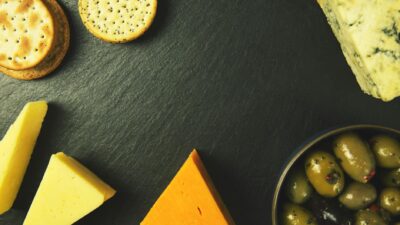
Blue cheese (Roquefort, Gorgonzola, Stilton, Danish blue) contains about 0.5-1 g carbohydrate, 6 g protein, and 8 g fat per 1-oz serving (100 calories). The glycemic impact is essentially zero. The intensely strong flavor means that small portions add significant taste impact — supporting portion control and culinary satisfaction. Distinctive varieties include Roquefort (sheep’s milk French original, aged in caves), Gorgonzola (Italian cow’s milk, dolce or piccante), Stilton (English cow’s milk, crumbly Christmas tradition), Danish blue (milder, widely available), Cabrales (Spanish blend, very strong), and Maytag blue (American). All have similar nutrition for diabetes purposes. Main consideration is sodium — 300-400 mg per oz from salt added during production. For adults on sodium-restricted diets, limit to ½-1 oz per serving and pair with naturally low-sodium foods. Diabetes-friendly applications include wedge salad with blue cheese crumbles, spinach salad with pears and walnuts, blue cheese topping on grilled steak, endive boats with blue cheese and walnuts, and cobb salad. Avoid creamy blue cheese dressings; choose vinaigrette-based blue cheese dressings.
Variety Comparison
| Variety | Origin | Milk Source | Flavor Profile |
|---|---|---|---|
| Roquefort | France | Sheep | Tangy, sharp, intense |
| Gorgonzola dolce | Italy | Cow | Sweet, creamy, mild |
| Gorgonzola piccante | Italy | Cow | Sharp, drier |
| Stilton | England | Cow | Crumbly, strong, complex |
| Danish blue | Denmark | Cow | Milder, salty |
| Cabrales | Spain | Cow/sheep/goat | Very strong, pungent |
| Maytag blue | USA | Cow | Tangy, similar to Roquefort |
Diabetes-Friendly Pairings
- Wedge salad: iceberg, blue cheese crumbles, bacon, tomato, ranch dressing (small amount).
- Spinach salad with pears (small portion), walnuts, blue cheese.
- Grilled steak with blue cheese crumbles on top.
- Buffalo cauliflower with blue cheese dressing.
- Endive boats with blue cheese, pear, walnuts.
- Cobb salad with blue cheese crumbles.
- Roasted Brussels sprouts with crumbled blue cheese.
- Cauliflower steaks with blue cheese topping.
- Mushrooms stuffed with blue cheese and herbs.
- Pecan-crusted chicken with blue cheese sauce (small amount).
Dressing Strategy
- Vinaigrette with crumbled blue cheese: olive oil, vinegar, mustard, crumbled blue cheese.
- Yogurt-based blue cheese dressing: Greek yogurt + blue cheese + lemon + herbs (lower calorie).
- Avoid heavy cream-based or mayo-based dressings as primary base.
- Limit to 2 Tbsp per serving.
- Make at home — control sodium and additives.
- Use sparingly — strong flavor doesn’t require large amounts.
Buying and Storage
- Pre-crumbled blue cheese: convenient; check ingredient list for added preservatives.
- Wedge cheese: best flavor; crumble fresh as needed.
- Wrap in waxed paper or parchment, then loose plastic — needs to breathe.
- Store in cheese drawer or warmer part of refrigerator (38-42°F).
- Use within 2-3 weeks of opening.
- Discard if texture becomes slimy or mold spreads beyond original veins.
- Freezing changes texture — only freeze for cooked applications.
Who Should Be Careful
- Adults on sodium-restricted diets (heart failure, hypertension, kidney disease).
- Adults watching saturated fat closely.
- Pregnant women — choose pasteurized varieties; avoid unpasteurized.
- Adults with mold allergies (rare; the mold in blue cheese is generally safe).
- Adults with severe lactose intolerance — aged blue cheese has minimal lactose.
- Adults with milk protein allergy — avoid.
The Bottom Line
Blue cheese (Roquefort, Gorgonzola, Stilton, Danish blue, Cabrales, Maytag blue) contains about 0.5-1 g carbohydrate, 6 g protein, and 8 g fat per 1-oz serving. The glycemic impact is essentially zero. The intensely strong flavor allows small portions to add significant taste impact — supporting portion control and culinary satisfaction. Varieties differ in milk source (sheep for Roquefort; cow for Italian Gorgonzola, English Stilton, Danish blue, American Maytag), aging, and flavor intensity. All have similar nutrition for diabetes purposes; choose by flavor preference. Main consideration is sodium — 300-400 mg per oz from salt added during production. For adults on sodium-restricted diets (heart failure, hypertension, kidney disease), limit to ½-1 oz per serving and pair with naturally low-sodium foods. Diabetes-friendly applications include wedge salad, spinach salad with pears and walnuts, blue cheese topping on grilled steak or chicken, endive boats, cobb salad, and roasted Brussels sprouts with crumbled blue cheese. Avoid creamy commercial blue cheese dressings; make at home with vinaigrette or Greek yogurt base. Pregnant women should choose pasteurized varieties. Most adults with type 2 diabetes can include blue cheese in small portions as a flavor-rich addition to vegetable-forward meals. See our broader diabetes diet guide for context.