Chickpeas sit alongside lentils as one of the most diabetes-friendly carbohydrate foods in mainstream US grocery stores. The glycemic index is low, the soluble fiber content is substantial, and they bring 7 grams of plant protein per half-cup serving. Like lentils, chickpeas produce a documented second-meal effect — eating chickpeas at one meal improves the glucose response at the next. The complication is the popularity of hummus and roasted-chickpea snacks, where added oils, sodium, and pita-bread accompaniments can change the equation. The whole-bean form is the most diabetes-friendly; the processed forms range from very good to mixed depending on preparation.
Nutrition Profile by Form
| Form (serving as noted) | Calories | Carbs (g) | Fiber (g) | Protein (g) | Sodium (mg) |
|---|---|---|---|---|---|
| Cooked from dry (½ cup) | 135 | 22 | 6 | 7 | 5 |
| Canned, drained (½ cup) | 130 | 22 | 6 | 7 | 360 |
| Canned, rinsed (½ cup) | 130 | 22 | 6 | 7 | 215 |
| Roasted chickpea snack (¼ cup) | 120 | 20 | 5 | 6 | 240 |
| Hummus (2 Tbsp) | 70 | 4 | 2 | 2 | 240 |
| Chickpea flour (¼ cup) | 110 | 18 | 5 | 6 | 15 |
| Chickpea pasta (2 oz dry) | 190 | 32 | 8 | 14 | 60 |
Glycemic Impact
Whole cooked chickpeas have glycemic indices in the high 20s to mid 30s — substantially below most grains. The combination of resistant starch, soluble fiber, and plant protein produces a flat, modest glucose curve. Several controlled-feeding studies show post-meal glucose peaks 25 to 40% lower when chickpeas replace rice or potatoes in matched meals. Chickpea flour has a higher glycemic index than whole beans because the starch is fully exposed, but it still typically runs lower than wheat flour.
The Second-Meal Effect
- Chickpeas at one meal improve glucose response at the following meal.
- Mechanism: short-chain fatty acids from colonic fermentation of resistant starch and fiber improve insulin sensitivity.
- Demonstrated in trials where chickpeas at breakfast lowered post-lunch glucose peaks.
- Effect generalizes across the legume family but is well-documented specifically for chickpeas.
- The implication: legume meals are not just locally beneficial — they shape later meals as well.
Hummus — A Closer Look
- Standard recipe: chickpeas + tahini + olive oil + lemon + garlic — favorable macronutrient ratio.
- Per 2-tablespoon serving: roughly 4 grams of carbohydrate, 2 grams of fiber, 2 grams of protein, 5 grams of fat.
- Pitfalls: store-bought brands often carry 240 to 350 mg sodium per serving; flavored versions may add sugars.
- Portion creep is the bigger issue — half a cup with pita can easily run 80 grams of carbohydrate from the bread alone.
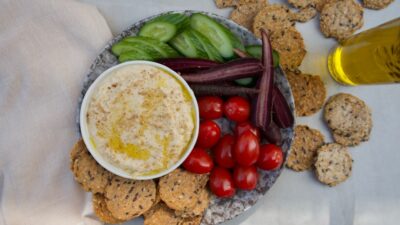
- Pair hummus with cucumber, carrot, celery, or bell pepper rather than pita for a low-glycemic snack.
- Homemade hummus gives full control over sodium and oil — straightforward to make in 5 minutes with canned chickpeas.
Roasted Chickpeas — A Closer Look
- Whole chickpeas roasted until crisp; a popular crunchy snack alternative to chips.
- Per quarter-cup serving: roughly 120 calories, 20 grams of carbohydrate, 5 grams of fiber, 6 grams of protein.
- Glycemic index is moderately higher than cooked-soft chickpeas (~40 to 45) because the texture is denser.
- Store-bought versions often coated in oil and heavy salt — check the label.
- Home-roasted: drain canned chickpeas, dry thoroughly, toss with 1 tsp olive oil and seasoning, bake at 400°F for 25 to 30 minutes.
Chickpea Flour and Pasta
- Chickpea flour: glycemic index modest (~45); useful for socca (savory pancake) and as a gluten-free thickener.
- Chickpea pasta: per 2-oz dry serving, 32 grams of carbohydrate, 8 grams of fiber, 14 grams of protein.
- Higher protein and fiber than wheat pasta; slightly different texture.
- Substitutes well for wheat pasta in most recipes; check cooking time (usually shorter).
- Useful for adults with diabetes who want a higher-protein, lower-glycemic pasta alternative.
Chickpeas vs Other Carbs
| Food (½ cup cooked) | Carbs (g) | Fiber (g) | Protein (g) | Glycemic Index |
|---|---|---|---|---|
| Chickpeas | 22 | 6 | 7 | ~30 |
| Lentils | 20 | 8 | 9 | ~28 |
| Black beans | 20 | 7 | 7 | ~30 |
| Brown rice | 22 | 2 | 2 | ~68 |
| White rice | 22 | 0 | 2 | ~73 |
| Pearled barley | 22 | 3 | 2 | ~28 |
Who Should Be Careful
- People with IBS — chickpeas contain GOS (galacto-oligosaccharides) that can trigger symptoms; introduce gradually.
- People with chronic kidney disease should watch potassium and total protein load.
- Those new to high-fiber diets may experience gas — small portions, build tolerance over weeks.
- People with G6PD deficiency may need to limit certain legumes including fava beans (chickpeas typically tolerated).
- Those on warfarin — chickpeas contain modest vitamin K; consistent intake matters.
Practical Patterns That Work
- Keep canned chickpeas on hand — rinse to lower sodium.
- Roast a tray on Sunday for a week of crunchy snacks.
- Use homemade hummus with cut vegetables as a daily snack.
- Add to salads, soups, curries, and grain bowls.
- Substitute chickpea pasta for wheat pasta 1-2 times a week.
- Mix into vegetable salads with olive oil and lemon for a desk-lunch staple.
The Bottom Line
Chickpeas are an unusually flexible diabetes-friendly carbohydrate food. The glycemic index is low (around 28 to 36), the soluble fiber content is high (6 grams per half-cup), and the plant protein contribution is substantial (7 grams per half-cup). Like lentils, chickpeas produce a documented second-meal effect that improves glucose response at subsequent meals. Whole cooked chickpeas — canned or home-cooked from dry — are the most diabetes-friendly form. Hummus is favorable in modest portions but pairs poorly with pita; pair with non-starchy vegetables instead. Roasted chickpea snacks and chickpea pasta are useful additions when sodium and portion are controlled. Substituting chickpeas for rice or pasta in a few meals per week is a low-effort, high-value change for diabetes meal planning. See our diabetes diet guide for the broader framework on building meals around foods like this.