Does quinoa spike blood sugar? Quinoa causes a modest, gradual rise in blood sugar for most people because it has a glycemic index around 53 and pairs slow-digesting carbohydrate with plant protein and fiber. It is one of the friendlier grain options for a prediabetes-aware plate, though portion size and toppings still matter.
What Makes Quinoa Different
Quinoa is a seed cooked and eaten like a grain. It is naturally gluten-free and contains all nine essential amino acids, which is unusual among plant foods. A 1-cup serving of cooked quinoa (about 185 grams) supplies roughly 222 calories, 39 grams of carbohydrate, 5 grams of fiber, and 8 grams of protein, along with magnesium, iron, and B vitamins. The fiber and protein are part of why quinoa tends to raise blood sugar less dramatically than rice or pasta at the same weight.
Quinoa’s Glycemic Index and Load
The international glycemic index tables place cooked quinoa at about 53 on the GI scale, putting it in the low-to-moderate range. Its glycemic load for a 150-gram portion is roughly 13 — considered moderate. Compared with other grains, quinoa typically ranks closer to barley, bulgur, and steel-cut oats than to white rice, instant oats, or rice cakes.
| Cooked Grain (1 cup) | Carbs (g) | Fiber (g) | Approx. GI | Approx. GL |
|---|---|---|---|---|
| Quinoa | 39 | 5 | 53 | 13 (moderate) |
| White rice | 45 | 1 | 73 | 29 (high) |
| Brown rice | 45 | 3 | 68 | 21 (high) |
| Barley, pearled | 44 | 6 | 35 | 12 (moderate) |
| Bulgur | 34 | 8 | 48 | 12 (moderate) |
| Oats, steel-cut | 27 | 4 | 55 | 11 (moderate) |
| Couscous | 36 | 2 | 65 | 17 (moderate-high) |
Glycemic numbers are population averages — your personal response can vary by 20 to 30 percent based on genetics, microbiome, sleep, and what you ate alongside the grain.
What Can Push Quinoa Higher
Quinoa itself is gentle, but a plate built around it can still spike glucose if you are not careful:
- Oversized bowls. A 2- or 3-cup quinoa base delivers 80 to 120 grams of carbohydrate in one sitting.
- Sweetened sauces. Teriyaki, sweet chili, barbecue, and honey-mustard dressings add 5 to 20 grams of added sugar per serving.
- Juices and sodas on the side — these drive most of the glucose rise, not the quinoa.
- Little protein or fat on the plate, which lets carbohydrate absorb faster.
- Dried fruit or candied nuts tossed into grain salads that can double the carb count.
Quinoa on a Prediabetes Plate
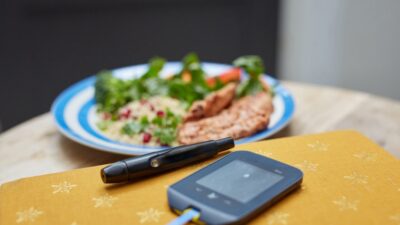
The American Diabetes Association’s “diabetes plate method” splits a 9-inch plate into half non-starchy vegetables, a quarter lean protein, and a quarter carbohydrate. A 1/2- to 1-cup portion of cooked quinoa fits neatly in that carbohydrate quadrant alongside options like roasted salmon, grilled chicken, tofu, or lentils, plus vegetables such as broccoli, spinach, or roasted peppers. See our diet and nutrition hub for more examples.
Useful pairings that flatten post-meal glucose include:
- Quinoa bowl with grilled chicken, arugula, avocado, cucumber, olive oil, and lemon.
- Quinoa taco bowls with black beans, salsa, cilantro, and a small amount of cheese.
- Warm breakfast quinoa with unsweetened almond milk, walnuts, cinnamon, and a few berries.
- Quinoa soup with chickpeas, tomato, kale, and olive oil.
Cooking and Storage Tips
Use a 1 to 2 ratio of quinoa to water, simmer about 15 minutes, and let it rest covered for 5 minutes for fluffier grains. Cooking and cooling quinoa — then using it cold in salads or reheating later — can slightly raise its resistant starch content, which may further blunt the glucose response in some people. Keep cooked quinoa in the fridge for up to 5 days or freeze in portioned containers.
Who Should Be Extra Careful
People managing type 1 or insulin-treated type 2 diabetes still need to count the 39 grams of carbohydrate in a 1-cup serving when dosing mealtime insulin. Those on very low-carb or ketogenic plans may find even a 1/2-cup portion too carb-heavy for their goals. For anyone with celiac disease, quinoa is gluten-free, but check labels for shared-facility warnings. If you track your blood sugar, test 1 to 2 hours after a quinoa meal for a few weeks to see how your body responds.
The Bottom Line
Quinoa does not sharply spike blood sugar for most people at a normal 1/2- to 1-cup portion. Its protein and fiber make it one of the better grain choices on a prediabetes-friendly plate, especially when paired with vegetables, lean protein, and healthy fat. Watch sauces, big restaurant portions, and sweetened salad mixes, and use personal glucose data to fine-tune the serving that works for you.
Medical Disclaimer: This article is for informational purposes only and does not constitute medical advice. Always consult a qualified healthcare professional about any medical condition, device, or treatment plan.