No, pure sucralose — the active sweetener in Splenda — does not raise blood sugar in most healthy people or in most people with diabetes. Randomized trials show that sucralose alone in water produces little or no glucose or insulin response. The granulated baking form of Splenda does contain small amounts of dextrose and maltodextrin as bulking agents (about 0.5 g of carbohydrate per packet), but the effect on a single reading is negligible for most people.
What Splenda Is Made Of
Splenda is a brand name for products made with sucralose, a chlorinated derivative of sucrose that is roughly 600 times sweeter than table sugar. The molecule passes through the body largely unchanged and is not metabolized for energy. Different Splenda formats use different amounts of bulking agents:
- Splenda Original packets: About 1 g per packet, of which roughly 0.5 g is dextrose and maltodextrin (carbohydrate); about 3 calories per packet.
- Splenda Granulated (cup-for-cup): Designed to measure like sugar, contains more maltodextrin per cup; about 96 calories and 24 g of carbs per cup, versus about 770 calories in a cup of sugar.
- Splenda Liquid: Water and sucralose only — zero calories, zero carbs.
- Splenda Naturals (stevia or monk fruit blends): Vary by formulation.
What the Research Says About Sucralose and Glucose
The bulk of randomized controlled trials in healthy adults and people with type 2 diabetes show that sucralose, taken alone in water, does not significantly raise blood glucose or insulin. Reviews including the Cochrane review of non-nutritive sweeteners and the FDA’s safety assessments concluded that sucralose has minimal acute metabolic impact. Specific findings:
- Sucralose alone in healthy volunteers: no change in blood glucose, no insulin spike.
- Sucralose alone in people with T2D: no change in glucose or insulin in most studies.
- Sucralose with a glucose load: a few small studies reported a modest increase in insulin response, but the effect did not change overall glucose curves significantly.
The Microbiome Question
Some animal studies and a smaller number of human studies have raised the possibility that long-term sucralose consumption alters the composition of gut bacteria, with potential downstream effects on insulin sensitivity. The most-cited human work suggested mild glucose intolerance after extended consumption in a subset of volunteers. The research is mixed:
- Animal data shows clearer microbiome shifts, but human dosing in those studies often exceeds typical intake.
- Human studies are smaller, shorter, and inconsistent.
- The American Diabetes Association and FDA have reviewed the evidence and continue to consider sucralose acceptable for people with diabetes.
The honest summary: there is enough signal to warrant continued research, but not enough evidence to change clinical recommendations.
Splenda vs Sugar vs Other Sweeteners
| Sweetener | Calories per Teaspoon | Carbs per Teaspoon | Effect on Blood Sugar |
|---|---|---|---|
| Table sugar (sucrose) | 16 | 4 g | Significant rise |
| Honey | 21 | 6 g | Significant rise |
| Splenda packet (sucralose + bulking) | ~3 per packet | 0.5 g per packet | Minimal |
| Splenda liquid (pure sucralose) | 0 | 0 | None measurable |
| Equal (aspartame) | ~4 per packet | under 1 g | Minimal |
| Sweet’N Low (saccharin) | ~4 per packet | under 1 g | Minimal |
| Stevia | 0 | 0 | None measurable |
| Truvia (stevia + erythritol) | 0 | 3 g (mostly unmetabolized) | None to minimal |
| Monk fruit | 0 | 0 | None measurable |
Practical Notes for People With Prediabetes or Diabetes
- Single packets are not a glucose problem. One packet in coffee adds about 0.5 g of carbs — well below a level that affects blood sugar.
- Baking with cup-for-cup Splenda adds up. A cup of granulated Splenda has about 24 g of carbs from maltodextrin and dextrose. If you use a full cup in a single recipe, count those carbs.
- Liquid Splenda or pure sucralose is essentially zero-carb. If you want the cleanest option, those are it.
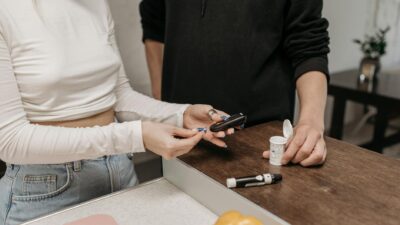
- Personal response varies. Test your own response by checking glucose 1 to 2 hours after consuming sucralose in your usual way.
- Avoid hidden carbs. Some flavored protein powders and beverages combine sucralose with maltodextrin or starches that do raise glucose.
For broader guidance on managing blood sugar through diet, see our prediabetes diet hub and our treatment options page.
The Bottom Line
Splenda — and sucralose in general — is one of the safest sweeteners for someone managing blood sugar. Pure sucralose has no measurable effect on glucose for most people, and the trace carbs in packet form rarely matter. The unsettled questions are about the gut microbiome and very-long-term metabolic health, not about acute glucose. If you are using a few packets a day, the choice is clearly better than the equivalent in table sugar. If you are using cups of granulated Splenda in baking, count the carbs from the bulking agents.