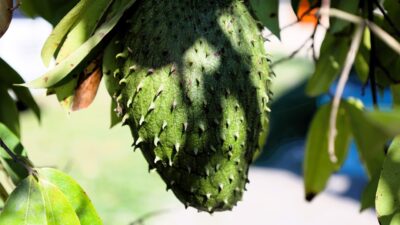
Durian (Durio zibethinus, “king of fruits”) is unique tropical fruit native to Southeast Asia (Malaysia, Thailand, Indonesia, Philippines, Vietnam, Singapore); large fruit with spiky exterior; multiple segments inside with custardy yellow flesh; famously pungent strong smell (loved or hated; banned from many hotels and public transit); rich, creamy, sweet flavor sometimes described as combination of vanilla, almond, garlic, and onion. Nutrition per cup (~243 g durian flesh) – 350 calories, 65 g carbohydrate, 9 g fiber (net 56 g), 4 g protein, 13 g fat. Glycemic index 49-59 (moderate). Note – durian per cup carb is similar to large slice of cake. Per ½ cup (~120 g) – 175 calories, 33 g carb, 4 g fiber, 2 g protein, 6 g fat. Small section/seg (~50 g) – 70 calories, 13 g carb. For diabetes – small portions are diabetes-friendly; large portions exceed standard fruit serving recommendations significantly. Health benefits – vitamin C (35% DV per cup), folate, magnesium, potassium, manganese, B vitamins; high fiber slows glucose absorption; healthy fats provide satiety. Asian research has explored durian effects on glucose. Findings – moderate glycemic index (~50-60); lower glucose spike than equivalent carbs from white bread or rice (despite high carb content); mechanisms proposed – high fiber slows absorption; sulfur compounds may have insulin sensitivity effects; fat content slows absorption; mineral content (chromium, magnesium) may support glucose metabolism. Limitations – portion size matters tremendously; even moderate GI fruit becomes high glycemic load with large portions; calorie density makes weight management harder. For diabetes – durian is reasonable in small portions (½ cup max); doesn’t seem to be uniquely harmful but also doesn’t have unique benefits requiring large portions. Asian folk wisdom “don’t eat durian with alcohol” has actually been substantiated. Research shows durian contains compounds (sulfur-containing amino acids, methylcyclopropyl ether) that inhibit aldehyde dehydrogenase enzymes that metabolize alcohol. Effect – accumulation of acetaldehyde (toxic alcohol metabolite); can cause severe nausea, vomiting, rapid heart rate, flushing, headache, sweating; in extreme cases – serious hyperthermia or even cardiac events. Mechanism similar to disulfiram (Antabuse) effect. Small portions and smart pairing recommended – ½ cup or smaller portion at one time; eat fresh, ripe durian; pair with protein (Greek yogurt, nuts); eat earlier in day; limit other carbs at same meal; drink water; avoid sweet beverages; avoid commercial durian sweets; try frozen durian for portion control; avoid alcohol within several hours.
Durian Nutrition
| Portion | Calories | Carbs (g) | Fiber (g) | Fat (g) |
|---|---|---|---|---|
| 1 small section (~50 g) | 70 | 13 | 2 | 3 |
| ½ cup (~120 g) | 175 | 33 | 4 | 6 |
| 1 cup (~243 g) | 350 | 65 | 9 | 13 |
| 1 typical “pip” (seed + flesh) | 50-100 | 10-20 | 1-3 | 2-5 |
| Durian ice cream (½ cup) | 250 | 35 | 1 | 12 |
Durian Cautions
| Caution | Reason |
|---|---|
| Don’t combine with alcohol | Inhibits ADH enzyme; causes acetaldehyde buildup; severe reactions |
| Watch portion size | High calorie density; large portions exceed fruit serving recommendations |
| Avoid commercial durian sweets | Often heavily sweetened; high glycemic load |
| Allergic reactions possible | Some people have allergies to durian |
| Strong smell | Banned in many hotels, public transit, hospitals |
| Constipation in large amounts | Very high fiber if consumed quickly |
Durian Forms and Use
- Fresh ripe durian – small portion (½ cup).
- Frozen durian – convenient for portion control.
- Vacuum-sealed – good for travelers.
- Durian paste – very concentrated; very small amount.
- Avoid durian ice cream (sweetened).
- Avoid durian cake, rolls, pancakes (sweetened).
- Avoid durian sticky rice (rice + coconut + sugar).
- Avoid durian chips (deep-fried with sugar).
- Avoid commercial smoothies (often sweetened).
- Avoid durian candies and pastes with added sugar.
Diabetes-Friendly Pairing
- Small durian section with Greek yogurt.
- ½ cup durian with handful walnuts or almonds.
- Durian with cheese (small portion of each).
- Eat earlier in day (afternoon).
- Limit other carbs at same meal.
- Drink water with durian.
- Test blood sugar 1-2 hours after.
- Pair with cucumbers or low-carb vegetables.
- Avoid combining with rice or other starches.
Why Durian is Different
- High fat for fruit (13 g per cup) – mostly healthy unsaturated.
- Calorie density – 350 cal/cup; among highest fruits.
- Moderate GI (~50-60) – lower than expected.
- Pungent sulfur compounds (distinctive smell).
- Custardy texture similar to ice cream.
- Cultural significance in Southeast Asia.
- Banned in many hotels/transit due to smell.
- Loved or hated – polarizing.
- Available frozen worldwide.
- Season – typically June-August.
Where to Find Durian
- Southeast Asian grocery stores – fresh or frozen.
- Asian supermarkets (H Mart, 99 Ranch).
- Some Whole Foods (frozen).
- Online frozen delivery.
- Specialty fruit markets.
- Cost varies widely – $5-30/lb depending on type and region.
- Best types – Mao Shan Wang (Musang King) Malaysian premium.
- D24 – Singapore favorite.
- Monthong – Thailand variety.
The Bottom Line
Durian (Durio zibethinus, “king of fruits”) is unique tropical fruit native to Southeast Asia (Malaysia, Thailand, Indonesia, Philippines, Vietnam, Singapore); large fruit with spiky exterior; multiple segments inside with custardy yellow flesh; famously pungent strong smell (loved or hated; banned from many hotels and public transit); rich, creamy, sweet flavor sometimes described as combination of vanilla, almond, garlic, and onion. Nutrition per cup (~243 g durian flesh) – 350 calories, 65 g carbohydrate, 9 g fiber (net 56 g), 4 g protein, 13 g fat. Glycemic index 49-59 (moderate). Note – durian per cup carb is similar to large slice of cake. Per ½ cup – 175 calories, 33 g carb, 4 g fiber, 2 g protein, 6 g fat. Small section (~50 g) – 70 calories, 13 g carb. For diabetes – small portions are diabetes-friendly; large portions exceed standard fruit serving recommendations significantly. Health benefits – vitamin C (35% DV per cup), folate, magnesium, potassium, manganese, B vitamins; high fiber slows glucose absorption; healthy fats provide satiety. Limited but emerging research – moderate glycemic index lower than expected given high sugar content; some studies suggest lower glucose spike than equivalent carbs from white bread or rice; mechanisms proposed include high fiber, sulfur compounds, fat content slowing absorption, mineral content. Asian folk wisdom “don’t eat durian with alcohol” has actually been substantiated – durian contains compounds (sulfur-containing amino acids, methylcyclopropyl ether) that inhibit aldehyde dehydrogenase enzymes; can cause acetaldehyde buildup with severe nausea, vomiting, rapid heart rate, flushing, headache; mechanism similar to disulfiram effect. Strategies for diabetes – ½ cup or smaller portion at one time; eat fresh, ripe durian (not over-ripe which has more sugar); pair with protein (Greek yogurt, nuts); eat earlier in day; limit other carbs at same meal; drink water before eating; avoid sweet beverages; avoid commercial durian sweets (often very high sugar – durian-flavored ice cream, durian cake, durian pancakes, durian rolls); try frozen durian for portion control; avoid alcohol within several hours; test blood sugar 1-2 hours after. Forms to limit – durian ice cream, durian cake, durian rolls, durian smoothies (often sweetened), durian sticky rice (Thai), durian chips (deep-fried with added sugar). Fresh small portion of fully ripe durian is best for diabetes. Cultural significance – durian central to Southeast Asian food culture. Available at Southeast Asian grocery stores (fresh or frozen), Asian supermarkets, some Whole Foods, specialty fruit markets. Cost $5-30/lb. Best varieties – Mao Shan Wang (Musang King) Malaysian, D24 Singapore, Monthong Thailand. For adults with type 2 diabetes – durian is enjoyable cultural food in small portions (½ cup max); avoid commercial sweetened durian products; never combine with alcohol; watch overall daily calorie/carb budget given calorie density. See our broader diabetes diet guide for context.