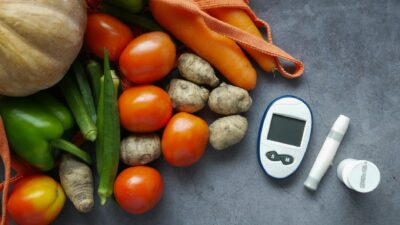
Eggplant is one of the more versatile low-carb vegetables in diabetes meal planning. A 1-cup cooked serving contains only 9 grams of carbohydrate with 3 grams of fiber and 35 calories. The glycemic impact is essentially zero. The dark purple skin contains nasunin, an anthocyanin polyphenol unique to eggplant with antioxidant and modest cardiovascular benefits. Eggplant works across many cuisines — Italian (eggplant parm, melanzane), Middle Eastern (baba ghanoush, moussaka), Indian (baingan bharta), Asian (Japanese miso-glazed, Chinese spicy eggplant), and Mediterranean. The main practical consideration is eggplant’s spongy texture that absorbs oil readily — salt-treating, air-frying, or moisture-rich cooking methods reduce oil absorption substantially. Traditional fried preparations (eggplant parmesan, eggplant rollatini) can be modified with almond-flour breading and baked rather than fried.
Nutrition Profile
| Eggplant form (1 cup unless noted) | Calories | Carbs (g) | Fiber (g) | Protein (g) |
|---|---|---|---|---|
| Cooked plain | 35 | 9 | 3 | 1 |
| Raw cubed | 20 | 5 | 3 | 1 |
| Grilled with olive oil (1 tsp) | 75 | 9 | 3 | 1 |
| Fried in oil (traditional) | 250-350 | 10 | 3 | 1 |
| Eggplant parmesan (1 cup, traditional) | 500 | 40 | 5 | 20 |
| Eggplant parmesan (low-carb version) | 300 | 15 | 5 | 22 |
| Baba ghanoush (½ cup) | 90 | 10 | 4 | 3 |
| Ratatouille (1 cup) | 100 | 15 | 5 | 3 |
Reducing Oil Absorption
- Salt-treat first: sprinkle cubed eggplant with salt, let sit 30 min, pat dry. Draws out moisture and reduces oil absorption.
- Air-fry: 400°F for 10-15 min with light oil spray; crispy without frying.
- Roast in oven: 425°F for 20-30 min with brushed olive oil; uses less oil than pan-frying.
- Grill: minimal oil on surface; high-heat sear.
- Use non-stick pan: less oil needed.
- Braise or stew: moisture-rich methods cook eggplant without oil absorption.
The Eggplant Parm Modification
- Traditional: breaded with bread crumbs, fried, layered with multiple cheeses.
- Diabetes-friendly modifications:
- Use almond flour or crushed pork rinds instead of bread crumbs.
- Bake breaded eggplant at 425°F instead of frying.
- Use modest cheese (mozzarella and parmesan, not 4-cheese blend).
- Skip the bread crumb topping.
- Serve smaller portions alongside non-starchy vegetables.
- Result: 250-350 cal, 15-20 g carb per serving vs 500+ cal, 40+ g carb for traditional.
Cooking Methods
- Grilled: thick slices, 4-5 min per side, olive oil and salt.
- Roasted: cubed at 425°F for 25 min with olive oil.
- Stir-fried: Asian-style with garlic, ginger, soy sauce.
- Braised: in tomato sauce; classic Italian.
- Stuffed: halve, scoop, fill with ground meat and vegetables.
- Pureed: for baba ghanoush after roasting whole eggplant.
- In ratatouille: classic French vegetable stew.
- Air-fried: crispy texture with minimal oil.
Eggplant Varieties
- Globe eggplant: large, dark purple; most common American variety; best for grilling, parm.
- Italian eggplant: medium-sized, sweeter, fewer seeds.
- Japanese eggplant: long, thin, mild; no need to salt-treat; great for stir-fries.
- Chinese eggplant: similar to Japanese, longer and thinner.
- Indian/Thai eggplant: small round; some are white or green; used in curries.
- Graffiti eggplant: purple-and-white striped; mild flavor.
- All have similar nutrition profiles.
Cuisines Featuring Eggplant
- Italian: eggplant parmesan, melanzane alla parmigiana, caponata.
- Middle Eastern: baba ghanoush, moussaka, fattoush variations.
- Indian: baingan bharta (roasted eggplant), eggplant curry.
- Chinese: spicy szechuan eggplant, eggplant in garlic sauce.
- Japanese: nasu dengaku (miso-glazed grilled eggplant).
- Greek: moussaka with lamb and eggplant layers.
- French: ratatouille with eggplant, tomato, zucchini, peppers.
- Turkish: imam bayildi (stuffed eggplant).
Pairing Strategies
- Grilled eggplant with feta, olives, lemon — Mediterranean side.
- Eggplant parmesan (low-carb version) with side salad.
- Baba ghanoush with vegetable dippers or whole-grain pita (moderate portion).
- Ratatouille with grilled chicken or fish.
- Stir-fried Japanese eggplant with garlic and ginger.
- Stuffed eggplant with ground turkey and vegetables.
- Eggplant rollatini with ricotta and tomato sauce.
Vitamin and Mineral Profile
| Nutrient (1 cup cooked) | Amount | % Daily Value |
|---|---|---|
| Manganese | 0.2 mg | 9% |
| Vitamin K | 3 mcg | 3% |
| Vitamin C | 1 mg | 2% |
| Vitamin B6 | 0.1 mg | 5% |
| Folate | 14 mcg | 3% |
| Potassium | 120 mg | 3% |
| Nasunin | varies | n/a |
Who Should Be Careful
- People with nightshade sensitivity — some adults with autoimmune conditions report symptoms.
- People prone to oxalate kidney stones — eggplant is moderate-oxalate.
- People who consume eggplant in heavy fried preparations regularly — modify cooking methods.
- People with histamine intolerance — eggplant is moderately histamine-releasing.
The Bottom Line
Eggplant is one of the more versatile low-carb vegetables for diabetes meal planning. A 1-cup cooked serving contains only 9 g carbohydrate, 3 g fiber, and 35 calories. The glycemic impact is essentially zero. The dark purple skin contains nasunin, an anthocyanin antioxidant. The main practical consideration is the spongy texture that absorbs oil readily — salt-treating first, air-frying, roasting with brushed oil, or moisture-rich cooking methods (braising, stewing) reduce oil absorption substantially. Traditional eggplant parmesan can be modified with almond-flour breading and baking (rather than frying) to deliver 250-350 calories and 15-20 g carb per serving (vs 500+ cal and 40+ g carb for traditional). Eggplant works across Italian, Middle Eastern, Indian, Chinese, Japanese, Greek, French, and Turkish cuisines. For adults with type 2 diabetes, eggplant 1-2 times per week in oil-reduced preparations is an excellent low-carb vegetable that substitutes for higher-carb foods in modified recipes. See our broader diabetes diet guide for vegetable framework.