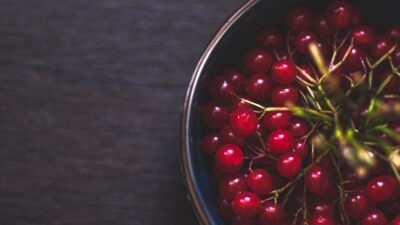
Goji berries (Lycium barbarum, also called wolfberries) are bright red-orange dried berries from a shrub native to China, particularly Ningxia province. Traditional Chinese medicine has used goji for centuries for eye health, immune function, and diabetes. Per ¼ cup (28 g) dried – 100 calories, 24 g carbohydrate, 3 g fiber (net 21 g), 4 g protein, 0 g fat. Per 1 tablespoon (10 g) – 35 calories, 8 g carb. Glycemic index moderate (around 30-40). Benefits – very high carotenoids (especially zeaxanthin and beta-carotene – eye health crucial in diabetic retinopathy prevention); vitamin C (about 50% DV per ¼ cup); polysaccharides (LBP – Lycium barbarum polysaccharides) with possible blood sugar effects; protein (relatively high for fruit); antioxidants. Concerns – concentrated sugar (24 g per ¼ cup); easy to overeat; expensive; some commercial varieties contain sulfites or added sugar. Use small portions (1-2 tablespoons) as snack mix-in, not large quantities. Research on goji berries and diabetes – several small studies have explored. Lycium barbarum polysaccharides (LBP) – studied in animal models showing improved insulin sensitivity, reduced fasting glucose. Human studies – several small trials suggest modest improvements in fasting blood sugar, postprandial glucose, lipids with regular goji or LBP supplementation. Antioxidant effects – reduces oxidative stress markers (elevated in diabetes). Eye health – high zeaxanthin and lutein may benefit diabetic retinopathy patients. Mechanisms proposed – alpha-glucosidase inhibition, insulin sensitization, hepatic glucose metabolism modulation. Limitations – most research from China, small sample sizes, methodological concerns. For diabetes – goji is reasonable functional food with possible modest benefits; not a treatment substitute; combine with diabetes management. Small portions as flavor and antioxidant addition – snack mix (1 tablespoon goji + nuts + seeds); trail mix homemade (small goji addition); yogurt topping (1 tablespoon on plain Greek yogurt); oatmeal addition (1 tablespoon mixed into oatmeal; account for carb); salad topping; smoothie addition; goji tea (steep 1 tablespoon in hot water 10 minutes; traditional Chinese tea); soup addition (Chinese chicken soup with goji and ginseng); rice/grain dishes (small handful for color and flavor); granola (homemade with small goji portion); energy balls (homemade with goji, nuts, seeds, dates limit). LIMIT goji juice (concentrated sugar), goji supplements with added ingredients, large portions of dried goji, sugared goji products. The Chinese tradition uses goji in soups and teas more than as snack – good model for diabetes (small portions mixed with other foods).
Goji Berry Nutrition
| Form | Calories | Carbs (g) | Fiber (g) | Protein (g) |
|---|---|---|---|---|
| Dried (¼ cup, 28 g) | 100 | 24 | 3 | 4 |
| Dried (1 tablespoon, 10 g) | 35 | 8 | 1 | 1 |
| Fresh (1 cup, ~120 g) | 100 | 22 | 3 | 4 |
| Goji juice (8 oz) | 110 | 26 | 1 | 1 |
| Goji powder (1 tsp) | 15 | 3 | 0.5 | 0.5 |
Dried Berries Comparison (per ¼ cup)
| Berry | Calories | Carbs (g) | Protein (g) |
|---|---|---|---|
| Goji | 100 | 24 | 4 (highest) |
| Dried blueberries | 105 | 25 | 1 |
| Dried cranberries (sweetened) | 110 | 30 | 0 |
| Raisins | 130 | 30 | 1 |
| Dried mulberries | 140 | 32 | 2 |
Diabetes-Friendly Applications
- Goji tea – 1 tablespoon dried berries in hot water 10 minutes; drink + eat berries.
- Chinese chicken soup with goji and ginseng (traditional).
- 1 tablespoon dried goji on plain Greek yogurt with cinnamon.
- 1 tablespoon in oatmeal (account for carb in meal).
- Small handful on green salad with grilled chicken.
- 1 tablespoon in homemade trail mix with nuts.
- Goji-cashew snack (1 tbsp goji + 10 cashews).
- Stir-fry addition with chicken and vegetables.
- Rice/grain bowl with goji for color (small amount).
- Goji-ginger tea (with fresh ginger and stevia).
- Smoothie addition – 1 tablespoon in protein smoothie.
- Goji-walnut energy balls (limit dates; use few).
- Hot herbal tea infusion.
Possible Research Benefits
- Modest fasting blood sugar reduction (preliminary).
- Postprandial glucose improvement.
- Lipid improvements (some studies).
- Antioxidant/anti-inflammatory effects.
- Eye health benefits (zeaxanthin, lutein).
- Immune function support.
- Liver function benefits in animal studies.
- Lycium barbarum polysaccharides (LBP) primary studied component.
- Most evidence from Chinese studies; Western reviews cautious.
- Not substitute for diabetes medications.
Choosing Goji Berries
- Bright red-orange color (not brown – oxidized).
- Slightly tart-sweet flavor.
- Pliable (not rock-hard).
- No added sugar in ingredients list.
- No sulfites if possible (some brands organic-sulfite free).
- Organic preferred when available.
- Ningxia or China-origin traditional.
- Store in cool dry place; freezer extends shelf life.
- Use within 6-12 months for freshness.
Where to Find Goji
- Asian/Chinese grocery stores (most authentic).
- Health food stores (Whole Foods, Sprouts).
- Online (Amazon, Navitas Naturals, Terrasoul).
- Some mainstream grocers in natural foods section.
- Bulk bins at some natural food stores.
- Goji powder also available.
- Cost: $8-20 per pound (more expensive than other dried fruits).
- Premium “Ningxia” varieties from Chinese herb shops.
The Bottom Line
Goji berries (Lycium barbarum, also called wolfberries) are bright red-orange dried berries from a shrub native to China, particularly Ningxia province. Traditional Chinese medicine has used goji for centuries for eye health, immune function, and diabetes. Per ¼ cup (28 g) dried – 100 calories, 24 g carbohydrate, 3 g fiber (net 21 g), 4 g protein, 0 g fat. Per 1 tablespoon (10 g) – 35 calories, 8 g carb. Glycemic index moderate (around 30-40). Benefits – very high carotenoids (especially zeaxanthin and beta-carotene – eye health crucial in diabetic retinopathy prevention); vitamin C (about 50% DV per ¼ cup); polysaccharides (LBP – Lycium barbarum polysaccharides) with possible blood sugar effects; protein (relatively high for fruit); antioxidants. Concerns – concentrated sugar (24 g per ¼ cup); easy to overeat; expensive; some commercial varieties contain sulfites or added sugar. Use small portions (1-2 tablespoons) as snack mix-in, not large quantities. Research on goji berries and diabetes – several small studies. Lycium barbarum polysaccharides (LBP) studied in animal models showing improved insulin sensitivity and reduced fasting glucose. Human studies – several small trials suggest modest improvements in fasting blood sugar, postprandial glucose, lipids. Antioxidant effects – reduces oxidative stress markers (elevated in diabetes). Eye health – high zeaxanthin and lutein may benefit diabetic retinopathy patients. Mechanisms proposed – alpha-glucosidase inhibition, insulin sensitization, hepatic glucose metabolism modulation. Limitations – most research from China, small sample sizes, methodological concerns. For diabetes – goji is reasonable functional food with possible modest benefits; not a treatment substitute. Small portions as flavor and antioxidant addition – snack mix (1 tablespoon goji + nuts + seeds); trail mix homemade; yogurt topping; oatmeal addition (account for carb); salad topping; smoothie addition; goji tea (steep 1 tablespoon in hot water 10 minutes; drink with berries; traditional Chinese tea); soup addition (Chinese chicken soup with goji and ginseng); rice/grain dishes (small handful for color); granola (homemade with small goji portion); energy balls. LIMIT goji juice (concentrated sugar), goji supplements with added ingredients, large portions of dried goji, sugared goji products. The Chinese tradition uses goji in soups and teas more than as snack – good model for diabetes (small portions mixed with other foods). Similar to other dried fruits with some distinctions – goji has slightly less carb than most dried fruits and notably higher protein; highest in zeaxanthin among foods. Vs fresh berries – dried goji much more concentrated; 1 tbsp dried = about ¼ cup fresh berries equivalent in sugar/carb. For diabetes – dried goji is reasonable in small portions; not significantly better than other dried fruits for daily eating; the antioxidants and traditional use are the main advantages. Available at Asian/Chinese grocery stores, health food stores, online retailers. For adults with type 2 diabetes – goji berries are a traditional Chinese functional food with possible modest blood sugar benefits and notable eye-health zeaxanthin; small portions (1-2 tablespoons) as flavor addition rather than primary fruit source. See our broader diabetes diet guide for context.