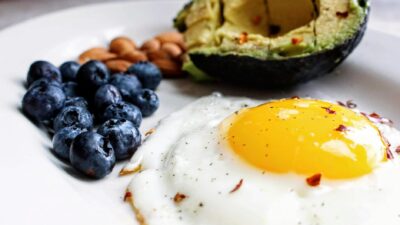
Combining intermittent fasting with a ketogenic diet stacks two of the most powerful insulin-lowering interventions available — producing the strongest non-medication strategy for type 2 diabetes and prediabetes. Both work through the same fundamental mechanism (reducing insulin demand) but through different levers: keto by removing carbohydrate, IF by removing eating time. Together, they produce deeper ketosis, lower insulin, more robust fat oxidation, and often dramatic A1C reductions. This guide covers the mechanism, evidence, how to combine them safely, medication coordination, sample days, and common pitfalls. Combining them requires careful medical supervision if you take any diabetes medication.
Why They Stack So Well
Insulin resistance — the core problem in type 2 diabetes and prediabetes — is driven primarily by chronically elevated insulin from frequent carb-containing meals. Both keto and IF lower insulin, just through different mechanisms:
- Keto lowers the height of the insulin response. Without dietary carbs, each meal triggers only a small insulin release. Insulin baseline drops within days.
- IF lowers the duration of insulin elevation. Fewer meal events means fewer insulin pulses per day. With a 16-hour fast, insulin spends 16+ hours at baseline.
- Combined, the insulin curve flattens dramatically. Two meals of low-carb food in an 8-hour window produces a daily insulin profile fundamentally different from a standard 3-meal high-carb pattern.
- Insulin sensitivity recovers faster. Cells adapt to lower insulin demand by up-regulating insulin receptors — directly reversing the molecular basis of insulin resistance.
- Fat oxidation is constant. Both keto and IF promote fat oxidation; combined, the body operates predominantly on fat fuel.
Evidence for the Combination
Direct head-to-head trials of keto + IF vs keto alone or IF alone are limited, but the component evidence is strong:
- Virta Health 1- and 2-year trials: Keto produced A1C drops of 0.9 to 1.3 points and 53 to 60 percent T2D reversal. Participants commonly fell into spontaneous time-restricted eating because hunger was suppressed by ketones.
- Sutton 2018: Early time-restricted feeding improved insulin sensitivity in prediabetics independent of weight loss.
- Mattson 2019 NEJM review: Intermittent fasting metabolic benefits are amplified when stacked with carbohydrate restriction.
- Cienfuegos 2020: Time-restricted eating in obesity produced metabolic gains; effects likely additive with carb restriction.
- Clinical practice (Virta, low-carb clinicians): Most low-carb specialists treating T2D use both interventions in combination because the combined effect on glucose and weight is typically stronger.
For the underlying mechanistic science, see Mattson et al.’s Effects of Intermittent Fasting on Health, Aging, and Disease in NEJM and the Virta Health keto trial research.
Recommended Sequence — Keto First, Then IF
Adding both interventions simultaneously is harder than necessary. The keto adaptation (1 to 2 weeks of “keto flu”) is hard enough on its own; layering a 16-hour fast at the same time compounds hunger, fatigue, and headache. The recommended sequence:
| Phase | Duration | Focus | Daily Schedule |
|---|---|---|---|
| Phase 1: Keto adaptation | Weeks 1-4 | Get into ketosis, manage keto flu, hit 20-30 g net carbs | 3 meals + snacks if needed; no time restriction |
| Phase 2: Natural meal compression | Weeks 4-6 | Skip snacks; eat when hungry only | Often 3 meals → 2 meals naturally |
| Phase 3: Add 14:10 | Weeks 6-8 | Push first meal later; finish dinner earlier | Eat 9 AM – 7 PM |
| Phase 4: Settle into 16:8 | Weeks 8+ | Sustain combination; monitor markers | Eat 11 AM – 7 PM or 12 PM – 8 PM |
| Phase 5 (optional): 18:6 or longer | Month 3+ | Deeper effect if plateau | Eat 1 PM – 7 PM |
Sample Keto + 16:8 Day
| Time | Meal / Activity | Macros |
|---|---|---|
| 6 AM | Wake, water, black coffee, walk 15 min | 0 kcal |
| 9 AM | Black coffee, electrolytes (salt water) | 0 kcal |
| 12 PM (break fast) | 4-egg omelet with cheese, spinach, mushrooms, avocado, side of bacon | ~900 kcal, 70 g fat, 50 g protein, 6 g net carbs |
| 3 PM | 1 oz macadamia nuts | ~200 kcal, 22 g fat, 2 g protein, 2 g net carbs |
| 7 PM (close window) | Pan-seared salmon (6 oz), roasted broccoli with butter, side salad, olive oil dressing | ~700 kcal, 50 g fat, 45 g protein, 8 g net carbs |
| Daily total | 2 meals + 1 snack in 7-hour window | ~1,800 kcal, 142 g fat, 97 g protein, 16 g net carbs |
What the Combination Feels Like Once Adapted
- Hunger is dramatically reduced. Ketones suppress ghrelin; most people on keto + IF report not feeling hungry during the 16-hour fast at all after the first 2 to 3 weeks.
- Energy is stable. The blood sugar roller coaster disappears. No 3 PM crash.
- Mental clarity is improved. Ketones are a stable brain fuel; cognitive performance often improves once adapted.
- Sleep often improves. Lower glucose variability and earlier dinners both support better sleep.
- Weight loss is consistent. 1 to 2 pounds per week is typical until reaching a healthy weight.
- Spontaneous calorie reduction. Most people eat 300 to 600 fewer calories per day without trying.
Medication Considerations — Compounded Risk
Combining keto and IF compounds the medication effects of each alone. Hypoglycemia risk is highest in the first 2 to 4 weeks. Coordinate with your doctor before starting:
- Metformin: Generally continue. Take with first meal of window.
- Sulfonylureas: Hypoglycemia risk very high. Most clinicians discontinue or halve these before starting the combination. Discuss before starting.
- SGLT2 inhibitors: Critical risk of euglycemic DKA — these must be discontinued before starting keto + IF. Do not combine without specific physician guidance.
- Insulin: Doses drop substantially within days. Endocrinologist supervision is essential. Basal often drops 50 percent or more in the first 2 weeks; mealtime insulin shifts to window meals only and at lower doses.
- GLP-1 agonists: Generally compatible; enhances weight loss synergistically.
- Blood pressure meds: Diuretics often need reduction within 2 weeks. ACE inhibitors may need adjustment.
Side Effects and How to Manage Them
- Compounded keto flu: If you add IF before fully fat-adapted, keto flu is worse. Wait 2 to 4 weeks on keto alone before adding IF.
- Electrolyte demand higher: Both interventions cause sodium and water loss. Aim for 3 to 5 g sodium daily, 300 to 400 mg magnesium, 3 to 4 g potassium.
- Sleep disturbance: Some people have insomnia in the first 1 to 2 weeks. Usually resolves with adequate electrolytes.
- Cold intolerance: Mild and transient for some people during deep ketosis.
- Constipation: Lower food volume means lower fiber. Add chia, flax, leafy greens.
- LDL increase: Some people see large LDL rises on keto. Monitor lipid panel at 3 months.
- Hypoglycemia: The biggest acute risk on medications. Report any lows to your doctor immediately.
Tracking Markers
| Marker | Baseline | Month 1 | Month 3 | Month 6 |
|---|---|---|---|---|
| A1C | Test | — | Expect 0.8–1.2 drop | Expect 1.2–1.8 drop |
| Fasting glucose | Test | 15–30 mg/dL lower | 30–50 mg/dL lower | Often normal |
| Fasting insulin | Test | 30–50% lower | 50–70% lower | Normal range |
| Weight | Test | 5–10 lbs down | 15–25 lbs down | 25–40 lbs down |
| Blood pressure | Test | 5–10 mmHg down | 10–15 mmHg down | Often normal |
| Triglycerides | Test | 20–30% lower | 30–40% lower | Often under 100 |
| HDL | Test | 5–10% higher | 10–18% higher | Often above 60 |
| BHB (ketones, blood) | 0.1 | 1.0–2.0 | 1.0–2.5 | Stable in target |
Who Should Not Combine Keto and IF
- Type 1 diabetes without endocrinologist supervision (combined DKA risk).
- Anyone currently on SGLT2 inhibitors (discontinue first).
- History of eating disorders — the combination of food restriction and time restriction can trigger relapse.
- Pregnancy or breastfeeding.
- Underweight or actively losing weight unintentionally.
- Children and adolescents.
- Active cancer treatment without medical guidance.
- Advanced kidney disease.
- Adrenal insufficiency.
Long-Term Sustainability
The keto + IF combination is one of the most metabolically powerful but also one of the more restrictive. Long-term adherence patterns from clinical practice:
- Most people who sustain keto + IF for 6 months relax to low-carb + 16:8 at month 12 to 18 (50 to 75 g carbs, same eating window).
- The metabolic gains typically persist as long as net carbs stay under 100 g and refined carbs remain mostly absent.
- Some practitioners use “cycling” — strict keto + IF for 3 to 4 months, then relaxation, then return if A1C drifts up.
- The strict phase builds preferences and habits (loving fatty fish, vegetables, eggs) that persist into the relaxed phase.
- Sustainability beats theoretical optimization — a relaxed keto + IF you sustain for 2 years beats strict keto + IF you abandon after 3 months.
Common Pitfalls
- Adding both too fast: Wait 2 to 4 weeks on keto before adding IF.
- Inadequate electrolytes: Compounded need on both. Daily salt, magnesium, potassium.
- Refeed binges: If you “fall off” keto or break the fast with junk, glucose spikes hard from the low-insulin state. Plan refeeds with low-carb foods.
- Over-restriction: Combining keto + IF with severe calorie restriction can stall metabolism. Eat to satiety in the window.
- Skipping protein: Adequate protein (0.7 to 1.0 g per pound lean body mass) prevents muscle loss.
- Ignoring symptoms: Persistent fatigue, hair loss, menstrual changes, or sleep disruption mean back off the protocol.
- Not tracking medications: The biggest danger. Coordinate every dose change with your doctor.
Related Reading
For the component approaches, see our deep dives on the keto diet for diabetics, keto for prediabetes, intermittent fasting plans, 16/8 intermittent fasting, and keto meal plans for diabetics. For comparison, see keto vs low carb for diabetes. For background, see our diet and nutrition hub, A1C levels, whether prediabetes is reversible, and the treatment hub.
The Bottom Line
Combining intermittent fasting and keto is the most powerful non-medication intervention available for type 2 diabetes and prediabetes — stacking two complementary insulin-lowering mechanisms for additive metabolic effect. The recommended sequence is to establish keto first for 2 to 4 weeks until fat-adapted, then layer in 16:8 IF, then progress to 18:6 if desired. Once adapted, hunger is naturally suppressed, energy is stable, and most people fall into the schedule effortlessly. Published evidence supports A1C reductions of 1.2 to 1.8 percentage points, substantial weight loss, and improvement in nearly every cardiometabolic marker over 6 months. Medication coordination is essential — sulfonylureas, SGLT2 inhibitors, and insulin all interact strongly. Work with a doctor familiar with low-carb medical nutrition therapy, get baseline labs, monitor glucose carefully in the first month, and re-test every 3 months.