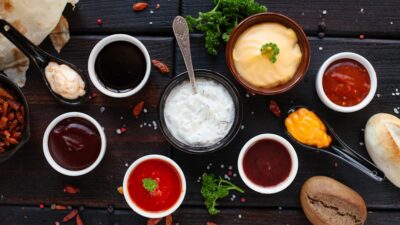
Ketchup is a hidden source of added sugar in many American diets. The per-tablespoon load — about 4 grams of sugar — sounds modest, but ketchup is rarely used by the tablespoon. Restaurant portions, daily fast-food habits, and generous home pours add up to 10 to 20 grams of added sugar per meal in many cases. For adults with diabetes, this kind of background sugar contribution is the type of thing that quietly chips away at A1C without anyone identifying the source. The good news is that sugar-free ketchup options have become widely available, and homemade alternatives are straightforward to make. Understanding the per-serving reality and the brand differences makes ketchup a manageable rather than problematic condiment.
Nutrition Profile
| Ketchup type (1 Tbsp, 15 g) | Calories | Carbs (g) | Sugar (g) | Sodium (mg) |
|---|---|---|---|---|
| Standard Heinz ketchup | 20 | 5 | 4 | 154 |
| Heinz No Sugar Added | 5 | 1 | 0 | 165 |
| Heinz Reduced Sodium | 20 | 5 | 4 | 105 |
| Heinz Organic | 20 | 4 | 4 | 155 |
| Hunt’s Ketchup | 20 | 5 | 4 | 160 |
| Primal Kitchen Unsweetened | 10 | 2 | 1 | 105 |
| Tessemae’s No Sugar Added | 5 | 1 | 0 | 140 |
| Restaurant packet (~10g) | 10 | 2-3 | 2 | 105 |
Portion Reality Check
- A tablespoon is roughly the size of two restaurant packets or a small squeeze line on a burger.
- Average ketchup pour for fries or a burger: 2 to 4 tablespoons (8 to 16 grams of sugar).
- Daily ketchup habit at 2 tablespoons adds about 28 grams of added sugar per week from ketchup alone.
- The AHA recommends limiting added sugar to 25 g (women) or 36 g (men) per day — ketchup can consume a meaningful fraction.
- Restaurant packets are deliberately small portions; reaching for 3 to 5 packets is common.
The Sugar-Free Versions
- Heinz No Sugar Added: sucralose-sweetened; tastes very close to standard.
- Primal Kitchen Unsweetened: tomato + vinegar + spices, no added sweetener; tangier taste.
- Tessemae’s No Sugar Added: tomato + apple cider vinegar + spices.
- G Hughes Sugar Free Ketchup: sucralose-sweetened; widely available.
- All produce essentially no glucose response in CGM users.
- Taste differences are modest — most adults adjust within a week.
Sodium Considerations
- Standard Heinz: 154 mg sodium per tablespoon — about 6 to 10% of daily limit.
- Reduced-sodium versions: 65 to 105 mg per tablespoon.
- For adults with hypertension, reduced-sodium ketchup is a reasonable swap.
- Total sodium from ketchup adds up — a daily 2-tablespoon habit contributes about 2,100 mg per week from ketchup alone.
- Most home cooks underestimate ketchup sodium.
Homemade Sugar-Free Ketchup
- 6 oz tomato paste + ¼ cup white or apple cider vinegar + ¼ cup water.
- ½ tsp onion powder + ½ tsp garlic powder + ½ tsp salt + ¼ tsp allspice or paprika.
- Optional: 10-15 drops liquid stevia or monk fruit drops for sweetness.
- Blend until smooth; refrigerate up to 2 weeks.
- About 1 to 2 g carbohydrate per tablespoon, essentially no added sugar.
- Useful for adults with diabetes who want full control over ingredients.
Ketchup Alternatives
| Condiment (1 Tbsp) | Carbs (g) | Sugar (g) | Sodium (mg) |
|---|---|---|---|
| Standard ketchup | 5 | 4 | 154 |
| Sugar-free ketchup | 1 | 0 | 165 |
| Yellow mustard | 0 | 0 | 55 |
| Salsa (mild) | 1 | 0 | 95 |
| Hot sauce (Tabasco) | 0 | 0 | 35 |
| Sriracha | 1 | 1 | 100 |
| Mayonnaise | 0 | 0 | 85 |
| BBQ sauce (standard) | 7 | 6 | 160 |
Hidden Ketchup Sources
- Russian and Thousand Island salad dressings — ketchup is a primary ingredient.
- Many barbecue sauces are ketchup-based with additional sugar.
- Cocktail sauce — ketchup + horseradish; high sugar.
- Meatloaf glazes and recipes often use ¼ to ½ cup of ketchup.
- Some American Chinese sauces (sweet and sour, sesame chicken sauce) use ketchup as a base.
- Restaurant condiment stations stock ketchup-heavy options.
Practical Patterns That Work
- Default to sugar-free ketchup for daily home use.
- Use mustard, hot sauce, or salsa as primary condiments.
- Measure ketchup portions rather than pouring freely.
- Watch ketchup-based sauces in mixed dishes.
- Make homemade sugar-free ketchup if family members will tolerate the taste shift.
- Track total daily added sugar — ketchup may be contributing more than you think.
Who Should Be Careful
- Adults with high A1C who use ketchup daily — sugar load can be meaningful over weeks.
- Adults with hypertension — choose reduced-sodium versions or alternatives.
- Adults watching added sugar specifically — ketchup is a stealth source.
- Adults on weight management plans — calories from condiments add up.
- Children with diabetes — early habits set lifetime patterns.
Connection to Broader Eating Patterns
Ketchup fits into the broader question of condiment-level added sugar contributions to daily intake. BBQ sauce, Russian dressing, sweet pickle relish, and honey mustard all contribute similar background sugar loads. For adults with diabetes following a structured carbohydrate budget, accounting for condiment carbohydrate is part of accurate carb counting. Substituting low-sugar alternatives across the condiment category produces compound benefits over months.
The Bottom Line
Ketchup itself is not a diabetes disaster, but it is a hidden source of added sugar that deserves attention. A tablespoon contains about 4 grams of added sugar — modest per serving but easy to over-portion. Restaurant pours and daily fast-food habits can push intake to 10 to 20 grams of ketchup sugar per meal. For adults with diabetes who use ketchup regularly, sugar-free options from major brands (Heinz No Sugar Added, G Hughes, Primal Kitchen, Tessemae’s) offer essentially the same flavor experience with 0 to 1 gram of carbohydrate per tablespoon. Mustard, hot sauce, and salsa are zero-sugar alternatives that work in many of the same contexts. Sodium content is meaningful at about 154 mg per tablespoon — reduced-sodium versions exist for adults with hypertension. Combined with attention to BBQ sauce and other sweet condiments, switching ketchup is a low-effort high-yield change for daily diabetes management. See our broader diabetes diet guide for the framework on condiments and added sugar.