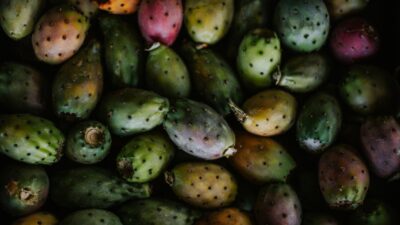
Nopales (pads of the prickly pear cactus, Opuntia ficus-indica) are exceptional for diabetes meal planning. One cup contains just 4 g carbohydrate with 2 g fiber (net 2 g) and 14 calories — very low glycemic impact. Multiple studies show nopales can modestly reduce post-meal glucose: López-Romero 2014 study found 30% reduction in post-meal glucose peak when 300 g nopales eaten with breakfast in Mexican adults with type 2 diabetes. Other studies show 10-30% reductions. Mechanisms: soluble fiber and mucilage slow glucose absorption; polysaccharides may have insulin-sensitizing effects; antioxidants (betalains, polyphenols). Provides vitamin C, magnesium, calcium. Traditional Mexican diabetes treatment with research support. Nopales are the pads (cladodes) of the prickly pear cactus — different from prickly pear fruit (tunas). Flat, oval, green pads with sharp spines that must be removed before eating. Texture similar to green beans when cooked. Mild flavor reminiscent of green beans, asparagus, or okra. Preparation: remove spines (use tongs and knife, or buy pre-cleaned), wash, cut off edges and base, slice. Cooking methods: boiled (10-15 min with garlic and onion; drain; reduces slime), grilled (whole pads brushed with oil; 4-5 min per side; minimal slime), sautéed, roasted at 400°F for 20 min, or raw in salad. Many applications: nopalitos salad with tomato-onion-cilantro-lime, huevos con nopales (eggs with nopales), grilled nopales in tacos, nopales in pozole, nopales con queso, tacos de nopales, camarones con nopales (with shrimp). For diabetes-specific benefit: 300 g (about 2 cups) with breakfast may modestly reduce post-meal glucose. Available fresh at Mexican markets, jarred (in vinegar brine), frozen, or as supplement form.
Research on Nopales for Diabetes
- López-Romero 2014: 300 g nopales with breakfast reduced post-meal glucose peak by 30% in 36 Mexican adults with type 2 diabetes.
- Multiple studies show 10-30% post-meal glucose reductions.
- Frati-Munari et al. (multiple studies in 1980s-90s): reduced post-meal glucose with broiled nopales.
- Improvements seen with both fresh and broiled preparations.
- Effect more pronounced after meals with high-GI foods.
- Whole vegetable preferred over extract supplements.
- Not a substitute for diabetes medications.
- Adjunct to medication and lifestyle.
- Compatible with other diabetes-friendly eating patterns.
Nutrition Profile
| Nutrient (1 cup cooked, 150 g) | Amount | % DV |
|---|---|---|
| Calories | 14 | — |
| Carbohydrate | 4 g | — |
| Fiber | 2 g | 7% |
| Net carbs | 2 g | — |
| Protein | 1 g | — |
| Vitamin C | 8 mg | 9% |
| Calcium | 140 mg | 11% |
| Magnesium | 50 mg | 12% |
| Vitamin A | 460 IU | 9% |
| Manganese | 0.3 mg | 13% |
Mechanisms of Blood Sugar Effect
- Soluble fiber (mucilage) slows carbohydrate absorption.
- Forms viscous gel in digestive tract.
- Polysaccharides may improve insulin sensitivity.
- Betalains (red pigments) — antioxidant effects.
- Polyphenols and flavonoids — anti-inflammatory.
- Possible effects on gut microbiome.
- Modest effects on lipid profile in some studies.
- Combined effects produce measurable post-meal glucose reduction.
Preparation Steps
- Wear thick gloves to handle thorny pads (or buy pre-cleaned).
- Hold pad with tongs.
- Cut off thorns with sharp knife — scrape spines off carefully.
- Trim cut edges and base.
- Wash thoroughly.
- Slice into strips or dice into cubes.
- Cooking method depends on application.
- Pre-cleaned nopales available at most Mexican markets (huge time-saver).
- Jarred nopales: ready to use; check for added salt.
- Frozen nopales: convenient for stews and soups.
Diabetes-Friendly Recipe Ideas
- Nopalitos salad — diced nopales, tomato, onion, cilantro, lime, jalapeño.
- Huevos con nopales — scrambled eggs with diced nopales, onion, tomato.
- Grilled nopales tacos with grilled chicken or carne asada.
- Nopales in pozole (Mexican hominy soup).
- Nopales con queso (with melted cheese) as appetizer.
- Vegetarian tacos with grilled nopales and beans.
- Chicken stew with nopales.
- Camarones con nopales (shrimp with nopales).
- Pickled nopales as low-carb condiment.
- Nopales smoothie (less common but used traditionally for diabetes).
- Mexican vegetable medley with nopales, zucchini, corn.
- Salsa de nopales.
Reducing Slime
- Boil with onion and garlic — discards mucilage in water.
- Drain well after boiling.
- Grilled or roasted preparations have minimal slime.
- Add vinegar or lime juice during cooking.
- Cook with tomatillo — natural acid balances.
- Cook with copper pot (traditional belief).
- Cook quickly at high heat.
- Whole pads release less slime than sliced.
- Some adults embrace slime — slow digestion is part of diabetes benefit.
Where to Buy
- Mexican markets — most affordable; usually pre-cleaned available.
- Latin grocery stores.
- Some Whole Foods and larger supermarkets.
- Farmers markets in Southwest U.S. and California.
- Online — fresh or jarred.
- Asian markets sometimes stock.
- Cost: $1-3 per pound fresh.
- Jarred nopales: $3-6 per jar.
- Frozen pre-cut: $3-6 per package.
- Whole fresh: most economical but requires preparation.
Cultural Importance
- National emblem of Mexico (appears on flag — eagle on cactus).
- Pre-Columbian food source for Aztec and earlier peoples.
- Traditional Mexican diabetes treatment for generations.
- Featured in many Mexican regional cuisines.
- Symbolizes Mexican identity and resilience.
- Increasingly available in U.S. as Mexican-American population grows.
- Sustainable crop — grows in arid conditions.
- Drought-tolerant — climate-resilient food source.
The Bottom Line
Nopales (pads of the prickly pear cactus, Opuntia ficus-indica) are exceptional for diabetes meal planning. One cup contains just 4 g carbohydrate with 2 g fiber (net 2 g) and 14 calories — very low glycemic impact. Multiple studies show nopales can modestly reduce post-meal glucose: López-Romero 2014 study found 30% reduction in post-meal glucose peak when 300 g nopales eaten with breakfast in Mexican adults with type 2 diabetes; other studies show 10-30% reductions. Mechanisms: soluble fiber and mucilage slow glucose absorption; polysaccharides may have insulin-sensitizing effects; antioxidants (betalains, polyphenols). Provides vitamin C, magnesium (12% DV per cup — relevant for diabetes), calcium. Traditional Mexican diabetes treatment with research support for modest benefits. Nopales are flat, oval, green cactus pads with sharp spines that must be removed before eating. Texture similar to green beans when cooked. Mild flavor reminiscent of green beans, asparagus, or okra. Preparation: remove spines (wear gloves, use tongs and knife — or buy pre-cleaned at Mexican markets), wash, cut off edges and base, slice. Cooking methods: boiled (10-15 min with garlic and onion; drain; reduces slime), grilled (whole pads brushed with oil; 4-5 min per side; minimal slime), sautéed, roasted at 400°F for 20 min, raw in salad. Diabetes-friendly recipes: nopalitos salad with tomato-onion-cilantro-lime, huevos con nopales (eggs with nopales), grilled nopales tacos with carne asada or grilled chicken, nopales in pozole, nopales con queso, vegetarian nopales tacos with beans, camarones con nopales (shrimp), pickled nopales as condiment. For diabetes-specific benefit: 300 g (about 2 cups) with breakfast may modestly reduce post-meal glucose. Reducing slime: boil and drain, grill or roast (less slime than wet cooking), add acid (vinegar, lime, tomatillo), cook quickly at high heat. Where to buy: Mexican markets (most affordable; usually pre-cleaned available), Latin grocery stores, some larger supermarkets, online. Cost: $1-3 per pound fresh; $3-6 jarred or frozen. Cultural importance: national emblem of Mexico, pre-Columbian food source, traditional Mexican diabetes treatment, sustainable drought-tolerant crop. Not a substitute for diabetes medications but excellent adjunct. For adults with type 2 diabetes (especially those from Mexican backgrounds), nopales offer culturally familiar food with research-backed modest blood sugar benefits. See our broader diabetes diet guide for context.