Peanuts occupy a quirky botanical position. Technically a legume — closer to beans and lentils than to almonds or walnuts — peanuts grow underground rather than on trees and developed entirely separately from the tree nut family. Nutritionally, however, peanuts behave like tree nuts: high in plant protein and monounsaturated fat, low in carbohydrate, modest in fiber. Observational cohort studies link peanut and peanut butter consumption with meaningfully lower type 2 diabetes risk, and peanuts are among the most affordable nuts in mainstream US grocery stores. The complications are mostly about peanut-butter labels (where added sugar varies widely between brands) and peanut allergy (which is among the most severe food allergies). For adults with type 2 diabetes who are not allergic, peanuts deserve a regular place in the diet rotation.
Nutrition Profile
| Peanut form (serving) | Calories | Carbs (g) | Fiber (g) | Protein (g) | Fat (g) |
|---|---|---|---|---|---|
| Raw peanuts (1 oz, ~28 nuts) | 161 | 5 | 2 | 7 | 14 |
| Dry-roasted unsalted (1 oz) | 166 | 6 | 2 | 7 | 14 |
| Dry-roasted salted (1 oz) | 166 | 6 | 2 | 7 | 14 |
| Oil-roasted (1 oz) | 170 | 5 | 2 | 7 | 15 |
| Peanut butter, natural (1 Tbsp) | 95 | 3 | 1 | 4 | 8 |
| Peanut butter, Skippy/Jif (1 Tbsp) | 95 | 4 | 1 | 3 | 8 |
| PB2 powdered (2 Tbsp) | 45 | 5 | 2 | 5 | 1.5 |
| Honey-roasted peanuts (1 oz) | 160 | 10 | 2 | 6 | 13 |
| Boiled peanuts (1 oz shelled) | 92 | 6 | 2 | 4 | 6 |
Glycemic Impact
Plain peanuts and natural peanut butter produce essentially no glucose response. The carbohydrate content is small (5 to 6 g per ounce), most of it bound to fiber and protein. CGM users see flat curves with peanuts eaten as a snack. The Cohen/Johnston-style acute-meal trials with nuts generally show that adding peanuts to a carbohydrate-containing meal reduces post-meal glucose peaks by 20 to 30%.
Cohort Evidence
- Jiang et al. (JAMA 2002): the Nurses’ Health Study followed 83,818 women for 16 years. Women who ate peanuts or peanut butter 5+ times per week had a 21 to 27% lower type 2 diabetes risk compared with rare consumers.
- The effect was independent of body weight — peanut consumers did not gain more weight than non-consumers.
- Similar effects shown in male cohorts.
- Plausible mechanisms: improved insulin sensitivity, modest weight maintenance, better lipid profile.
- Effects are observational; randomized trials show smaller but directionally consistent benefits.
The Peanut Butter Labyrinth
- Natural peanut butter: ingredients are peanuts and optionally salt. Oil separation is normal — stir before using.
- Major commercial brands (Skippy, Jif): add sugar (corn syrup or sugar) and hydrogenated oils to prevent oil separation. Sugar content 2 to 3 g per tablespoon.
- Reduced-fat peanut butter: replaces fat with starch — actually higher carbohydrate than regular.
- PB2 (powdered peanut butter): oil pressed out, sometimes sugar added. Useful for smoothies but check label.
- Crunchy versions: same nutrition as smooth.
- Flavored peanut butters (honey, chocolate): typically 5 to 10 g added sugar per tablespoon.
- Read the ingredient list — “natural” alone is not always sufficient.
The Aflatoxin Question
- Aflatoxins are fungal toxins produced by Aspergillus molds that can grow on peanuts.
- FDA regulates aflatoxin levels in US peanuts to ensure safety.
- Commercial US peanut products are tested and well below safety thresholds.
- The risk is greater in developing countries where regulation is weaker.
- For adults eating commercial US peanuts in normal amounts, aflatoxin is not a routine concern.
- Health-food-store organic peanuts and home-grown peanuts may have slightly higher aflatoxin variability.
Peanut Forms
| Form | Best uses | Diabetes notes |
|---|---|---|
| Whole roasted (in shell) | Snack, ballpark | Shelling slows consumption — portion benefit |
| Shelled roasted | Snack, salads, recipes | Easy over-portion — pre-measure |
| Natural peanut butter | Spread, smoothies, sauces | Daily-staple option |
| PB2 powdered | Smoothies, low-calorie spreads | Watch label for sugar |
| Boiled peanuts | Southern snack | Lower fat; high sodium |
| Peanut flour | Low-carb baking | Higher protein than wheat flour |
| Peanut oil | High-heat cooking | High smoke point, omega-6 heavy |
| Honey-roasted | Occasional treat | 4-5 g added sugar per oz |
Peanuts vs Tree Nuts
| Nut (1 oz) | Calories | Carbs (g) | Fiber (g) | Protein (g) |
|---|---|---|---|---|
| Peanuts | 166 | 6 | 2 | 7 |
| Almonds | 164 | 6 | 4 | 6 |
| Walnuts | 185 | 4 | 2 | 4 |
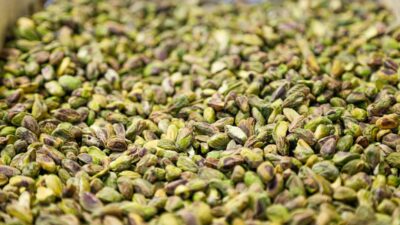
| Pistachios | 159 | 8 | 3 | 6 |
| Cashews | 157 | 9 | 1 | 5 |
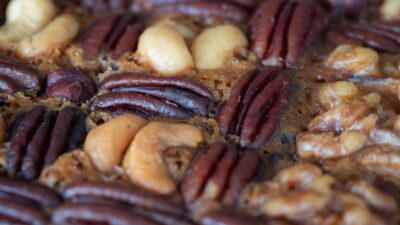
| Pecans | 196 | 4 | 3 | 3 |
Pairing Strategies
- Peanut butter on celery — classic low-carb snack.
- 1 oz peanuts + medium apple — balanced snack.
- Peanut butter + plain Greek yogurt + cinnamon as a high-protein dessert.
- Peanut sauce for Asian-style stir-fries (use natural peanut butter, low-sodium soy sauce, ginger, garlic).
- Peanuts in salads for crunch and protein.
- Peanut butter in smoothies with protein powder.
- Peanut-flour-coated chicken or fish — low-carb breading.
Who Should Be Careful
- People with peanut allergy — avoid all peanut products; carry epinephrine; check labels.
- People with chronic kidney disease — high phosphorus and potassium; portion-control with renal team.
- People watching sodium — choose unsalted versions; commercial salted peanuts add up.
- People pursuing weight loss — calorie density adds up; pre-portion peanut butter.
- People with gout — peanuts are moderate-purine; modest portions are usually fine.
Practical Patterns That Work
- Stock natural peanut butter (just peanuts and salt); skip commercial sugar-added versions.
- Pre-portion 1-oz bags of peanuts for grab-and-go.
- Use peanut butter as a fruit-pairing spread or stir-fry sauce base.
- Pair peanuts with fruit or whole-grain carbs for slower glucose curves.
- Try PB2 for low-calorie smoothies and spreads.
- Avoid honey-roasted and other sugar-coated varieties as daily snacks.
The Bottom Line
Peanuts are technically a legume but nutritionally behave like tree nuts and offer similar diabetes benefits. A 1-ounce serving provides 7 grams of plant protein, 2 grams of fiber, 14 grams of healthy fat, and only 5 to 6 grams of carbohydrate, producing essentially zero glycemic impact. Large prospective cohort studies link regular peanut and peanut butter consumption with 15 to 30% lower type 2 diabetes risk. Natural peanut butter (ingredients: peanuts, salt) is diabetes-friendly; major commercial brands that add sugar and hydrogenated oils are less ideal — always read the ingredient list. Peanut allergy is severe and requires strict avoidance for affected individuals. The aflatoxin concern is regulated to safe levels in US commercial peanuts and is not a routine worry. For adults with type 2 diabetes who are not allergic, peanuts and natural peanut butter are among the most affordable and accessible nut/legume options in the grocery store. They deserve a regular place in the daily-staple food rotation. See our broader diabetes diet guide for the framework on nuts and healthy fats.