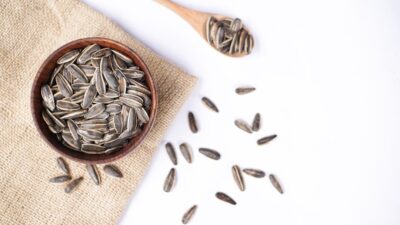
Pumpkin seeds (pepitas) are one of the more underrated diabetes-friendly foods in mainstream US grocery stores. The macronutrient profile is exceptional — 9 grams of plant protein per ounce, 2 grams of fiber, only 4 grams of carbohydrate. The mineral content is even more remarkable: 37% of the daily magnesium target, 21% of the daily zinc target, and 26% of the daily iron target per ounce. The polyunsaturated fat is mostly omega-6 with modest omega-3, and the seeds contain phytochemicals studied for modest glucose, prostate, and sleep benefits. For adults with type 2 diabetes who want to add seeds to their daily food rotation alongside or in place of nuts, pumpkin seeds offer one of the highest protein-and-mineral densities available.
Nutrition Profile
| Pumpkin seed form (serving) | Calories | Carbs (g) | Fiber (g) | Protein (g) | Fat (g) |
|---|---|---|---|---|---|
| Pepitas raw (1 oz, ~85 seeds) | 151 | 4 | 2 | 9 | 13 |
| Pepitas dry-roasted (1 oz) | 163 | 4 | 2 | 9 | 14 |
| Pepitas salted roasted (1 oz) | 163 | 4 | 2 | 9 | 14 |
| Whole in-shell roasted (1 oz) | 126 | 15 | 5 | 5 | 5 |
| Pumpkin seed butter (1 Tbsp) | 95 | 3 | 1 | 5 | 8 |
| Pumpkin seed oil (1 Tbsp) | 120 | 0 | 0 | 0 | 13 |
| Pumpkin seed flour (¼ cup) | 120 | 5 | 3 | 13 | 5 |
| Honey-roasted pepitas (1 oz) | 165 | 11 | 2 | 8 | 11 |
Glycemic Impact
Pumpkin seeds have essentially zero glycemic impact. The total carbohydrate is small (4 g per oz for pepitas), most of it bound to fiber and protein. CGM users see no measurable response. Pumpkin seeds added to mixed meals modestly slow the glucose response from accompanying carbohydrates through the protein and fat content. The high protein-to-carbohydrate ratio makes pepitas particularly useful as a glucose-stabilizing addition to fruit or carbohydrate snacks.
Magnesium Density
- 1-oz serving: 156 mg magnesium — 37% of daily target.
- Pumpkin seeds are among the top 5 food sources of magnesium.
- Magnesium deficiency has been linked to insulin resistance, glucose dysregulation, and elevated cardiovascular risk.
- Many US adults consume below-target magnesium (about 60% women, 70% men).
- A daily ounce of pepitas + dark leafy greens + a small piece of dark chocolate covers magnesium needs without supplements.
- Other high-magnesium foods: spinach (157 mg/cup cooked), almonds (76 mg/oz), dark chocolate (~70% cacao, 95 mg/oz).
Mineral Profile
| Mineral (1 oz pepitas) | Amount | % Daily Value |
|---|---|---|
| Magnesium | 156 mg | 37% |
| Iron | 4.2 mg | 23% |
| Phosphorus | 333 mg | 33% |
| Zinc | 2.2 mg | 20% |
| Copper | 0.4 mg | 44% |
| Manganese | 1.3 mg | 56% |
| Selenium | 2.7 mcg | 5% |
Pepitas vs Whole In-Shell Seeds
- Pepitas (hulled): green, oval, the most common US form; higher nutrition density per serving.
- Whole in-shell roasted: white shell with green seed inside; classic Halloween snack; lower nutrition per ounce because most of the weight is shell.
- In-shell provides more fiber (much indigestible) and slows consumption.
- For diabetes meal planning, pepitas are usually more useful — higher protein and mineral content per serving.
- In-shell works as a portion-controlled snack, similar to the pistachio principle.
Tryptophan Content and Sleep
- Pumpkin seeds have one of the highest tryptophan concentrations of any food.
- Tryptophan is the precursor to serotonin (mood) and melatonin (sleep).
- Eating pumpkin seeds 1 to 2 hours before bed may modestly support sleep onset.
- Sleep quality independently affects glucose control — adults with diabetes who sleep poorly have higher A1C.
- The effect is modest; not a treatment for insomnia.
- Combine with a small amount of carbohydrate (like a piece of fruit) for better tryptophan brain uptake.
Cooking and Preparation
- Raw pepitas: add to salads, yogurt, oatmeal.
- Dry-roasted: 350°F for 10 to 12 minutes; deepens flavor.
- Spiced/savory roasted: toss with olive oil, salt, paprika, cumin before roasting.
- Pepita brittle: low-carb version using stevia and a touch of butter.
- Pumpkin seed pesto: blend with basil, olive oil, garlic, parmesan as a low-carb pesto alternative.
- Mole sauce: traditional Mexican mole pipián uses pumpkin seeds as a thickener.
- Pumpkin seed crust: ground pepitas as breading for chicken or fish.
Pumpkin Seeds vs Other Seeds and Nuts
| Food (1 oz) | Carbs (g) | Fiber (g) | Protein (g) | Magnesium (mg) |
|---|---|---|---|---|
| Pumpkin seeds (pepitas) | 4 | 2 | 9 | 156 |
| Sunflower seeds | 6 | 3 | 6 | 91 |
| Hemp seeds | 3 | 1 | 10 | 196 |
| Chia seeds | 12 | 10 | 5 | 95 |
| Flaxseeds (ground) | 8 | 8 | 5 | 110 |
| Almonds | 6 | 4 | 6 | 76 |
| Cashews | 9 | 1 | 5 | 83 |
Pairing Strategies
- Sprinkled over salads with grilled chicken or fish.
- Toasted pepitas + plain Greek yogurt + berries — protein-rich breakfast.
- Roasted pepitas as a low-carb snack on their own.
- Add to oatmeal or chia pudding for crunch and protein.
- Pumpkin seed butter on celery or apple slices.
- Pumpkin seed crust on baked salmon or chicken.
- Pepitas in trail mix with almonds and dark chocolate chips (use unsweetened).
- Top soups and roasted vegetables with toasted pepitas.
Who Should Be Careful
- People with seed/nut allergies — relatively uncommon but possible.
- People with chronic kidney disease — high phosphorus (333 mg per oz); discuss with renal dietitian.
- People watching sodium — choose unsalted versions.
- People with diverticulitis — historically advised to avoid seeds, but evidence no longer supports this; most can eat seeds safely.
- People with gout — pumpkin seeds are moderate-purine.
Practical Patterns That Work
- Keep a jar of dry-roasted unsalted pepitas in the pantry as a default.
- Add 1 to 2 tablespoons to salads, yogurt, oatmeal, or roasted vegetables daily.
- Pre-portion 1-oz bags for snacking.
- Use as a low-carb crust for protein dishes.
- Try pumpkin seed butter as an alternative nut butter (lower allergen profile).
- Pair with fruit or whole-grain carbs for balanced snacks.
The Bottom Line
Pumpkin seeds (pepitas) are one of the most underrated diabetes-friendly foods in mainstream US grocery stores. A 1-ounce serving provides 9 grams of plant protein, 2 grams of fiber, and only 4 grams of carbohydrate — an exceptional macronutrient profile for a snack. The mineral content is even more remarkable: 37% of daily magnesium, 33% of daily phosphorus, 20% of daily zinc, 23% of daily iron, all per single ounce. Magnesium adequacy specifically matters for glucose metabolism, and many US adults consume below-target magnesium. The glycemic impact is essentially zero. Pepitas work well in salads, yogurt, oatmeal, as snacks, as low-carb crusts for protein dishes, and as a pesto base. Tryptophan content may modestly support sleep when eaten in the evening. Roasted, salted, sweet-flavored versions all exist — choose dry-roasted unsalted for daily use. For adults with type 2 diabetes looking to add nutrient-dense seeds to their food rotation, pumpkin seeds deserve a regular daily place. See our broader diabetes diet guide for the framework on seeds, nuts, and healthy fats.