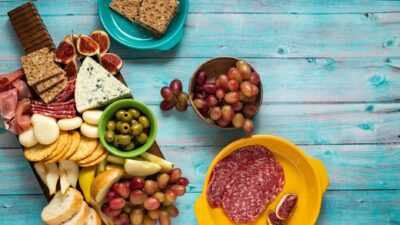
Roquefort is French AOP (Appellation d’Origine Protégée) blue cheese from Roquefort-sur-Soulzon village in southern France; made exclusively from raw sheep’s milk (Lacaune breed); aged 3+ months in Combalou caves of Cambalou Mountain. Distinctive characteristics – white-ivory color with blue-green veins from Penicillium roqueforti mold; creamy, crumbly texture; intense salty, tangy, pungent flavor; pale-white interior with blue marbling. Per 1 oz (28 g) – 105 calories, less than 1 g carb, 6 g protein, 9 g fat (5 g saturated), 190 mg calcium (15% DV), 510 mg sodium (22% DV – very high), 0 sugar, 0 fiber. Very low glycemic impact – Roquefort doesn’t raise blood sugar. Benefits – high protein for satiety; intense flavor encourages small portions; calcium and phosphorus; sheep milk advantages (smaller fat globules, A2 casein); penicillium may provide some benefits. Concerns – VERY HIGH sodium (510 mg per oz – among highest cheeses); high saturated fat; mold (safe for healthy individuals; pregnancy caution); expensive ($25-40/lb). Hypertensive patients particular caution. Storied French cheese tradition. Roquefort – one of world’s oldest known cheeses; legend – shepherd left lunch in cave, returned to find mold-veined cheese that became famous. AOP status protected since 1925; strict rules – made only from milk of Lacaune sheep, aged in Combalou caves with specific bacteria-fungi conditions; geographical exclusivity. Distinct from other blue cheeses – made specifically from sheep milk; aged in natural caves with specific limestone fissures (fleurines). Famously banned briefly in U.S. due to FDA raw milk concerns; ban later overturned. Other notable blue cheeses – Stilton (England, cow), Gorgonzola (Italy, cow), Cabrales (Spain, cow + sheep + goat), Danish Blue, Maytag (USA), Bleu d’Auvergne. Sheep milk Roquefort vs cow milk blues – more concentrated nutrients; more pungent; smaller portions satisfy. Roquefort has 510 mg sodium per oz – among highest of all cheeses (vs cheddar 180, mozzarella 175, paneer 18, feta 320). For comparison – 1 oz Roquefort = 22% DV sodium; 2 oz portion = 44% DV. For diabetes patients with hypertension – limit to small portions and infrequently; or skip; or choose lower-sodium blue cheese alternative.
Roquefort Nutrition Per Ounce
| Nutrient | Amount |
|---|---|
| Calories | 105 |
| Carbohydrate | Less than 1 g |
| Protein | 6 g |
| Fat (total) | 9 g |
| Saturated fat | 5 g |
| Calcium | 190 mg (15% DV) |
| Sodium | 510 mg (22% DV) — VERY HIGH |
Blue Cheese Sodium Comparison
| Blue Cheese | Sodium per oz (mg) |
|---|---|
| Roquefort | 510 (very high) |
| Stilton | 580 (highest) |
| Gorgonzola Piccante | 400 |
| Maytag Blue | 380 |
| Danish Blue | 500 |
| Cabrales | 400-500 |
| Reference – cheddar | 180-200 |
| Reference – mozzarella | 175 |
Diabetes-Friendly Uses
- Cheese plate with apple, pear, walnuts.
- Cheese course with very small honey drizzle and walnuts.
- Roquefort vinaigrette for salad.
- Salad topping (small crumble over greens, walnuts).
- Steak Roquefort sauce (small amount).
- Roquefort burger (small amount; whole-grain bun or lettuce wrap).
- Wine pairing (small portions of red wine or Sauternes).
- Pear-walnut-Roquefort appetizer.
- Endive-walnut-Roquefort salad.
- Roquefort spread (mixed with Greek yogurt or cream cheese).
- Crumbled in omelet (small amount).
Sodium Strategy for Diabetes Patients
- ½-1 oz portion size limit.
- Use as flavoring/accent, not main cheese.
- Avoid with other high-sodium foods in same meal.
- Make dressing with yogurt base to dilute.
- Choose lower-sodium blue alternatives (Maytag, Gorgonzola Dolce).
- Hypertensive patients – limit or avoid.
- Monitor daily sodium 1500-2300 mg target.
- Cardiovascular protection priority in diabetes.
Roquefort History
- One of world’s oldest cheeses (referenced in Roman times).
- Legend of shepherd who left lunch in cave.
- AOP protected since 1925 (one of first).
- Strictly defined – Lacaune sheep, Combalou caves.
- About 7 authorized producers.
- Briefly banned in U.S. (raw milk concerns).
- Symbol of French gastronomy.
- Cultural heritage protected.
The Bottom Line
Roquefort is French AOP blue cheese from Roquefort-sur-Soulzon village; made exclusively from raw sheep’s milk (Lacaune breed); aged 3+ months in Combalou caves. Distinctive characteristics – blue-green veins from Penicillium roqueforti mold; creamy, crumbly texture; intense salty, tangy, pungent flavor. Per 1 oz (28 g) – 105 calories, less than 1 g carb, 6 g protein, 9 g fat (5 g saturated), 190 mg calcium, 510 mg sodium (22% DV – VERY HIGH), 0 sugar, 0 fiber. Very low glycemic impact. Benefits – high protein for satiety; intense flavor encourages small portions; calcium; sheep milk advantages. Concerns – VERY HIGH sodium (among highest cheeses); high saturated fat; mold; expensive. One of world’s oldest known cheeses; AOP protected since 1925; strict rules. Other notable blue cheeses – Stilton (England, cow), Gorgonzola (Italy, cow), Cabrales (Spain), Danish Blue, Maytag (USA), Bleu d’Auvergne. Sheep milk Roquefort vs cow blues – more concentrated; more pungent. Diabetes-friendly uses with small portions due to intensity and sodium – cheese plate with apple, pear, walnuts; cheese course with honey and walnut (very small portions); Roquefort vinaigrette; salad topping (small crumble); steak Roquefort sauce; Roquefort burger; wine pairing; pear-walnut-Roquefort; endive salad; spread mixed with Greek yogurt. Sodium concerns major – Roquefort 510 mg per oz vs cheddar 180; for diabetes patients with hypertension (very common) limit small portions or skip; choose lower-sodium blue alternative; ½-1 oz portion size limit; use as flavoring/accent not main cheese; cardiovascular protection priority in diabetes. For adults with type 2 diabetes – Roquefort is excellent low-carb high-protein blue cheese; cultural French tradition worth exploring; small portions due to intensity and sodium; combine with apples, walnuts, vegetables for balanced eating; hypertensive patients especially limit or substitute lower-sodium alternatives; save for occasional cheese course enjoyment. See our broader diabetes diet guide for context.