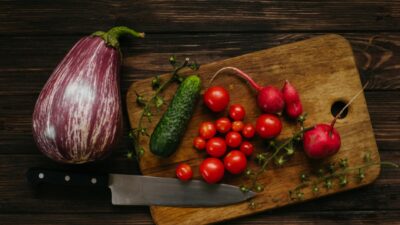
Vegetables fall into two big buckets for blood sugar: non-starchy vegetables, which contain very little carbohydrate and barely affect glucose, and starchy vegetables, which contain enough carbs to be counted like a grain. This A-to-Z list covers both, with carbs per serving and glycemic index, so you can build meals with confidence.
The Diabetes Plate Method
The American Diabetes Association recommends filling half of a 9-inch plate with non-starchy vegetables, a quarter with lean protein, and a quarter with carbohydrate (which can include starchy vegetables). For more, see our prediabetes diet guide.
Non-Starchy Vegetables (Mostly Free)
These vegetables typically have 3 to 7 grams of carbohydrate per cooked cup or 1.5 cups raw. They are low calorie, high fiber, and packed with vitamins and minerals.
| Vegetable | Serving | Carbs (g) | GI Category |
|---|---|---|---|
| Artichoke | 1 medium | 13 | Low |
| Arugula | 1 cup raw | 1 | Low |
| Asparagus | 1 cup cooked | 7 | Low |
| Bean sprouts | 1 cup raw | 6 | Low |
| Beets | 1 cup cooked | 13 | Medium |
| Bell pepper | 1 cup raw | 9 | Low |
| Bok choy | 1 cup cooked | 3 | Low |
| Broccoli | 1 cup cooked | 11 | Low |
| Brussels sprouts | 1 cup cooked | 11 | Low |
| Cabbage | 1 cup cooked | 8 | Low |
| Carrots | 1 cup cooked | 13 | Medium |
| Cauliflower | 1 cup cooked | 5 | Low |
| Celery | 1 cup raw | 3 | Low |
| Chard, Swiss | 1 cup cooked | 7 | Low |
| Collard greens | 1 cup cooked | 11 | Low |
| Cucumber | 1 cup raw | 4 | Low |
| Eggplant | 1 cup cooked | 9 | Low |
| Endive | 1 cup raw | 2 | Low |
| Fennel | 1 cup raw | 6 | Low |
| Garlic | 1 clove | 1 | Low |
| Green beans | 1 cup cooked | 10 | Low |
| Jicama | 1 cup raw | 11 | Low |
| Kale | 1 cup cooked | 7 | Low |
| Kohlrabi | 1 cup raw | 8 | Low |
| Leeks | 1/2 cup cooked | 8 | Low |
| Lettuce, romaine | 1 cup raw | 2 | Low |
| Mushrooms | 1 cup cooked | 8 | Low |
| Mustard greens | 1 cup cooked | 3 | Low |
| Okra | 1 cup cooked | 7 | Low |
| Onion | 1/2 cup raw | 5 | Low |
| Radicchio | 1 cup raw | 2 | Low |
| Radishes | 1 cup raw | 4 | Low |
| Snap peas | 1 cup cooked | 11 | Low |
| Snow peas | 1 cup cooked | 11 | Low |
| Spinach | 1 cup cooked | 7 | Low |
| Tomato | 1 medium | 5 | Low |
| Turnip | 1 cup cooked | 8 | Low |
| Watercress | 1 cup raw | 0 | Low |
| Zucchini | 1 cup cooked | 7 | Low |
Starchy Vegetables (Count as Carbs)
These contain enough carbohydrate that they should be portioned like a grain or other carbohydrate side.
| Vegetable | Serving | Carbs (g) | GI Category |
|---|---|---|---|
| Acorn squash | 1 cup cooked | 30 | Medium |
| Butternut squash | 1 cup cooked | 22 | Medium |
| Cassava | 1/2 cup cooked | 39 | Medium to High |
| Corn, sweet | 1 cup | 30 | Medium |
| Hubbard squash | 1 cup cooked | 22 | Medium |
| Parsnip | 1 cup cooked | 27 | Medium to High |
| Peas, green | 1 cup cooked | 21 | Low |
| Plantain | 1 cup cooked | 48 | Medium to High |
| Potato, baked | 1 medium | 37 | High |
| Pumpkin, cooked | 1 cup | 12 | High |
| Sweet potato | 1 medium baked | 27 | Medium |
| Taro | 1 cup cooked | 46 | Medium |
| Yam | 1 cup cooked | 37 | Medium |
| Yuca | 1/2 cup cooked | 39 | Medium to High |
Cruciferous Vegetables
The cruciferous family (Brassica) is rich in sulforaphane and other compounds linked to cardiovascular and metabolic health. Members include:
- Broccoli, broccoli rabe, broccolini
- Cauliflower
- Cabbage (green, red, savoy, Napa)
- Brussels sprouts
- Kale, collard greens, mustard greens
- Bok choy, choy sum
- Kohlrabi, turnips, rutabaga, radishes, daikon
- Arugula, watercress, horseradish
Leafy Greens
Leafy greens are extremely low in carbohydrate and exceptionally nutrient-dense. According to the CDC, only about 1 in 10 American adults meet the recommended daily vegetable intake. Leafy greens are an easy place to add volume.
- Spinach, baby spinach
- Kale (curly, lacinato, red Russian)
- Romaine, butter, iceberg, leaf lettuce
- Arugula, watercress, dandelion greens
- Swiss chard, beet greens, collards
- Bok choy, mizuna, tatsoi
- Endive, escarole, frisée, radicchio
Less Familiar Vegetables Worth Trying
- Daikon radish: crunchy, mild, great in slaws and stir-fries.
- Kohlrabi: tastes like a sweet broccoli stem; eat raw or roasted.
- Jicama: crisp Mexican root, low GI, good with lime and chili.
- Romanesco: fractal cousin of cauliflower; same carb count.
- Celeriac (celery root): cauliflower-like substitute for mashed potatoes.
- Sunchokes (Jerusalem artichokes): rich in inulin fiber.
Frozen, Canned, and Cooked Considerations
- Frozen vegetables retain most of their nutrition and are often cheaper than fresh.
- Plain canned vegetables can be high in sodium; rinsing cuts sodium by about 40 percent.
- Roasting at high heat caramelizes natural sugars but does not change carb content.
- Boiling can leach water-soluble vitamins; quick steaming preserves more nutrients.
- Adding healthy fat (olive oil, avocado) improves absorption of fat-soluble vitamins A, E, and K.
Quick Build-a-Plate Examples
- Sheet-pan dinner: chicken thighs + Brussels sprouts + bell peppers + olive oil
- Big salad: romaine + cucumber + tomato + bell pepper + grilled shrimp + vinaigrette
- Stir-fry: tofu + broccoli + snow peas + mushrooms + cauliflower rice
- Soup: chicken broth + spinach + zucchini + white beans + lemon
- Grain bowl: quinoa (controlled portion) + roasted carrots + kale + tahini dressing
For more recipe inspiration, see our diet and nutrition hub.
The Bottom Line
Vegetables are the easiest food group to add to a diabetes-friendly diet. Non-starchy vegetables can be eaten freely; starchy vegetables should be portioned like a grain. Use the lists above as a shopping companion, aim for at least half your plate in non-starchy vegetables at lunch and dinner, and rotate colors and types across the week to cover the broadest range of nutrients.