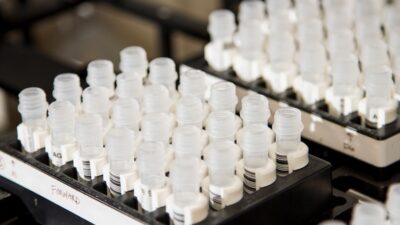
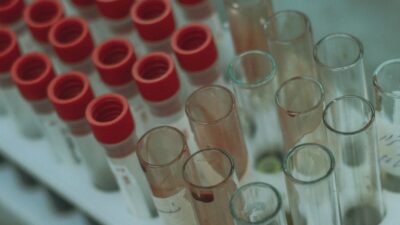
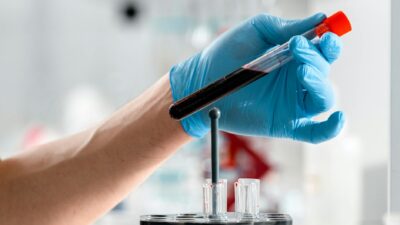
An A1C machine is any analyzer — clinic-based or home-use — that measures hemoglobin A1C from a small finger-stick blood sample and returns a result in 5-10 minutes. Leading devices include the Siemens DCA Vantage, Bio-Rad D-100, Quo-Test, Tosoh G11, and the consumer A1CNow+. Accuracy is generally within 0.3-0.5% of the central lab, which is sufficient for treatment adjustments but not for diagnosis per ADA guidance.
How A1C Machines Work
Most point-of-care A1C analyzers use boronate affinity or immunoassay methods to separate glycated from non-glycated hemoglobin. A finger-stick sample (5-10 microliters) is mixed with a buffer cartridge, inserted into the analyzer, and read in minutes. Laboratory instruments like the Bio-Rad D-100 use HPLC (high-performance liquid chromatography) — the gold standard — and run batches of venous samples.
The NGSP (National Glycohemoglobin Standardization Program) certifies analyzers whose results align within tight limits of the reference method used in the DCCT trial. Only NGSP-certified machines should be used for clinical decisions.
Leading Clinic A1C Machines
| Device | Technology | Time | NGSP Certified |
|---|---|---|---|
| Siemens DCA Vantage Plus | Immunoassay | 6 min | Yes |
| Bio-Rad D-100 | HPLC | 2 min/sample | Yes (reference grade) |
| Tosoh G11 | HPLC | 1.6 min | Yes |
| Quo-Test A1C | Boronate fluorescence | 4 min | Yes |
| Alere Afinion 2 | Boronate affinity | 3 min | Yes |
These devices are common in primary care offices, endocrinology clinics, and Federally Qualified Health Centers. They enable “test and treat” visits — you get your A1C during the appointment, and your clinician can adjust your plan before you leave.
Home A1C Machines
The best-known home A1C machine is the A1CNow+ (PTS Diagnostics), sold over-the-counter in 2-test kits for roughly 35-50 dollars. It uses immunoassay chemistry and returns results in 5 minutes. NGSP-certified versions exist for professional use; the consumer version is labeled for self-monitoring only.
Other options that have appeared and disappeared from the home market include the A1C At-Home kit from Home Access and mail-in fingertip kits (CoreMedica, LetsGetChecked) that ship to a central lab.
Home A1C accuracy
- Typical agreement with lab A1C: within 0.5% for 90%+ of users.
- Technique-sensitive: poor finger-stick, timing errors, or expired cartridges widen the gap.
- Store cartridges at room temperature; freezing or heat above 80 degrees F degrades reagents.
When to Use a Point-of-Care A1C Machine
- In-clinic screening: Rapid results allow diet, exercise, and medication counseling during the same visit.
- Medication titration: Post-visit A1C in 3 months confirms whether dose changes worked.
- Home progress tracking: Between lab visits, home A1C lets you verify that your lifestyle changes are moving the number.
- Rural or remote settings: POC A1C avoids the need to ship samples to a central lab.
For context on what A1C means, see our hub on A1C levels.
Limitations and Caveats
The ADA explicitly states that a point-of-care A1C result should not be used alone for diagnosis. Reasons include:
- Cartridge-to-cartridge variability of 0.2-0.4%.
- Interference from hemoglobin variants (HbS, HbC, HbE, HbF) in some assays.
- Operator technique matters more than with venous draws.
- Most POC devices lack traceability documentation required for diagnostic labs.
If a POC machine shows 6.5% or higher, confirm with a venous lab A1C and/or fasting plasma glucose before a formal diagnosis.
Cost and Reimbursement
| Type | Upfront cost | Per-test cost | Covered by insurance |
|---|---|---|---|
| Clinic analyzer (DCA Vantage) | 2,000-3,500 dollars | 8-12 dollars | Yes (CPT 83036) |
| HPLC analyzer (Bio-Rad D-100) | 10,000-15,000 dollars | 3-5 dollars | Yes |
| Home A1C (A1CNow+) | 35-50 dollars (2-test kit) | 18-25 dollars | Rarely; HSA eligible |
| Mail-in lab kit | 49-79 dollars | 49-79 dollars | Sometimes (HSA eligible) |
Getting a Reliable Result at Home
- Warm your hand under warm water for 30 seconds to improve blood flow.
- Wipe with alcohol, let fully dry.
- Use the side of the fingertip, not the pad.
- Fill the sample well to the indicator line — don’t squeeze excessively.
- Run within the time window specified by your kit (usually under 90 seconds).
- Log the result. Trends are more useful than any single reading.
Pair home A1C testing with a meter or CGM for a fuller picture. See our treatment hub for how to use these numbers to make changes.
The Bottom Line
A1C machines — from the 15,000-dollar Bio-Rad D-100 in a reference lab to the 40-dollar A1CNow+ kit on your kitchen counter — give you fast feedback on your 3-month glucose average. Clinic-grade NGSP-certified devices agree with lab A1C within 0.3-0.5%. Home machines are solid for trend tracking but not for diagnosis. Use POC A1C as a complement to, not replacement for, venous lab testing.