COVID-19 and diabetes have a two-way relationship. People with diabetes have higher COVID-19 hospitalization and mortality, and COVID-19 itself can trigger new-onset hyperglycemia and new diabetes diagnoses in previously unaffected people. The pancreatic beta cell expresses the ACE2 receptor that SARS-CoV-2 uses to enter cells, and inflammation, stress hormones, and corticosteroid treatment for severe COVID all contribute. Vaccination is strongly recommended, sick-day plans matter during acute illness, and clinicians should screen post-COVID patients for new diabetes when symptoms suggest it.
How Diabetes Affects COVID Outcomes
| Outcome | Diabetes vs No Diabetes |
|---|---|
| Hospitalization | ~2 to 3 times higher |
| ICU admission | ~2 to 3 times higher |
| Mortality | ~2 times higher |
| DKA during illness | Notably elevated in type 1 diabetes |
| Mechanical ventilation | Higher |
Risk varies by glycemic control, age, body mass index, kidney function, and cardiovascular disease. A1C above 9 percent at admission is a strong predictor of poor outcomes. Younger and well-controlled patients have outcomes closer to the general population.
Why Diabetes Worsens COVID
- Hyperglycemia impairs neutrophil chemotaxis and phagocytosis
- Impaired T-cell function reduces viral clearance
- Diabetes-associated obesity reduces lung mechanics
- Endothelial dysfunction increases thrombotic risk
- Cardiovascular and kidney disease comorbidities raise severity independently
- Chronic low-grade inflammation amplifies cytokine response
Can COVID Cause New Diabetes
Multiple lines of evidence suggest COVID-19 can precipitate new diabetes diagnoses.
Evidence Base
- The international CoviDIAB Project Registry tracks new-onset diabetes after COVID-19
- VA Million Veteran cohort: roughly 40 percent increased risk of new diabetes diagnosis in the year after COVID-19 vs uninfected controls
- Pediatric series show new type 1 diabetes diagnoses, sometimes with DKA, after acute COVID
- Severity of COVID correlates with size of the diabetes signal
Possible Mechanisms
- Direct beta-cell injury via ACE2 expression on islet cells
- Systemic inflammation and cytokine release impair insulin signaling
- Cortisol and catecholamine surges from acute illness raise glucose
- Corticosteroid treatment (dexamethasone) for severe disease causes drug-induced hyperglycemia
- Unmasking of pre-existing prediabetes
Distinguishing true new diabetes from stress hyperglycemia that resolves requires follow-up — A1C, fasting glucose, and sometimes an OGTT after recovery, with attention to autoantibodies if a young or lean patient presents.
Symptoms of New-Onset Diabetes After COVID
- Increased thirst and urination
- Weight loss
- Persistent fatigue (overlaps with post-COVID symptoms)
- Blurred vision
- Recurrent infections or slow-healing wounds
- DKA presentation in type 1-like cases — nausea, abdominal pain, deep breathing, fruity breath
Anyone with these symptoms after COVID — even if mild infection — should be evaluated with a fasting glucose and A1C.
Managing Diabetes During Acute COVID
Outpatient (Mild Illness)
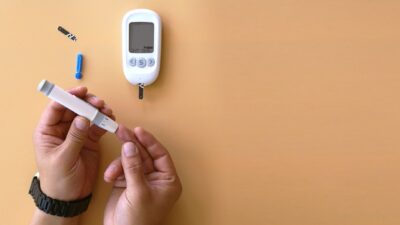
- Check glucose more often, typically every 2 to 4 hours if unwell
- Continue basal insulin even if appetite is reduced
- Drink fluids to stay hydrated
- Test for ketones in type 1 diabetes if glucose persists above 240 mg/dL or with nausea
- Consider pausing SGLT2 inhibitors during acute illness to reduce euglycemic DKA risk
- Contact the care team early if vomiting, persistent high glucose, or ketones develop
Hospitalized (Moderate to Severe Illness)
- Target glucose typically 140 to 180 mg/dL on insulin therapy
- IV insulin infusion in ICU when needed
- Steroid-induced hyperglycemia from dexamethasone often requires substantial insulin doses
- Monitor electrolytes, kidney function, ketones
- Anti-coagulation per protocol
Treatment Interactions to Watch
| COVID Therapy | Diabetes-Relevant Consideration |
|---|---|
| Dexamethasone | Predictably raises glucose; plan insulin adjustment |
| Remdesivir | Generally compatible; monitor liver and kidney function |
| Nirmatrelvir/ritonavir (Paxlovid) | Multiple drug interactions; review statins, certain SGLT2 inhibitors |
| Tocilizumab / baricitinib | May raise glucose; monitor infection risk |
| Monoclonal antibodies | No significant glucose interaction |
Vaccination
- Strongly recommended for all people with diabetes
- No diabetes-specific contraindication
- Brief rise in glucose for 24 to 48 hours post-vaccination is common
- Vaccination reduces severe disease and hospitalization
- Boosters per current CDC schedule
- Flu and pneumococcal vaccines remain important alongside COVID vaccination
Follow-Up After COVID
- Recheck A1C and fasting glucose 6 to 12 weeks after recovery if there was hyperglycemia
- Consider autoantibody testing (GAD, IA-2, ZnT8) in young or lean patients with new-onset diabetes
- OGTT if A1C is borderline
- Cardiovascular evaluation for persistent symptoms
- Long COVID assessment if symptoms persist beyond 12 weeks
The diagnostic thresholds are the same as standard — see our overview of A1C levels and the detection of prediabetes for the criteria.
Long-Term Implications
- People who had moderate to severe COVID should be considered higher-risk for future cardiovascular events
- Glycemic control matters more, not less, after the acute infection
- Persistent fatigue and cognitive symptoms may overlap with diabetes symptoms
- Some new diagnoses may revert to prediabetes range with weight loss and exercise; others persist
Related Reading
For more on COVID and diabetes specifically, see our companion guides on long COVID and diabetes and immunotherapy and diabetes. For the foundations, see prediabetes basics.
The Bottom Line
COVID-19 and diabetes interact in both directions. Diabetes raises the risk of severe COVID by 2 to 3 times, and COVID-19 itself can trigger new-onset hyperglycemia and new diabetes diagnoses through direct beta-cell injury, inflammation, stress hormones, and corticosteroid treatment. Sick-day rules — continuing basal insulin, checking glucose more often, watching for ketones in type 1 diabetes, and pausing SGLT2 inhibitors during severe illness — reduce DKA risk during acute infection. Vaccination is strongly recommended. People who had hyperglycemia during COVID should be re-screened after recovery, and clinicians should consider autoantibody testing in young or lean patients with new-onset diabetes after COVID.