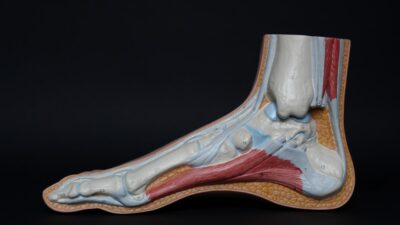
Ingrown toenails are a substantially more dangerous condition for adults with diabetes than for the general population. Three factors compound the risk: diabetic peripheral neuropathy means many adults don’t feel pain until infection develops; elevated blood glucose impairs immune function and wound healing; and peripheral artery disease (common in diabetes) reduces foot blood flow. What appears as a minor problem can progress to cellulitis, abscess, osteomyelitis, and in severe cases amputation. The American Podiatric Medical Association and American Diabetes Association both recommend that adults with diabetes have any ingrown toenail evaluated by a podiatrist rather than self-treating. Proper nail trimming technique (straight across, not too short) prevents most ingrown nails, and routine podiatric care every 6-8 weeks is appropriate for adults with neuropathy or vision issues that make home trimming difficult.
What Is an Ingrown Toenail?
- The nail edge grows into the surrounding skin rather than over it.
- Most commonly affects the big toe (hallux).
- Stages: stage 1 (mild redness, slight swelling), stage 2 (drainage, infection), stage 3 (chronic with granulation tissue).
- Symptoms: pain, redness, tenderness, swelling, sometimes drainage.
- In adults with peripheral neuropathy, pain may be absent until infection.
Diabetes-Specific Risks
| Factor | Effect |
|---|---|
| Peripheral neuropathy | Reduced pain sensation; delayed recognition |
| Hyperglycemia | Impaired immune function and wound healing |
| Peripheral artery disease | Reduced blood flow to feet; impaired healing |
| Retinopathy/vision loss | Difficulty seeing problems; harder nail care |
| Limited joint mobility | Difficulty reaching feet; obesity contribution |
| Skin fragility | Easier to break skin during nail care |
Common Causes
- Improper nail trimming: cutting too short, rounding corners, picking at nails.
- Tight footwear: shoes too narrow, high heels, pressure on toe.
- Toe trauma: stubbing, dropping objects, sports injuries.
- Genetic factors: some adults are predisposed to curved nail growth.
- Hyperhidrosis (sweaty feet): softens nails and surrounding skin.
- Fungal nail infection: thickens nails and changes shape.
Proper Toenail Trimming
- Trim straight across — do not round or curve corners.
- Leave nail edge extending slightly past skin (don’t cut too short).
- Use proper nail clippers (designed for toenails, not fingernails).
- File rough edges smooth with an emery board.
- Trim after bath or shower when nails are softer.
- Wash hands and clippers before trimming.
- For adults with significant neuropathy or vision issues: professional podiatric care every 6-8 weeks.
Treatment of Mild Ingrown Toenails
- For non-diabetic adults: warm soaks, dental floss under nail edge, supportive shoes — home care may resolve mild cases.
- For adults with diabetes: even mild cases warrant podiatrist evaluation due to infection risk.
- The American Diabetes Association recommends professional foot care rather than home treatment for any toe problems in diabetes.
- Self-treatment “bathroom surgery” (cutting the nail edge, picking) significantly increases infection risk.
Podiatric Treatment
- Conservative: nail elevation, packing under the nail edge, antibiotics if infected.
- Partial nail avulsion: removing the ingrown portion of the nail under local anesthesia.
- Chemical matrixectomy: phenol applied to nail matrix to prevent regrowth of problem section.
- Antibiotics: oral antibiotics for infected ingrown nails.
- Wound care: dressing changes, follow-up monitoring.
- Procedures can usually be done in office; recovery typically 1-2 weeks.
Signs of Infection
- Increasing redness extending beyond nail edge.
- Increased swelling.
- Pus or drainage.
- Warmth around the toe.
- Foul odor.
- Fever or chills.
- Red streaks extending up the foot (sign of spreading infection — emergency).
- Any of these in an adult with diabetes warrants immediate evaluation.
Prevention Strategies
- Daily visual foot inspection (mirror or partner for soles).
- Proper toenail trimming technique.
- Well-fitted shoes with adequate toe box space.
- Avoid high heels and narrow-toed dress shoes for routine wear.
- Keep feet dry and clean.
- Wear moisture-wicking socks.
- Treat fungal nail infections promptly.
- Maintain glucose control to support immune function.
- Annual comprehensive foot exam by podiatrist or primary care.
- Routine podiatric care every 6-8 weeks for high-risk adults.
Who Should Be Especially Careful
- Adults with peripheral neuropathy.
- Adults with peripheral artery disease.
- Adults with previous foot ulcers or amputations.
- Adults with vision loss from retinopathy.
- Adults with limited mobility making foot care difficult.
- Adults with poor glucose control.
- Adults with charcot foot or significant foot deformity.
The Bottom Line
Ingrown toenails are substantially more dangerous in adults with diabetes than in the general population. Three factors compound the risk: peripheral neuropathy delays pain recognition; hyperglycemia impairs immune function and wound healing; peripheral artery disease reduces foot blood flow. What appears as a minor problem can progress to cellulitis, abscess, osteomyelitis, and in severe cases amputation. The American Diabetes Association and American Podiatric Medical Association both recommend that adults with diabetes have any ingrown toenail evaluated by a podiatrist rather than self-treating. Proper toenail trimming technique — straight across, not too short, with rough edges filed — prevents most ingrown nails. For adults with peripheral neuropathy, vision loss, or limited mobility, routine podiatric nail care every 6-8 weeks is appropriate. Signs of infection (increasing redness, drainage, fever, red streaks up the foot) require immediate evaluation. Daily visual foot inspection catches problems before they progress. Maintaining glucose control supports immune function and wound healing. For adults with type 2 diabetes, foot care is among the most important preventive practices — small habits like proper nail trimming have outsized impact on long-term outcomes. See our broader diabetic foot ulcer staging guide for context on foot complications.