Organ transplant raises diabetes risk because the lifelong immunosuppressants that keep the new organ alive — tacrolimus, cyclosporine, corticosteroids, and mTOR inhibitors — all impair insulin secretion or sensitivity. New-onset diabetes after transplantation (NODAT) affects roughly 10 to 40 percent of solid-organ recipients within 5 years, with kidney and liver transplant recipients at highest risk. Pre-transplant screening, careful regimen selection, and early treatment of hyperglycemia all matter because NODAT shortens graft survival and increases cardiovascular death.
What Is NODAT
NODAT stands for new-onset diabetes after transplantation. Some guidelines prefer the term post-transplant diabetes mellitus (PTDM) to capture both new cases and pre-existing undiagnosed diabetes that becomes apparent after surgery. The diagnostic thresholds are identical to those used in the general population.
- A1C at or above 6.5 percent
- Fasting plasma glucose at or above 126 mg/dL
- 2-hour oral glucose tolerance test (OGTT) value at or above 200 mg/dL
- Random glucose at or above 200 mg/dL with classic symptoms
The OGTT is the most sensitive test in this population because A1C can be artificially lowered by anemia, blood transfusion, and shortened red cell survival, which are common after transplant.
How Often Does It Happen
| Transplant Type | NODAT Incidence at 5 Years |
|---|---|
| Kidney | 15 to 30 percent |
| Liver | 20 to 40 percent |
| Heart | 15 to 35 percent |
| Lung | 20 to 40 percent |
| Pancreas (recipient already has type 1) | Not applicable — separate category |
Most NODAT cases appear in the first 6 to 12 months after transplant, when immunosuppressant doses are highest. Some additional cases emerge later as cumulative drug exposure and weight gain take effect.
Why Immunosuppressants Drive Diabetes
Corticosteroids
- Reduce insulin sensitivity in muscle and fat
- Stimulate hepatic gluconeogenesis
- Promote visceral fat gain
- Dose-dependent effect — tapering can improve glucose
Tacrolimus and Cyclosporine (Calcineurin Inhibitors)
- Inhibit beta-cell insulin secretion
- Tacrolimus is more diabetogenic than cyclosporine
- Effect is partly reversible if drug levels are reduced
- Cannot be discontinued without risking rejection
mTOR Inhibitors (Sirolimus, Everolimus)
- Reduce beta-cell mass
- Worsen peripheral insulin resistance
- Sometimes used as a tacrolimus-sparing strategy, but with its own metabolic costs
Other Contributors
- Hepatitis C — historically a major NODAT risk factor; largely eliminated by direct-acting antiviral therapy
- CMV infection
- Weight gain after recovery from end-stage organ disease
- Reduced physical activity post-operatively
Who Is at Highest Risk
| Risk Factor | Effect on NODAT Risk |
|---|---|
| Age over 45 to 50 | Substantial increase |
| BMI over 30 | Substantial increase |
| Family history of type 2 diabetes | Increase |
| South Asian, African, or Hispanic ethnicity | Higher baseline risk |
| Prior gestational diabetes | Increase |
| Pre-transplant impaired glucose tolerance | Strongest single predictor |
| Tacrolimus plus high-dose steroid regimen | Strong increase |
| Polycystic kidney disease as transplant indication | Modest increase |
| Hepatitis C infection (untreated) | Historic risk factor |
Pre-Transplant Screening
- Fasting plasma glucose
- A1C
- 2-hour OGTT — recommended in candidates without known diabetes
- Body weight and BMI
- Family history of diabetes
- Review of medications likely to be used after transplant
Candidates flagged as high-risk may benefit from pre-transplant weight optimization and lifestyle intervention. Our overview of prediabetes detection explains the screening tests in more depth.
Symptoms to Watch For
- Increased thirst and urination
- Unintentional weight loss
- Fatigue
- Blurred vision
- Slow-healing wounds at the surgical site
- Recurrent yeast infections
Many NODAT cases are picked up on routine post-transplant blood work before symptoms appear, which is why scheduled monitoring is part of standard care.
Post-Transplant Monitoring
- Fasting glucose at every clinic visit for the first 3 months
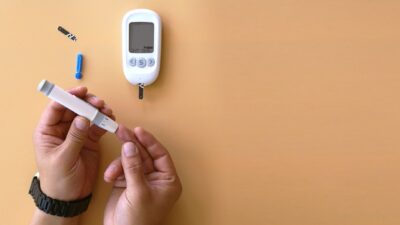
- Weekly fingerstick glucose during high-dose steroid pulses
- A1C at 3 months, 6 months, 12 months, then annually
- OGTT if A1C or fasting glucose is borderline
- Lipid panel, blood pressure, kidney function
Treatment Options
Lifestyle
- Weight management — especially after early post-op weight gain
- Mediterranean or DASH-style eating pattern
- Physical activity once cleared by the surgical team
- Smoking cessation
Medications
| Drug Class | Use in NODAT |
|---|---|
| Metformin | First-line if eGFR allows; watch for GI side effects |
| DPP-4 inhibitors | Well-tolerated; minimal interactions |
| GLP-1 receptor agonists | Emerging role; weight loss benefit |
| SGLT2 inhibitors | Use cautiously in stable kidney recipients; growing evidence base |
| Insulin | Standard in early post-op or when oral agents are inadequate |
| Sulfonylureas | Used but with hypoglycemia caution |
| Pioglitazone | Effective but watch fluid retention |
Immunosuppressant Adjustment
- Steroid tapering when graft is stable
- Switching tacrolimus to cyclosporine in selected cases
- Belatacept-based regimens may carry lower diabetes risk in kidney transplant
- Any changes are made by the transplant team, not by the diabetes clinician alone
Why Glycemic Control Matters After Transplant
- NODAT is associated with higher graft loss, particularly in kidney transplant
- Cardiovascular disease is the leading cause of death in solid-organ recipients — hyperglycemia compounds this risk
- Diabetes raises post-transplant infection risk
- Microvascular complications can still develop, though usually later than in classic type 2 diabetes
Sustained A1C control in the 7 percent range is a typical post-transplant target, individualized for age, frailty, and graft status. The same general treatment principles we cover under diabetes treatment apply, with attention to immunosuppressant interactions.
Special Situations
Pancreas and Kidney-Pancreas Transplant
For selected people with type 1 diabetes and kidney failure, a simultaneous pancreas-kidney transplant restores insulin production and renal function. The donor pancreas provides functional beta cells, but the recipient still requires immunosuppression and remains at risk for graft-related issues. See our companion piece on pancreas transplant for a deeper look at this option.
Islet Cell Transplant
Isolated islet cells from a donor pancreas are infused into the liver. This is an alternative for selected type 1 patients with severe hypoglycemia unawareness. It is less invasive than whole-organ transplant but still requires immunosuppression.
Liver Transplant
Many liver transplant candidates already have insulin resistance from cirrhosis. NODAT rates are particularly high in this population, especially when MASH (metabolic dysfunction-associated steatohepatitis) was the original disease.
Related Reading
For more on diabetes and complications, see our complications and related conditions overview and our prediabetes basics hub.
The Bottom Line
Organ transplant raises diabetes risk because lifelong immunosuppression with tacrolimus, corticosteroids, cyclosporine, or mTOR inhibitors impairs insulin secretion and sensitivity. NODAT affects 10 to 40 percent of recipients within 5 years and is associated with worse graft survival and higher cardiovascular death. Pre-transplant screening with an OGTT, careful regimen selection, scheduled post-operative monitoring, and timely treatment with metformin, DPP-4 inhibitors, GLP-1 receptor agonists, or insulin all reduce the burden. Patients who notice increased thirst, unexplained weight loss, or recurrent infections after transplant should talk to their transplant team promptly.