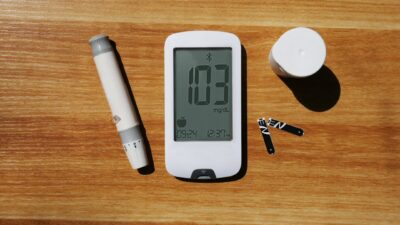
Adults with diabetes lose teeth at approximately twice the rate of non-diabetic peers — averaging 1-2 more tooth losses per decade. The cause is overwhelmingly periodontitis (severe gum disease destroying bone supporting teeth), not tooth decay. The mechanisms involve hyperglycemia favoring gum-disease bacteria, impaired immune function and wound healing, chronic inflammation amplifying periodontal destruction, and reduced collagen synthesis weakening periodontal ligaments. The clinical importance extends beyond appearance — tooth loss substantially affects nutrition. Adults with fewer teeth eat fewer fruits, vegetables, lean proteins, and whole grains because these require chewing; they shift toward refined carbohydrates and soft processed foods, worsening glycemic control. The relationship is bidirectional: poor diabetes control accelerates tooth loss, and tooth loss worsens diabetes control. Prevention through dental care every 3-6 months and treatment of periodontitis is essential.
The Scope of the Problem
| Population | Average teeth retained at age 65 |
|---|---|
| Non-diabetic US adults | ~22 of 32 |
| Adults with diabetes | ~17-18 of 32 |
| Adults with poor glucose control | ~14-15 of 32 |
| Adults with diabetes + smoking | ~12-13 of 32 |
| Edentulous (completely toothless) in diabetes | ~25-30% by age 65 |
The Nutrition Connection
- Adults with significant tooth loss eat fewer fruits and vegetables.
- Whole grains, nuts, lean meats — all require chewing.
- Compensatory diet often higher in refined carbs and soft foods.
- A1C is 0.3-0.5 percentage points higher in adults with significant tooth loss.
- The cycle: tooth loss → worse diet → worse diabetes → more tooth loss.
- Breaking the cycle requires dental restoration + nutrition counseling.
Restoration Options
- Dental implants: titanium screw fused to jawbone + crown; gold standard for single missing teeth.
- Fixed bridges: replace 1-3 teeth; anchored on adjacent teeth.
- Removable partial dentures: replace multiple teeth; clip onto remaining teeth.
- Complete dentures: replace all teeth in upper or lower jaw.
- Implant-supported dentures: dentures anchored on 4-6 implants; stable.
- All-on-4: full arch replacement on 4 implants.
Implant Considerations in Diabetes
- Success rates with well-controlled diabetes (A1C below 7-8%): ~95% (similar to non-diabetic).
- Poor glucose control (A1C above 8-9%): substantially higher failure rates.
- Optimize A1C before surgery.
- Antibiotic prophylaxis sometimes recommended.
- Ongoing 3-month maintenance for implant longevity.
- Cost: $3,000-6,000 per implant including crown.
- Generally not covered by Medicare; varies by private insurance.
Denture Considerations
- Properly fitted dentures matter — ill-fitting cause sores that heal poorly in diabetes.
- Daily cleaning prevents fungal infection (oral thrush more common in diabetes).
- Soft tissue underneath needs daily inspection.
- Nutrition counseling helps adults adapt to denture eating.
- Removable partial dentures + natural teeth require careful hygiene.
- Refits needed periodically as bone resorbs.
- Cost: $1,000-3,000 for partial; $1,500-5,000 for complete.
Prevention Strategies
- Aggressive treatment of gingivitis to prevent progression.
- Periodontal treatment for any signs of periodontitis.
- Dental visits every 3-6 months.
- Twice-daily brushing, daily flossing.
- Glucose control supports oral health.
- Smoking cessation — major risk factor.
- Address bruxism (teeth grinding) if present.
- Address dry mouth if present (common in diabetes).
The Bottom Line
Adults with diabetes lose teeth at approximately twice the rate of non-diabetic peers — averaging 1-2 more tooth losses per decade. The cause is overwhelmingly periodontitis (severe gum disease destroying bone supporting teeth) rather than tooth decay. The mechanisms involve hyperglycemia favoring gum-disease bacteria, impaired immune function and wound healing, and chronic inflammation. The clinical importance extends beyond appearance — tooth loss substantially affects nutrition. Adults with fewer teeth eat fewer fruits, vegetables, and lean proteins, shifting toward refined carbohydrates that worsen glycemic control. A1C is typically 0.3-0.5 percentage points higher in adults with significant tooth loss. Restoration options include dental implants (gold standard with success rates ~95% in well-controlled diabetes), fixed bridges, partial dentures, complete dentures, and implant-supported dentures. Implant success depends substantially on glucose control — A1C above 8-9% increases failure rates substantially. Prevention through periodontitis treatment, dental care every 3-6 months, glucose control, and smoking cessation matters substantially. For adults with type 2 diabetes managing long-term health, dental care is among the most undervalued elements of comprehensive diabetes management. See our broader gum disease and diabetes guide for context.