Yes, there is a clear link between trigger finger and diabetes. People with diabetes are more likely to develop trigger finger, a condition in which a finger or thumb catches, pops or gets stuck in a bent position. It usually responds to rest, splinting, a steroid shot or a minor surgery. If you have diabetes, a steroid shot can raise your blood sugar for a day or two, so plan to check more often.
This guide explains what trigger finger is, why diabetes matters, the treatment options, and how to manage your glucose around an injection.
What Is Trigger Finger?
Trigger finger, also called stenosing tenosynovitis, affects the tendons that bend your fingers. Each tendon slides through a tunnel in the palm and finger. According to MedlinePlus, when that tunnel swells and narrows, or the tendon develops a bump, the tendon can’t glide smoothly. It can catch as you straighten the finger, then release with a snap, like a trigger being pulled and let go.
It can affect any finger, including the thumb.
How Diabetes Affects Your Risk
Diabetes is a well-recognized risk factor for trigger finger. MedlinePlus lists these factors as raising your risk:
- Having diabetes, rheumatoid arthritis or gout
- Being between 50 and 70 years old
- Being female
- Being pregnant
- Doing work or hobbies with repeated, forceful gripping
The exact reason diabetes raises risk isn’t fully understood. Trigger finger is one of several hand and joint problems that are more common with diabetes, alongside limited joint mobility in the small joints of the hand, Dupuytren’s contracture and frozen shoulder. You can read about other conditions linked to high blood sugar in our complications and related conditions hub.
Symptoms of Trigger Finger
Symptoms often start gradually and may come and go. Common signs include:
- A stiff finger, or a finger that locks in a bent position
- A painful snapping or popping when you bend and straighten the finger
- Symptoms that are worse in the morning
- A tender bump on the palm side at the base of the finger
Some people need to use the other hand to straighten a locked finger. Over time, catching can make it harder to grip, type, button clothes or hold tools.
Trigger Finger vs Other Diabetes Hand Problems
| Condition | What You Notice | Key Difference |
|---|---|---|
| Trigger finger | Catching, popping or locking of a finger, often with a tender bump at its base | The finger usually moves, but snags along the way |
| Dupuytren’s contracture | One or more fingers gradually drawn toward the palm | Gradual bending without the typical catch and release |
| Limited joint mobility | Stiffness in the small joints of the hands | Stiffness across several joints rather than catching |
| Nerve problems such as neuropathy | Numbness, tingling or burning in the hands | Mainly sensory symptoms rather than mechanical catching |
Because these conditions can overlap, a clinician should examine your hand to confirm the cause.
Treatment Options
Treatment depends on how severe and long-lasting your symptoms are. Options usually move in steps.
| Treatment | What It Involves | Diabetes Notes |
|---|---|---|
| Rest and splinting | Resting the tendon, wearing a splint or buddy taping; heat, ice and stretching may help | No effect on blood sugar |
| Corticosteroid injection | A cortisone shot into the tendon tunnel; a second shot may be tried if the first doesn’t work | Can raise blood sugar briefly and may be less likely to work with higher A1C |
| Surgery (trigger finger release) | Releasing the tight tunnel, usually under local anesthesia or a nerve block | Watch closely for infection and keep glucose in your target range while healing |
MedlinePlus notes that surgery may be needed if your finger is locked in a bent position or doesn’t improve with other treatment.
Steroid Shots and Blood Sugar
Corticosteroids can raise blood sugar, and a shot in the hand is no exception. Research on people with diabetes who received hand and wrist injections gives a sense of what to expect:
- In a 2014 study, fasting blood sugar rose significantly only on the first and second days after the injection. Type 1 diabetes and insulin use each predicted a rise.
- An earlier study found average glucose increased slightly after injection, though most people had at least one isolated higher reading.
Managing Glucose After a Shot
- Tell the person giving the injection that you have diabetes and which medicines you take.
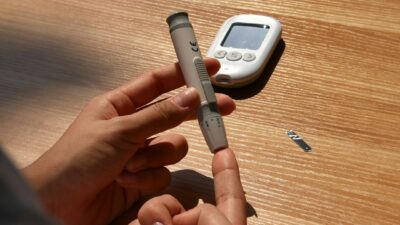
- Check your blood sugar more often for a few days afterward, or watch your CGM trends closely.
- Ask your diabetes care team ahead of time how to respond to high readings, especially if you use insulin.
- If you have type 1 diabetes and your glucose stays high, follow your plan for checking ketones.
Long-term or frequent steroid use carries more risk than a single shot. Our page on steroid-induced diabetes explains how steroids affect blood sugar more broadly.
Do Steroid Shots Work as Well With Diabetes?
They may be less effective. In a 2022 hospital study of people treated first with a steroid injection, those with diabetes and an A1C above 6.5 percent (48 mmol/mol) failed injection therapy more often than other patients. Having symptoms for more than about two and a half months and having another condition in the same hand were also linked to a higher failure rate.
This was a single-center review, so it can’t predict how any one person will respond. Still, it is a reason to see a clinician early and to keep working on glucose control. Our guide to A1C levels explains what your number means.
Recovery After Surgery
According to MedlinePlus, you can usually start bending and straightening your finger right after trigger finger release. The bandage typically stays on for about 48 hours, and stitches are removed after about two weeks. Follow your surgeon’s specific instructions.
Contact your surgeon right away if you notice signs of infection, such as redness, swelling or warmth, yellow or green drainage from the incision, increasing hand pain or fever. Infections can be more serious with diabetes, so don’t wait. If trigger finger comes back after surgery, let your surgeon know.
When to See a Doctor
Make an appointment if a finger catches, pops painfully or locks, or if stiffness is making daily tasks harder. Seek prompt care for a finger that is red, hot and swollen, especially with fever, since that may signal infection rather than trigger finger.
The Bottom Line
Trigger finger is more common in people with diabetes. It usually improves with rest, splinting, a steroid injection or a short outpatient surgery. If you have diabetes, expect that a steroid shot may raise your blood sugar for a day or two, plan extra checks, and know that injections may be less effective when A1C is high. Talk with your clinician early, and keep working with your care team on glucose control.