The best glucose monitor for non diabetics in 2024 and 2025 is usually an over-the-counter continuous glucose monitor such as Stelo or Lingo, with Libre Rio entering the market as a third option. Choosing the best glucose monitor for non diabetics depends on whether your goal is behavioral insight, prediabetes screening, or spot-checking readings.
Why Non-Diabetics Consider Glucose Monitoring
Interest in glucose monitoring outside of diabetes has grown alongside awareness of metabolic health. Common motivations include:
- Curiosity about how specific meals affect blood glucose
- Family history of type 2 diabetes and a desire for early insight
- A recent diagnosis of prediabetes or borderline A1C
- Interest in metabolic health as part of fitness or longevity goals
- Concern about reactive hypoglycemia or post-meal energy crashes
Evidence that non-diabetic CGM wear changes long-term health outcomes is still emerging. The best-studied benefit is behavior change during short wear periods, such as food choice adjustments after seeing personal spike patterns.
Top Over-the-Counter CGMs
Three CGMs are positioned for non-diabetics, all FDA-cleared and sold without a prescription to adults 18 and older who are not on insulin.
| Monitor | Wear Time | Monthly Cost | App Focus | Key Limitation |
|---|---|---|---|---|
| Dexcom Stelo | 15 days | About 99 dollars subscription | Glucose spike alerts, weekly reports | No urgent low alarm |
| Abbott Lingo | 14 days | About 89 dollars subscription | Lingo Count score, coaching content | Subscription required |
| Abbott Libre Rio | 14 days | Pricing TBA | LibreLink with Rio features | Newer to market |
| Oura Ring metabolic integrations | N/A (partners with CGM) | Varies | Activity and sleep context | Does not measure glucose alone |
Dexcom Stelo in Depth
Stelo was the first FDA-cleared OTC CGM, approved in March 2024. The sensor wears for 15 days, displays glucose in the Stelo app every 15 minutes, and provides weekly ambulatory glucose profile summaries. Stelo focuses on behavioral framing, identifying meals and habits associated with spikes above 140 or 180 mg per dL. It lacks low glucose alarms below 70 mg per dL, which suits a population not at hypoglycemia risk.
Abbott Lingo in Depth
Lingo markets to wellness-focused adults through a Lingo Count score, a daily glucose-variability metric meant to encourage steadier glucose patterns. The 14-day sensor streams to the Lingo app. Abbott emphasizes educational content, coaching prompts, and habit-building over raw data presentation. Pricing includes a monthly or multi-month subscription that can be paused online.
Abbott Libre Rio
Libre Rio is Abbott’s second OTC product in the US market, targeted at adults with type 2 diabetes not using insulin as well as the metabolic-curious population. It leverages the LibreLink app platform and the same sensor hardware as Libre 3. Availability and pricing are rolling out through 2024 and 2025.
Prescription CGMs Versus OTC for Non-Diabetics
Prescription CGMs such as Dexcom G7 and Freestyle Libre 3 offer slightly higher accuracy, finer data granularity, full alarm capability, and insurance coverage for eligible patients. Non-diabetics without coverage pathways generally find OTC CGMs more accessible and cost-effective for short-term wear. If you have been told you have prediabetes, ask whether a prescription CGM falls under your plan’s preventive or treatment benefits.
Fingerstick Meters as a Budget Option
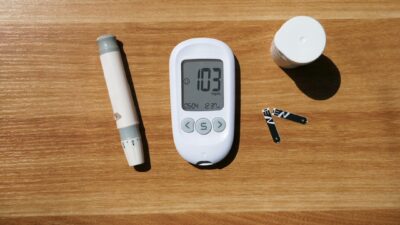
A basic glucose meter such as Contour Next One or Freestyle Lite paired with an inexpensive lancing device costs about 20 to 40 dollars for the starter kit, with strips around 30 to 70 cents each. Fingerstick testing is fine for occasional checks, confirming a CGM reading, or screening fasting glucose. It misses the postprandial curve, overnight patterns, and glycemic variability information that make CGM uniquely useful for non-diabetics interested in metabolic patterns.
Realistic Benefits and Limitations
Short-term CGM wear in non-diabetics typically reveals:
- Foods that trigger larger-than-expected spikes, often refined-grain breakfasts, sweetened beverages, and certain ultra-processed snacks
- The effect of a short walk after meals on peak glucose
- Sleep quality influence on fasting glucose the next morning
- Response variation by time of day, with evening meals often producing larger spikes than identical midday meals
Limitations to keep in mind include inter-individual variation that makes personal data poorly generalizable, occasional sensor artifacts that look like spikes, and the risk of anxious over-interpretation of normal postprandial rises. Glucose briefly reaching 140 to 160 mg per dL after a large carbohydrate meal is biologically normal, not a danger signal.
How to Get the Most From a Short Wear
A structured two-week CGM trial tends to be more informative than open-ended wear. Consider this approach:
- Week 1: eat normally, log every meal, and note context like sleep and exercise.
- Identify three or four spike patterns you want to test.
- Week 2: run small experiments such as switching breakfast foods, adding a 10-minute walk after dinner, or changing meal order.
- Compare weekly ambulatory glucose profile reports.
- Discuss patterns with a clinician, especially if fasting glucose stays above 100 mg per dL. Reviewing the relationship with A1C levels helps put CGM data in context.
When a Glucose Monitor Is Not the Right Tool
If you are already at a healthy weight, exercise regularly, and have a recent normal A1C, continuous glucose monitoring may offer little actionable information. Other metabolic markers such as fasting insulin, lipid panel, liver enzymes, and blood pressure often yield more useful insights. Monitoring also does not directly address dietary patterns, sleep, or stress, which ultimately drive metabolic health more than any single meter.
The Bottom Line
For non-diabetics seeking behavioral insight, Stelo and Lingo are the leading over-the-counter CGMs, with Libre Rio joining in 2024 and 2025. Fingerstick meters remain a low-cost alternative for spot checks. The FDA announcement on the first OTC CGM outlines the intended population. Evidence for long-term outcomes in healthy adults is still developing, so treat CGM wear as a short-term learning tool rather than a permanent fixture. Discuss goals with your clinician before investing in monitoring hardware.
This article is for educational purposes only and does not constitute medical advice. Always consult your healthcare provider for diagnosis and treatment decisions.