The best time for an HbA1c test is simply whenever it fits your schedule. Unlike fasting blood sugar or an oral glucose tolerance test, HbA1c does not depend on the time of day, what you ate, or how recently you exercised. The test reflects your average blood glucose over the past 2-3 months, so a single meal, coffee, or workout won’t move the number.
Why Time of Day Doesn’t Affect HbA1c
HbA1c (also written A1c or glycated hemoglobin) measures the percentage of hemoglobin proteins in your red blood cells that have glucose attached. Red blood cells live about 120 days, so the result is a rolling average of the last 2-3 months of blood sugar exposure.
Because the test is an average, short-term variations — a big breakfast, a morning cup of coffee, a brisk walk — have essentially no impact. The NIDDK notes that HbA1c can be drawn at any time of day, with or without fasting.
What Actually Affects HbA1c Results
While time of day doesn’t matter, several medical factors can skew HbA1c:
| Factor | Effect on HbA1c | What to Do |
|---|---|---|
| Iron-deficiency anemia | Falsely elevated | Treat anemia first, retest |
| Hemolytic anemia or blood loss | Falsely low | Use fasting glucose instead |
| Recent blood transfusion | Distorted | Wait 2-3 months to retest |
| Pregnancy | Falsely low (2nd/3rd trimester) | Use OGTT for diagnosis |
| Hemoglobin variants | Varies by lab method | Request a variant-tolerant assay |
| Chronic kidney disease | Can lower HbA1c | Use fructosamine or CGM |
If any of these apply, tell your doctor so they can choose a different test or interpret HbA1c with appropriate caution.
How Often to Test HbA1c
Testing frequency matters more than time of day. According to the American Diabetes Association:
- Every 3 months: If you have diabetes and your treatment has changed or you are not at your A1C goal.
- Every 6 months: If your diabetes is stable and you are meeting your target.
- Every 1-3 years: For prediabetes or general screening in adults over 35 with risk factors.
- Annually: Common as part of a routine physical, especially if you have a family history of diabetes, obesity, or high blood pressure.
Because HbA1c reflects the prior 2-3 months, testing more often than every 3 months provides limited new information.
How to Prepare for an HbA1c Test
Preparation is straightforward:
- Eat and drink normally. No fasting needed.
- Take your medications. Continue all prescribed drugs unless your doctor says otherwise.
- Hydrate. Drinking water helps the phlebotomist find a vein.
- Disclose medical history. Anemia, hemoglobin variants, recent transfusion, kidney disease, or pregnancy all matter.
- Confirm with your lab. If a fasting glucose or lipid panel is ordered at the same visit, those tests do require fasting.
Pairing HbA1c With Home Monitoring
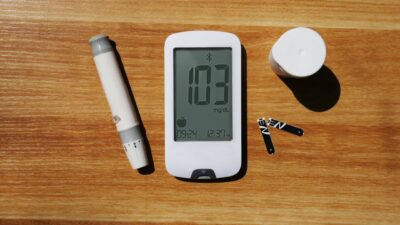
HbA1c gives you the long-term picture; a home glucose meter or continuous glucose monitor (CGM) shows real-time variation. Together they are more informative than either alone.
For example, two people with the same HbA1c of 6.2% can have very different glucose patterns: one with steady mid-range readings, and one with large swings between highs and lows. A meter or CGM reveals that variability, while HbA1c summarizes the average.
If your HbA1c comes back in the prediabetes range of 5.7-6.4%, the good news is that prediabetes is reversible. Consistent dietary changes, physical activity, and modest weight loss can bring HbA1c back into the normal range within 3-6 months.
Understanding Your Results
Here is how HbA1c values are interpreted for adults who are not pregnant:
- Below 5.7%: Normal
- 5.7% to 6.4%: Prediabetes
- 6.5% or higher: Diabetes (typically confirmed with a repeat test)
For a detailed breakdown of what each level means and next steps, see our A1C levels guide. If your number comes back high, discuss an action plan with your doctor — lifestyle changes, monitoring frequency, and in some cases medications like metformin can help.
The Bottom Line
The best time for an HbA1c test is whichever time works for you. Morning, afternoon, or evening all produce equally accurate results because HbA1c reflects a 2-3 month average, not a momentary value. What matters more is testing at the right frequency — every 3-6 months for known diabetes, every 1-3 years for screening — and avoiding unusual circumstances like recent transfusion, pregnancy, or acute illness that can distort the reading. Schedule when convenient, stay hydrated, and review the result with your doctor.