Dexcom G5 was a continuous glucose monitoring system cleared by the US FDA in 2015 and formally discontinued by Dexcom in 2021. It used an enzyme-electrode sensor inserted under the skin, a reusable Bluetooth transmitter, and a receiver or compatible smartphone to display glucose readings every five minutes.
What Dexcom G5 Was
The G5 Mobile CGM System was the first Dexcom device approved by the FDA for non-adjunctive use, meaning patients could make insulin dosing decisions directly from its readings rather than confirming with a fingerstick. This regulatory milestone expanded CGM adoption among people using intensive insulin therapy. It replaced the earlier G4 Platinum and was eventually succeeded by the G6 and G7 platforms.
How the System Worked
G5 had three main components:
- Sensor: A disposable, hair-thin electrochemical sensor inserted into interstitial tissue, typically on the abdomen, and worn for up to 7 days.
- Transmitter: A reusable device that snapped onto the sensor housing, transmitting glucose values over Bluetooth Low Energy for roughly 3 months before battery replacement.
- Display: A dedicated receiver or a paired iOS/Android app that displayed current value, trend arrow, and historical graph.
The sensor contained immobilized glucose oxidase. Glucose in interstitial fluid reacted with the enzyme to produce hydrogen peroxide, which generated a small current proportional to glucose concentration. An algorithm converted raw current into a calibrated mg/dL value.
Calibration and Accuracy
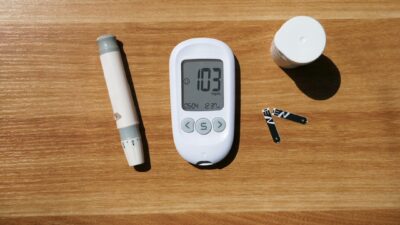
Unlike modern factory-calibrated CGMs, G5 required at least two fingerstick calibrations per day using a compatible blood glucose meter. The pivotal US accuracy study reported a mean absolute relative difference (MARD) near 9% versus a YSI laboratory reference, with acceptable performance across the hypoglycemic, euglycemic, and hyperglycemic ranges.
| Specification | Dexcom G5 | Dexcom G6 (successor) |
|---|---|---|
| Sensor wear | 7 days | 10 days |
| Calibration | Twice daily fingerstick | None required (factory) |
| Acetaminophen interference | Yes | Algorithm-corrected |
| Approximate MARD | ~9% | ~9% |
| Non-adjunctive claim | Yes (first) | Yes |
| Current status | Discontinued | Supported (being replaced by G7) |
Who Used G5
G5 was indicated for adults and children aged 2 and older with diabetes. Typical users included people on multiple daily insulin injections or insulin pump therapy who needed real-time trend data, hypoglycemia alerts, and share features for family or school personnel. Some prediabetes research studies also used G5 off-label to characterize glucose patterns in people without diabetes.
Why G5 Was Discontinued
Dexcom retired G5 in favor of G6 for several reasons:
- G6 eliminated fingerstick calibration, lowering day-to-day burden.
- G6 extended wear to 10 days, reducing supply costs.
- G6 introduced a simpler auto-applicator and slimmer transmitter.
- Improved algorithm handled acetaminophen interference that affected G5 readings.
The G7 launched in 2023 further reduced sensor size and shortened warm-up time. Current Dexcom pipeline and commercial focus is on G7 and the over-the-counter Stelo for non-diabetes use.
What to Do If You Still Have a G5 Prescription
Patients with remaining prescriptions should contact their clinician and insurance carrier about transitioning to a supported device. For most US users this means G6, G7, or FreeStyle Libre 2/3. Medicare criteria for CGM coverage have expanded, and many people on diabetes treatment plans qualify who did not previously.
Historical Accuracy Data
A 2018 head-to-head analysis by Shah and colleagues compared G5 with a YSI reference analyzer in 51 adults with type 1 diabetes. Overall MARD was 9.0%. Hypoglycemia detection sensitivity (70 mg/dL threshold) reached 85%, with a mean alert lead time of 23 minutes – clinically meaningful for safety. Independent review by the FDA supported the non-adjunctive claim.
Common User Issues With G5
- Acetaminophen interference: Taking Tylenol could falsely raise readings, which the G5 algorithm did not correct. Many patients learned to confirm with a fingerstick after over-the-counter pain medication.
- Sensor bleeding: Occasional capillary puncture during insertion could cause erratic readings for the first several hours.
- Compression lows: Lying on the sensor while sleeping sometimes produced falsely low values.
- Transmitter battery: The 90-day battery required timely reordering, and insurance refill windows sometimes did not align.
Why Some Users Resisted Switching
Despite the clear advantages of G6 and G7, a subset of users preferred G5 because their insurance covered it with lower out-of-pocket cost, because they were comfortable with the calibration routine, or because they had well-established pump or app integrations that had not yet migrated to newer platforms. As supplies ran out, these users were forced to transition. Clinicians working with patients through a structured treatment plan should check CGM compatibility with current pumps and automated insulin delivery systems before switching.
The Bottom Line
Dexcom G5 was an influential CGM that helped legitimize real-time interstitial glucose monitoring for insulin-treated patients, but it is no longer sold or supported. Anyone still relying on leftover supplies should plan a transition with their diabetes care team to a current device such as Dexcom G7 or FreeStyle Libre 3. Accuracy, cost, and convenience have all improved materially since G5’s launch.