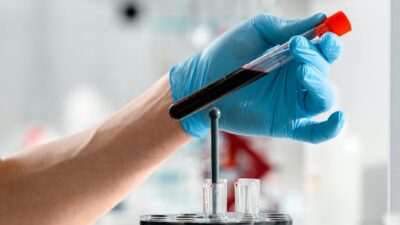
Low testosterone affects 30-50% of men with type 2 diabetes — much higher than general adult men (20%). Symptoms overlap with diabetes (fatigue, low libido, depression, weight gain) making testing important to distinguish. Causes of low T in diabetes: obesity (adipose tissue converts testosterone to estrogen), insulin resistance, inflammation, sleep apnea, opioid use, medications. Effects of low T: low energy, low libido, erectile dysfunction, muscle loss, increased body fat, depression, possibly worsened glucose control. Endocrine Society recommends screening men with type 2 diabetes who have symptoms. Testing methods: total testosterone (most common; normal 264-916 ng/dL; best drawn 7-10 AM when testosterone peaks; confirm low T with 2-3 morning measurements), free testosterone (biologically active form; normal 9-30 pg/mL; useful when SHBG abnormal), SHBG (high SHBG can falsely lower bioavailable testosterone). Treatment options for confirmed low T: topical gels (Androgel, Testim, Fortesta — daily application), patches (Androderm), intramuscular injections (cheapest option, every 2-3 weeks), pellets (Testopel — every 3-6 months), nasal gel (Natesto), oral (Jatenzo — newer). Treatment considerations: regular blood monitoring, prostate exam, cardiovascular monitoring, fertility impact (TRT suppresses sperm production). Recommend addressing modifiable factors first: weight loss (most effective — often raises testosterone significantly), sleep apnea treatment, depression treatment, opioid reduction. TRT may improve quality of life and modestly help diabetes management when modifiable factors addressed but T remains low.
Testosterone Reference Ranges
| Measurement | Normal Range (Adult Men) | Notes |
|---|---|---|
| Total testosterone | 264-916 ng/dL | Most common screening test |
| Free testosterone | 9-30 pg/mL | Biologically active form |
| SHBG | 10-50 nmol/L | Binding protein |
| Total testosterone (older men) | 200-800 ng/dL | Lower with age |
| Bioavailable testosterone | 83-257 ng/dL | Free + albumin-bound |
Why Low T Common in Type 2 Diabetes
- Obesity — adipose tissue converts testosterone to estrogen via aromatase.
- Insulin resistance — directly affects testicular function.
- Chronic inflammation — affects hypothalamic-pituitary-testicular axis.
- Sleep apnea (common in T2D) — reduces testosterone production.
- Sleep deprivation — even without apnea, reduces testosterone.
- Medications — opioids, glucocorticoids, statins (modest).
- Hyperglycemia itself may affect testosterone production.
- Combined effects: T2D men have 30-50% rate of low T.
Symptoms of Low T
- Low energy and fatigue.
- Reduced libido (sex drive).
- Erectile dysfunction.
- Reduced muscle mass.
- Increased body fat (especially abdominal).
- Depression and mood changes.
- Difficulty concentrating.
- Sleep disturbances.
- Hot flashes (rare but possible).
- Reduced facial/body hair (with prolonged severe deficiency).
- Many symptoms overlap with diabetes and depression.
Testosterone Replacement Therapy Options
| Formulation | Frequency | Cost |
|---|---|---|
| Topical gel (Androgel, Testim) | Daily | $300-700/month (brand); $50-200 generic |
| IM injection (testosterone cypionate) | Every 2-3 weeks | $30-100/month generic |
| Subcutaneous pellets (Testopel) | Every 3-6 months | $400-1,000 per procedure |
| Patch (Androderm) | Daily | $300-500/month |
| Nasal gel (Natesto) | 3x daily | $200-400/month |
| Oral (Jatenzo) | Twice daily | $300-500/month |
| Topical solution (Axiron) | Daily armpit | $300-500/month |
Address Before TRT
- Weight loss — often raises testosterone significantly.
- Sleep apnea treatment (CPAP).
- Sleep adequacy improvement.
- Reduce alcohol consumption.
- Address depression.
- Review medications (opioids especially).
- Exercise — particularly resistance training.
- Glucose control improvement.
- Vitamin D adequacy.
- Zinc adequacy.
- Stress management.
- Smoking cessation.
- Many men’s testosterone normalizes with these interventions alone.
TRT Monitoring
- Total testosterone — target mid-normal range.
- Hematocrit — TRT can increase (donate blood if elevated).
- PSA — monitor for prostate concerns.
- Lipid panel — TRT can affect lipids.
- Cardiovascular monitoring — TRT effect on CV events debated.
- Initial monitoring: 3 months after starting.
- Ongoing: every 6-12 months.
- Prostate exam annually.
- Discuss fertility before starting (TRT suppresses sperm production).
Diabetes-Specific Considerations
- Weight loss is most effective intervention for low T in obese men.
- Treatment may modestly improve insulin sensitivity.
- Erectile dysfunction often improves with TRT (and with PDE5 inhibitors like sildenafil).
- Body composition changes can support diabetes management.
- TRT doesn’t directly lower A1C significantly.
- For men with diabetes and erectile dysfunction: address both diabetes and testosterone.
- Discuss screening with primary care or endocrinologist if symptomatic.
The Bottom Line
Low testosterone affects 30-50% of men with type 2 diabetes — much higher than general adult men. Symptoms overlap with diabetes (fatigue, low libido, depression, weight gain) making testing important. Causes in diabetes: obesity (adipose tissue converts testosterone to estrogen via aromatase), insulin resistance, inflammation, sleep apnea, sleep deprivation, opioid use, medications, hyperglycemia. Effects: low energy, low libido, erectile dysfunction, muscle loss, increased body fat, depression, possibly worsened glucose control. Endocrine Society recommends screening men with type 2 diabetes who have symptoms. Testing methods: total testosterone (normal 264-916 ng/dL; best drawn 7-10 AM when testosterone peaks; confirm low with 2-3 morning measurements), free testosterone (normal 9-30 pg/mL; useful when SHBG abnormal), SHBG (binding protein). Treatment options for confirmed low T: topical gels (Androgel, Testim — daily, $50-700/month), IM injections (testosterone cypionate every 2-3 weeks, cheapest at $30-100/month), pellets (Testopel every 3-6 months), patches (Androderm), nasal gel (Natesto), oral (Jatenzo). Address modifiable factors first: weight loss (most effective — often raises testosterone significantly), sleep apnea treatment with CPAP, depression treatment, opioid reduction, resistance exercise, glucose control improvement, vitamin D and zinc adequacy, stress management, smoking cessation. Many men’s testosterone normalizes with these interventions alone. TRT monitoring: total testosterone (target mid-normal), hematocrit (can increase with TRT — donate blood if elevated), PSA, lipid panel, initial monitoring 3 months then every 6-12 months, annual prostate exam. Discuss fertility before starting — TRT suppresses sperm production. Cardiovascular safety of TRT debated; recent studies suggest no clear increased risk in appropriately monitored adults. Treatment may modestly improve insulin sensitivity and body composition; doesn’t directly lower A1C significantly. For men with diabetes and erectile dysfunction: address both diabetes management and testosterone evaluation (PDE5 inhibitors like sildenafil also help ED). For men with type 2 diabetes and persistent fatigue, low libido, or depression after addressing modifiable factors, testosterone evaluation is reasonable and treatable in many cases. See our broader diabetes and low testosterone guide for context.