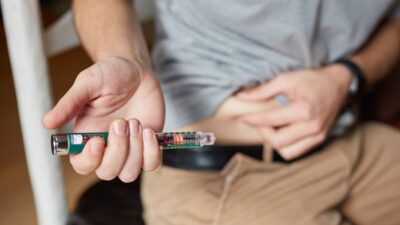
AI in diabetes management in 2026 is a real and growing part of clinical care, not a futuristic concept. The most established and widely used application is automated insulin delivery (AID) — closed-loop pumps including Tandem Control-IQ, Medtronic SmartGuard with MiniMed 780G, Omnipod 5 SmartAdjust, and Beta Bionics iLet use predictive algorithms with CGM data to adjust insulin every 5 minutes. Other AI applications include CGM pattern recognition (Glooko, mySugr Pro), predictive low-glucose suspend, AI dosing advisors for multiple daily injections (Insulia, Hedia), and conversational tools like ChatGPT used informally. The fundamental limit: AI is excellent for pattern recognition and rule-based adjustments, but it does not replace the clinical reasoning of your endocrinologist or diabetes educator.
Categories of AI in Diabetes Today
| Category | Examples | Maturity |
|---|---|---|
| Automated insulin delivery (AID) | Control-IQ, 780G, Omnipod 5, iLet | FDA-cleared, widely used |
| Predictive low-glucose suspend | Tandem Basal-IQ, Medtronic 670G predecessor | FDA-cleared |
| CGM pattern recognition | Glooko, mySugr Pro, Dexcom Clarity | Widely available |
| AI dosing advisors (MDI) | Insulia, Hedia, Mendor | Some FDA-cleared, varies by country |
| Conversational AI / LLMs | ChatGPT, Claude, Gemini | Informal use, not validated |
| AI meal carb estimation | SnapCalorie, various pilots | Emerging, accuracy variable |
| Retinopathy screening AI | IDx-DR, EyeArt | FDA-cleared point-of-care |
| Hypoglycemia prediction | Research-stage | Not commercially available |
Automated Insulin Delivery (AID) Systems in 2026
- Tandem t:slim X2 with Control-IQ: Dexcom G6 or G7 integration; adjusts basal and delivers auto-correction boluses; well-studied
- Medtronic MiniMed 780G with SmartGuard: Guardian 4 sensor; adjusts basal and delivers correction boluses every 5 minutes; auto-correction for high targets
- Omnipod 5 with SmartAdjust: Tubeless pod; Dexcom G6/G7 integration; smartphone control
- Beta Bionics iLet: Simplified user interface — only meal announcements (no carb counting); Dexcom or Libre integration
- Tandem Mobi: Smaller pump with smartphone control; Control-IQ algorithm
Each system uses CGM input to predict glucose 30 to 60 minutes ahead and adjust insulin accordingly. Time-in-range improvements typically run 5 to 15 percentage points over basic pump therapy.
What “AI” Actually Means in These Systems
- Predictive algorithms (model predictive control, fuzzy logic, neural networks)
- Personalization based on past 6 hours to several days of glucose patterns
- Adjustments every 5 minutes based on CGM data
- Manual override always available for safety
- Not “deep learning” in the modern LLM sense — these are tightly constrained, FDA-validated decision systems
ChatGPT and LLMs in Diabetes Self-Management
- Useful uses: general education, meal idea generation, pattern explanations in plain language, recipe modification for lower carbs, summary of complex articles
- Risky uses: dose recommendations, insulin sliding scales, sick-day rules, drug interaction questions, hypoglycemia management
- Why the difference: LLMs can produce confidently wrong information; no liability or clinical accountability; not validated for diabetes decisions
- Best practice: use ChatGPT to ask better questions to your care team, not to replace them
CGM Pattern Recognition Apps
- Glooko: aggregates data from many CGMs, pumps, pens; pattern reports for clinicians
- mySugr Pro: pattern detection, A1C estimation from CGM
- Dexcom Clarity: AGP (Ambulatory Glucose Profile) reports; pattern identification
- Tidepool: non-profit, donates data for research; multi-device support
AI Dosing Advisors for Injections
- Insulia: FDA-cleared decision support for basal insulin titration
- Hedia: bolus calculator with learning over time (more available in Europe than the U.S. as of 2026)
- Mendor: dosing support integrated with their smart device ecosystem
- These tools augment — not replace — clinician oversight of insulin doses
Privacy and HIPAA Considerations
- FDA-cleared diabetes devices and apps generally fall under HIPAA when used through a covered healthcare provider
- Wellness apps and ChatGPT are not HIPAA-covered — assume what you type is processed and possibly stored on third-party servers
- Do not enter personally identifying medical information into general-purpose AI chatbots
- Review privacy policies for specific apps before connecting them to your CGM data
What AI Cannot Yet Do Well
- Accurately estimate carbs from a meal photo across diverse cuisines
- Predict hypoglycemia far enough in advance to be useful in all situations
- Substitute for clinical judgment in sick days, surgery prep, or major medication changes
- Manage complex insulin scenarios like exercise plus stress plus delayed meals
- Detect device failures (sensor inaccuracy, pump occlusion) without user awareness
The Near Future (2026 to 2028)
- Better AID algorithms with fully autonomous mealtime handling
- Dual-hormone (insulin plus glucagon) closed-loop systems in trials
- AI-assisted meal photo carb estimation improving toward clinical usefulness
- LLM-based “AI scribes” in endocrinology visits already widespread
- FDA framework for AI/ML medical devices evolving — “predetermined change control plans”
- Direct integration of CGM data with AI dietary coaching apps
Practical Recommendation
- If you take insulin, ask your endocrinologist whether you are a candidate for an AID system
- Use CGM pattern apps to share rich data with your care team between visits
- Use ChatGPT for education and idea generation; do not act on its dose suggestions
- Review privacy policies before connecting CGM data to non-medical apps
- Keep your clinical team in the loop on any AI tools you incorporate
Related Reading
See our broader guides on diabetes treatment, Apple Watch and diabetes, and telehealth for diabetes.
The Bottom Line
AI in diabetes management is already a routine part of care in 2026 — automated insulin delivery systems from Tandem, Medtronic, Insulet, and Beta Bionics use predictive algorithms with CGM input to adjust insulin every 5 minutes and have been shown to improve time-in-range and reduce hypoglycemia. Pattern-recognition apps, AI dosing advisors, and retinopathy screening AI add more pieces. Conversational AI like ChatGPT is useful for general education and meal ideas but should not be used for clinical decisions. The most reliable use of AI in diabetes today is as decision support working alongside your clinical team — not as a replacement for endocrinologists, diabetes educators, or your own informed self-management.