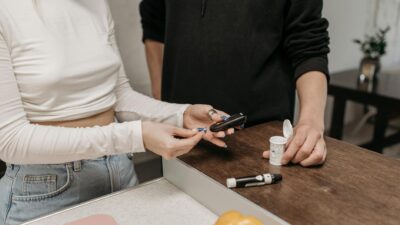
Apidra (insulin glulisine) is a rapid-acting insulin analog used at mealtimes for adults and children with type 1 or type 2 diabetes. It has onset in 10 to 15 minutes, peak at 60 to 90 minutes, and duration of 3 to 4 hours. Apidra is given by subcutaneous injection 15 minutes before meals (or within 20 minutes after starting a meal) or used continuously in an insulin pump. Dosing is individualized with a prescriber.
What Apidra Is
Apidra is the brand name for insulin glulisine, manufactured by Sanofi. It is one of three commonly used rapid-acting insulin analogs in the United States, along with Novolog (insulin aspart) and Humalog (insulin lispro). All three function as bolus or prandial insulins — designed to cover the rapid rise in blood glucose that follows eating.
Apidra is FDA-approved for adults and pediatric patients age 4 years and older with type 1 or type 2 diabetes. It is supplied in 10 mL U-100 vials, 3 mL SoloStar disposable prefilled pens, and 3 mL cartridges (compatible with reusable pens).
How Apidra Works
Insulin glulisine is human insulin modified by two amino acid substitutions — asparagine at position B3 is replaced by lysine, and lysine at position B29 is replaced by glutamic acid. These changes reduce self-association of insulin molecules into hexamers (six-molecule clusters), so the injected insulin separates into single molecules more quickly and is absorbed faster into the bloodstream.
The formulation also uses zinc-free chemistry stabilized with polysorbate 20, which is unusual among insulin analogs and contributes to its slightly different absorption profile. Once in circulation, insulin glulisine binds insulin receptors with the same potency as human insulin.
Pharmacokinetics: Onset, Peak, Duration
| Parameter | Apidra (insulin glulisine) |
|---|---|
| Onset of action | 10 to 15 minutes |
| Peak effect | 60 to 90 minutes |
| Duration of action | 3 to 4 hours |
| Recommended timing | 15 minutes before a meal or within 20 minutes after starting a meal |
| Concentration | U-100 (100 units/mL) |
| Half-life (subcutaneous) | Approximately 42 minutes |
Who Apidra Is For
- Adults with type 1 diabetes for prandial coverage as part of basal-bolus therapy
- Adults with type 2 diabetes who need mealtime insulin in addition to basal insulin or oral therapy
- Children age 4 years and older with diabetes requiring mealtime insulin
- People using insulin pumps (continuous subcutaneous insulin infusion)
- People who prefer or tolerate a slightly shorter-duration rapid insulin
How Apidra Is Used
Apidra is injected subcutaneously into the abdomen, thigh, or upper arm. Site rotation reduces lipodystrophy. Typical use patterns include:
- Inject 15 minutes before a meal, or within 20 minutes after starting a meal
- Calculate the dose from an insulin-to-carbohydrate ratio plus correction for pre-meal glucose
- In an insulin pump, deliver as continuous basal infusion plus mealtime and correction boluses
- Pair with a long-acting basal insulin (Lantus, Toujeo, Tresiba, Levemir) for full type 1 coverage
Starting ratios are estimated by the prescriber and refined with experience. Continuous glucose monitor data are especially helpful for fine-tuning ratios and timing.
Apidra vs Other Rapid-Acting Insulins
| Insulin | Onset | Peak | Duration | Pediatric Age |
|---|---|---|---|---|
| Apidra (glulisine) | 10 to 15 min | 60 to 90 min | 3 to 4 hr | 4 years and older |
| Novolog (aspart) | 5 to 15 min | 30 to 90 min | 3 to 5 hr | 2 years and older |
| Humalog (lispro) | 5 to 15 min | 30 to 90 min | 3 to 5 hr | 3 years and older |
| Fiasp (faster aspart) | ~2 to 5 min | ~60 min | 3 to 5 hr | 1 year and older |
| Lyumjev (faster lispro) | ~1 to 3 min | ~60 min | 4 to 5 hr | Adults |
Side Effects
- Hypoglycemia — the most common adverse effect; usually occurs within 1 to 4 hours of dosing
- Weight gain — modest, typical of intensified insulin therapy
- Injection site reactions — redness, swelling, itching, or pain
- Lipodystrophy — lipohypertrophy or lipoatrophy from repeated injections in the same spot
- Hypokalemia (low potassium) — possible, particularly with large doses
- Allergic reactions — local or rare systemic anaphylactic reactions
- Peripheral edema, especially with thiazolidinediones
Why Some Clinicians Prefer Apidra
- Slightly faster onset than Novolog or Humalog in some patients
- Slightly shorter duration of action, which can reduce post-meal hypoglycemia 3 to 4 hours after eating
- Suitable option when insurance formulary prefers Sanofi rapid analog
- Compatible with most modern insulin pumps for continuous subcutaneous infusion
Cost and Access
- Apidra costs roughly $300 to $500 per month at retail without insurance, similar to other rapid-acting analogs
- Sanofi offers patient assistance and a $35 monthly co-pay program for eligible patients
- Medicare Part D covers Apidra at the federal $35-per-month cap for covered insulins
- Commercial coverage varies by formulary; sometimes prior authorization or step therapy from Novolog or Humalog is required
Storage and Handling
- Unopened vials, pens, and cartridges: refrigerate at 36 to 46 °F (2 to 8 °C)
- In use: room temperature up to 77 °F (25 °C) for up to 28 days, then discard
- Do not expose to temperatures above 98.6 °F (37 °C)
- Do not freeze
- Solution is clear and colorless — discard if cloudy, discolored, or contains particles
- Do not mix Apidra with insulins other than NPH (and only when specifically directed by a prescriber)
Practical Tips
- Warm the pen or vial briefly in your hand before injection if it has just come from the refrigerator — cold insulin stings
- Use a fresh pen needle every dose
- Rotate sites within the abdomen, thigh, and upper arm in a planned pattern
- Check blood glucose 2 hours after meals to assess whether your insulin-to-carb ratio is appropriate
- Keep a fast-acting carbohydrate source (glucose tablets, juice) on hand for hypoglycemia
Related Reading
For broader context, see our treatment overview, the comparison guide on insulin types, and basal-bolus insulin regimens.
The Bottom Line
Apidra (insulin glulisine) is a rapid-acting mealtime insulin analog with onset in 10 to 15 minutes, peak at 60 to 90 minutes, and duration of 3 to 4 hours. It is used in type 1 and type 2 diabetes for prandial coverage, including in insulin pumps, and is approved for children age 4 and older. Compared with Novolog and Humalog, Apidra has a slightly shorter duration that some clinicians use for tighter postprandial control. Side effects include hypoglycemia, weight gain, and injection site reactions. Dose is individualized with a prescriber and refined using post-meal glucose monitoring. Apidra is one of three clinically equivalent rapid-acting analogs — your specific choice typically reflects insurance, device preference, and clinical history.