The question how many mg is 50 units of semaglutide does not have one answer — it depends on the concentration in mg per milliliter of the specific vial. Units on a standard U-100 insulin syringe measure volume (100 units = 1 mL), not milligrams of drug. This article explains the math in educational terms only. It is not a dosing recommendation, and you must never adjust a semaglutide dose without your prescriber.
Units vs. Milligrams: Why They Are Not Interchangeable
Insulin syringes are marked in “units” because they were designed for U-100 insulin, where 100 units equals 1 mL (and 100 units of U-100 insulin equals 1 mg of insulin). When those same syringes are used for other medications — like semaglutide compounded in vials — the numbered markings still measure volume, not milligrams.
So “50 units” on an insulin syringe means 0.5 mL of liquid, regardless of what drug is in the vial. To convert 0.5 mL to milligrams, you must know the drug concentration in mg/mL.
The Conversion Formula
The volume-to-milligram relationship is:
Milligrams = Volume (mL) x Concentration (mg/mL)
And 50 units on a U-100 syringe = 0.5 mL, so:
Milligrams in 50 units = 0.5 mL x Concentration (mg/mL)
Examples at Different Concentrations
| Vial Concentration | Milligrams in 50 units (0.5 mL) | Milligrams in 20 units (0.2 mL) | Milligrams in 10 units (0.1 mL) |
|---|---|---|---|
| 1 mg/mL | 0.5 mg | 0.2 mg | 0.1 mg |
| 2 mg/mL | 1 mg | 0.4 mg | 0.2 mg |
| 2.5 mg/mL | 1.25 mg | 0.5 mg | 0.25 mg |
| 5 mg/mL | 2.5 mg | 1 mg | 0.5 mg |
| 10 mg/mL | 5 mg | 2 mg | 1 mg |
As the table shows, “50 units” of semaglutide could be anywhere from 0.5 mg (on a 1 mg/mL vial) to 5 mg (on a 10 mg/mL vial) — a ten-fold difference that would be dangerous if someone substituted one for the other.
FDA-Approved Semaglutide Products
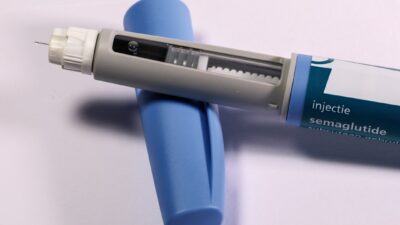
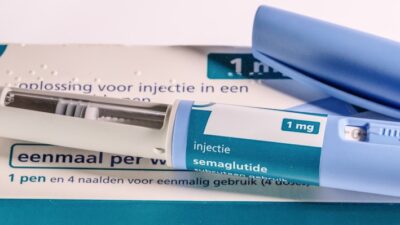
FDA-approved semaglutide is not sold in user-drawn vials. It comes in prefilled pens at fixed concentrations and click-based dose selectors:
- Ozempic — 2 mg/1.5 mL (1.34 mg/mL) or 4 mg/3 mL (1.34 mg/mL) or 8 mg/3 mL (2.68 mg/mL) pens, delivering 0.25, 0.5, 1, 2 mg weekly doses for type 2 diabetes.
- Wegovy — single-dose, fixed-strength pens for weight management and cardiovascular risk reduction, dosed 0.25 mg to 2.4 mg weekly on a titration schedule.
- Rybelsus — oral semaglutide tablets, 3 mg, 7 mg, or 14 mg taken daily.
Because these products have built-in click doses, patients do not need to draw with insulin syringes or calculate milligrams from units. That engineering choice removes the math errors that vials introduce.
Compounded Semaglutide and Unit Instructions
During manufacturer shortages, some state-licensed compounding pharmacies prepared semaglutide in multi-dose vials. These are drawn with U-100 insulin syringes, and dosing instructions are often written in units. Concentrations vary by compounder and can change between refills, which is exactly why recalculating on your own is risky. The FDA has issued safety communications about dosing errors and adverse events associated with compounded semaglutide, including cases where patients received many times the intended dose.
If you have a compounded semaglutide prescription, the pharmacy label should state:
- The concentration in mg/mL.
- The prescribed dose in milligrams.
- The exact number of units to draw with a U-100 insulin syringe.
- The injection frequency.
If any of those details are missing or unclear, call the pharmacy before using the medication. Learn more in our treatment hub.
Why Self-Conversion Is Dangerous
Small decimal errors with injectable peptides can produce large clinical effects. Risks of overdosing semaglutide include severe nausea, vomiting, dehydration, acute kidney injury, acute pancreatitis, and hypoglycemia if combined with insulin or sulfonylureas. Reports collected through the FDA MedWatch program show several compounded-semaglutide overdose incidents traced to unit-versus-milligram confusion. Clinical supervision is not optional; it is a safety safeguard.
What to Do If You Are Unsure
- Do not inject if you cannot verify both the concentration and the intended milligram dose.
- Call your prescriber or dispensing pharmacist to confirm the exact unit count for your vial.
- Keep original packaging and dosing instructions until you finish the course.
- Report any suspected dosing error or significant adverse reaction to your clinician and to the FDA MedWatch program.
People beginning any GLP-1 therapy should also review baseline labs such as A1C and kidney function with their clinician so progress and safety can be tracked.
The Bottom Line
There is no universal milligram value for “50 units of semaglutide” because units measure volume and milligrams measure mass. The conversion hinges on the vial concentration, which varies between compounded products. This page is educational — your prescribing clinician and pharmacist are the only people who should tell you how many units match your milligram dose. When in doubt, pause and verify before you inject.
Medical Disclaimer: This article is for informational purposes only and does not constitute medical advice. Always consult a qualified healthcare professional about any medical condition, device, or treatment plan.