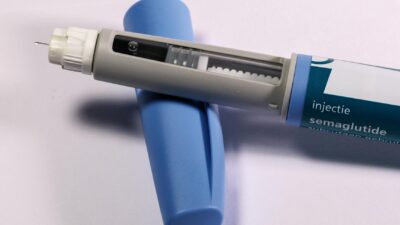
Semaglutide causes constipation in roughly 15 to 25 percent of users because GLP-1 receptor activation slows gastric emptying and gut motility. It is most common during dose titration and often improves at a stable dose. The fix is usually simple: 2 to 3 liters of daily fluid, 25 to 35 grams of fiber, regular walking, and an osmotic laxative like polyethylene glycol if needed. Red flags — severe pain, vomiting, bloody stool, or more than a week without a bowel movement — need same-day medical attention.
How Common Is It?
The FDA label lists constipation among the most common GI side effects. Reported rates:
- Ozempic (1 mg diabetes dose): about 5 percent
- Wegovy (2.4 mg weight-loss dose): about 24 percent
- Rybelsus (oral semaglutide): about 5 percent
Real-world rates track somewhat higher than trials report because patients notice and count milder symptoms.
Why It Happens
GLP-1 receptors are present in the stomach, small intestine, and colon. Activating them slows peristalsis — the wave of muscle contractions that moves food through the GI tract. Slower transit is one of the mechanisms that makes semaglutide work for appetite control (food lingers longer, signaling fullness), but the same slowdown in the colon allows more water to be reabsorbed from stool, producing harder, less frequent bowel movements.
Because the effect is dose-dependent, constipation tends to peak right after each titration step and then improves as the body adapts over 2 to 8 weeks.
First-Line Management (Try These Together)
Hydration
- Aim for 2 to 3 liters (about 64 to 100 ounces) of fluid per day
- Water, herbal tea, clear broth, sparkling water all count
- Limit alcohol and excessive caffeine (both are mildly dehydrating)
- One practical target: urine pale yellow, not dark amber
Fiber
- Build up gradually to 25 to 35 grams per day — sudden jumps worsen bloating
- Good sources: beans, lentils, berries, pears, apples with skin, oats, chia, flax, whole grains
- Psyllium (Metamucil, Konsyl) is the best-studied supplement; start 1 teaspoon daily, build to 2 to 3
- Avoid fiber if you have had bowel surgery or a stricture without clinician guidance
Movement
- A 20- to 30-minute walk stimulates colonic motility
- Morning walks are especially helpful; colonic activity peaks in the first hour after waking
- Yoga poses (twists, gentle inversions) can help
Routine
- Try to use the bathroom at the same time each morning — the colon responds to predictable cues
- Do not strain; use a squat stool or step under the feet to improve position
When Lifestyle Is Not Enough: Over-the-Counter Options
| Option | Type | Onset | How to Use |
|---|---|---|---|
| Polyethylene glycol 3350 (MiraLAX) | Osmotic | 1–3 days | 17 g in 8 oz water daily; safe long-term |
| Magnesium citrate | Osmotic | 30 min–6 hr | One bottle for acute relief; not daily |
| Milk of magnesia | Osmotic | 30 min–6 hr | 2 tbsp at bedtime; avoid daily in kidney disease |
| Docusate sodium (Colace) | Stool softener | 1–3 days | 100 mg twice daily with fluids |
| Senna | Stimulant | 6–12 hr | Short-term rescue only; not daily |
| Bisacodyl (Dulcolax) | Stimulant | 6–12 hr | Short-term rescue only |
| Psyllium | Bulk-forming | 12–72 hr | Build gradually with extra water |
| Lubiprostone, linaclotide | Prescription | Daily | For chronic idiopathic constipation if OTC fails |
What Not to Do
- Do not use stimulant laxatives (senna, bisacodyl) daily for weeks on end — rare tolerance and colonic dysmotility can result
- Do not add 30 grams of fiber overnight — expect gas and bloating; build gradually over 2 weeks
- Do not skip the next semaglutide dose without discussing with your clinician — erratic dosing increases GI side effects rather than reducing them
- Do not ignore a missed bowel movement for more than a week — evaluate for obstruction
When to Call Your Clinician
- Severe abdominal pain (especially cramping with distention)
- Repeated vomiting
- No bowel movement for more than 7 days despite OTC measures
- Blood in stool (bright red or black tarry)
- Unintended weight loss not explained by the expected GLP-1 appetite effect
- Fever with abdominal symptoms
- New weakness or lightheadedness
These can indicate bowel obstruction, ileus, or a more serious complication that needs imaging and sometimes hospitalization.
Dose-Level Strategy
If constipation is severe at every escalation step, your clinician has several options short of discontinuation:
- Extend the interval between titration steps from 4 weeks to 8 weeks
- Stop titration at a lower maintenance dose (1.0 mg or 1.7 mg rather than 2.4 mg)
- Add a daily osmotic laxative proactively rather than reactively
- Switch to an alternative GLP-1 (dulaglutide, liraglutide) — individual GI tolerance varies
Related Reading
For broader context, see our treatment hub and guides on diet and nutrition for GLP-1 users.
The Bottom Line
Semaglutide constipation is common, dose-related, and usually improves with hydration, fiber, movement, and a daily osmotic laxative like polyethylene glycol. Most patients do not need to stop the medication. Watch for red flags — severe pain, vomiting, bloody stool, or over 7 days without a bowel movement — and involve your clinician before symptoms escalate. Plan ahead: start hydration and fiber before the next titration step rather than waiting for constipation to appear.