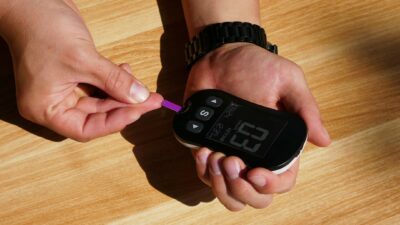
Shift work — particularly rotating and permanent night shifts — raises type 2 diabetes risk by approximately 30 to 40 percent through circadian disruption, sleep deprivation, and eating at biological night. About 20 percent of the US workforce works non-standard hours. The Pan et al. 2011 analysis of over 175,000 nurses showed each 5 years of rotating night shifts raised risk by about 5 percent; 20+ years roughly doubled risk. People with existing diabetes face additional management challenges — medication timing, glucose monitoring, and meal patterns all need active adjustment around shift changes. Shift work is one of the most underappreciated risk factors in diabetes care, and structured strategies can reduce the metabolic damage.
Why Shift Work Raises Diabetes Risk
Multiple overlapping mechanisms produce the elevated risk seen in shift workers.
- Circadian misalignment — eating, sleeping, and being active out of phase with the internal clock
- Glucose tolerance is biologically lower at night — the same meal raises glucose more at 3 AM than at 3 PM
- Sleep deprivation — most shift workers sleep 1 to 2 hours less than day workers on average
- Hormonal disruption — cortisol curve flattening, melatonin suppression, leptin and ghrelin imbalance
- Eating at biological “night” disrupts gut microbiome and insulin response — see circadian rhythm and diabetes
- Reduced exercise opportunity — shift workers often have less physical activity than day workers
- More processed food and shift-meal culture (vending machines, late-night fast food)
- Higher rates of smoking and stress eating in shift worker populations
- Long-term cumulative damage — risk rises with years of shift work exposure
What the Evidence Shows
| Study / Population | Finding |
|---|---|
| Pan et al. 2011 — Nurses Health Study | 20+ years rotating night shifts roughly doubled T2D risk |
| Shan 2018 — BMJ | Combined unhealthy lifestyle + shift work magnified risk over 2x |
| Vetter 2018 — JAMA | Each 5 years rotating shifts raised T2D risk ~5% |
| Knutsson meta-analyses | Permanent night shifts and rotating shifts both increase risk; rotating shifts somewhat worse |
| Gan 2015 — Occup Environ Med | Meta-analysis of 12 studies — relative risk ~1.10 to 1.40 across shift types |
| Wang 2014 — Diabetologia | Pooled analysis — 30% increased risk in shift workers |
Shift Type Matters
- Rotating shifts — generally highest risk; circadian system never adapts
- Permanent night shift — high risk during weekdays, but some adaptation possible if days off are spent on the same schedule
- Evening shift (2 PM-11 PM) — lower risk than full night, but still raises risk vs day work
- Early morning shifts (4 AM-noon) — moderate risk; requires very early bedtimes that are hard to maintain
- Compressed schedules (4×10, 3×12) — fewer shifts per week reduces cumulative exposure
- Forward-rotating (day-evening-night) shifts — somewhat easier on circadian system than backward-rotating
- On-call work — unpredictable sleep disruption can be as damaging as scheduled shifts
Anchor Sleep Strategy
An “anchor sleep” is a consistent block of sleep at the same time every day, regardless of schedule. The aim is to keep some part of your circadian rhythm stable while the rest shifts.
- Identify 3 to 4 hours that you can sleep every day — for many night shift workers this is 8 AM to 12 noon
- Protect this block with blackout curtains, eye mask, do-not-disturb signs, family agreements
- Stack additional sleep around this anchor — earlier or later as schedule allows
- Aim for 7 hours total sleep across the 24 hour period, including the anchor
- On days off, maintain the anchor; do not completely flip back to a day schedule
- This is especially important for permanent night shift workers — anchor sleep is the single highest-yield habit
- For rotating shift workers, anchor sleep is harder but still helpful when feasible
Strategic Light Exposure
| Shift Time | Strategic Light Use |
|---|---|
| Start of night shift (10-11 PM) | Bright light (10,000 lux box) 30 min — boosts alertness and shifts circadian phase |
| During night shift | Brighter workplace lighting if possible; bright breaks every 2-3 hours |
| End of night shift / commute home | Wear dark wraparound sunglasses to block morning sunlight — prevents circadian re-set to day |
| Sleep block | Blackout curtains; eye mask |
| Pre-shift waking (afternoon) | Some daylight exposure 1-2 hours before shift to wake up; not too bright too early |
Light is the strongest circadian signal — even brief bright morning light exposure on the commute home can reset your clock back toward daytime, undoing your sleep prep.
Melatonin Timing for Shift Work
- For shift work, melatonin is used as a circadian-shifting hormone, not a sleep pill
- Take 0.3 to 3 mg about 30 minutes before your intended sleep time after a night shift
- Lower doses (0.3 to 1 mg) often work as well as higher doses and cause less morning grogginess
- Take it consistently — same time daily on shift days
- Do not take during shift or when alertness is needed
- Effect is modest but consistent in studies; works better combined with light therapy
- Discuss with clinician if you have epilepsy, are pregnant, on warfarin, or have liver disease
- Skip melatonin on days off to allow natural rhythm
Meal Timing for Shift Workers
| Schedule Time | Strategy |
|---|---|
| Pre-shift (afternoon) | Moderate balanced meal — your “dinner” before night shift |
| Early shift (10 PM-1 AM) | Light snack — protein and fiber; avoid heavy carbs |
| Mid-shift (2-5 AM) | Avoid heavy meals; this is the worst time for glucose tolerance; small protein-fat snacks only |
| Late shift (5-7 AM) | Light snack if needed; avoid full meal before sleep |
| Pre-sleep (after shift) | Small protein-and-fat snack if hungry; avoid carbs that spike |
| Post-sleep waking | Larger meal — your “breakfast” before next shift |
- 2 AM to 5 AM is the worst glucose tolerance window — same meal raises glucose 30 to 50 percent more than at 2 PM to 5 PM
- Pre-shift meal helps reduce mid-shift cravings
- Plan and pack meals — vending machines and break-room snacks drive worse choices
- Hydration is often neglected on shift — water and unsweetened drinks throughout
- Caffeine — use strategically early in shift; cut off 6 hours before intended sleep
- Pair shift-work eating with the dietary patterns in our diet and nutrition guide
Glucose Monitoring on Shift
- Check glucose more frequently around shift changes — patterns shift with schedules
- Expect higher overnight glucose during night shifts even with same diet
- CGM use is especially valuable for shift workers — patterns become visible
- Time-in-range tends to drop during night shifts; budget for this with medication adjustments rather than blaming yourself
- Risk of overnight hypoglycemia (during night shift) and post-shift hypoglycemia (during day sleep) both increase
- Wear CGM alerts during sleep block; some workers prefer louder phone alarms
- Track at least one full rotation cycle to learn your patterns
- Bring CGM data to clinic visits — shift-specific medication tuning matters
Medication Timing
- Basal insulin — timing should follow biological day-night, not clock time; discuss with clinician when rotating shifts
- Mealtime (bolus) insulin — match to meal timing on the actual schedule
- Long-acting GLP-1 (semaglutide, dulaglutide) — once weekly; pick a stable day
- Metformin — extended release is forgiving; immediate release should pair with meals on schedule
- Sulfonylureas — riskier on shift work because of hypoglycemia at variable timing; discuss alternatives
- SGLT2 inhibitors — generally any time; nocturia can disrupt daytime sleep
- DPP-4 inhibitors — daily; flexible timing
- Always review medication timing with your clinician when shift schedule changes
Exercise on Shift Work Schedules
- Exercise within 2 hours of waking up before a shift — improves alertness and glucose for the shift
- Avoid vigorous exercise within 2 hours before sleep block
- Even 10 to 15 minute walking breaks during shift improve glucose and alertness
- See best time to exercise for blood sugar control for general principles
- Light walking after meals during shift helps blunt overnight glucose spikes
- Aim for the ADA target of 150 minutes per week — even broken into shorter sessions on shift days
- Strength training 2 to 3 days per week — see strength training for diabetes
Long-Term Career Planning
- If you have prediabetes or strong family history, consider rotating off night shifts when possible
- Permanent night shift is metabolically easier than rotating, if shift type is fixed
- Years of rotating night work cumulatively raise risk — risk reduces partially after stopping but never fully reverses
- Forward-rotating shift patterns (day to evening to night) are easier than backward (night to evening to day)
- Talk to occupational health if your role allows accommodation for diabetes management
- Track your A1C every 3 to 6 months — particularly during years of high shift work
- For prediabetes context see is prediabetes reversible
Cautions and Caveats
- Modafinil or armodafinil for shift work sleep disorder are prescription only — discuss with sleep specialist if daytime alertness is impaired
- Driving home after a night shift is high-risk — pull over to nap if drowsy; do not “push through”
- Severe daytime sleepiness with driving impairment may meet shift work sleep disorder criteria — same-day evaluation
- Pregnancy on rotating night shifts associates with higher gestational diabetes risk — discuss accommodations
- Older shift workers tolerate circadian disruption less well — younger workers can compensate more
- Chronic shift work also raises cardiovascular, breast cancer, and depression risk — diabetes is one of multiple concerns
The Bottom Line
Shift work raises type 2 diabetes risk by approximately 30 to 40 percent through circadian disruption, sleep deprivation, and eating at biological night. Years of rotating night shifts cumulatively double risk. People with existing diabetes face additional management challenges around glucose monitoring, medication timing, and meal patterns. The most evidence-supported strategies are anchor sleep blocks at the same time every day, strategic light therapy (bright light early in shift, dark sunglasses after), timed melatonin (at the start of your sleep period after a shift, not during work), pre-shift moderate meals, and avoiding heavy meals at 2 AM to 5 AM when glucose tolerance is biologically worst. Use a CGM to learn your shift-specific patterns and bring data to medication review with your clinician. Pair shift work strategies with the broader sleep foundation in our sleep and diabetes guide, the circadian principles in circadian rhythm and diabetes, and the dietary changes in our diet and nutrition guide for the highest combined effect on long-term glucose control.