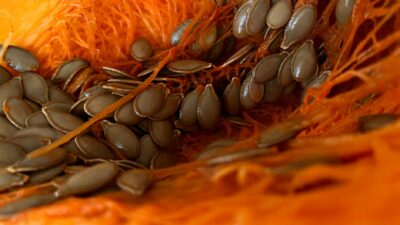
Almonds are one of the most evidence-supported foods in diabetes nutrition. Clinical trials of regular almond consumption show modest A1C improvements, LDL cholesterol reductions, and better post-meal glucose response. The macronutrient profile — high in monounsaturated fat, plant protein, and fiber, low in carbohydrate — fits well with both low-carb and Mediterranean eating patterns. The main consideration is calorie density: almonds are 164 calories per ounce, and unmonitored snacking can easily reach 400 to 600 calories per session. Pre-portioning and pairing with fruit or other foods preserves the benefits while controlling intake. Almond flour and unsweetened almond milk extend the diabetes-friendly uses across baking and beverages.
Nutrition Profile
| Almond form (serving) | Calories | Carbs (g) | Fiber (g) | Protein (g) | Fat (g) |
|---|---|---|---|---|---|
| Raw whole (1 oz, 23 nuts) | 164 | 6 | 4 | 6 | 14 |
| Dry-roasted unsalted (1 oz) | 170 | 6 | 3 | 6 | 15 |
| Oil-roasted (1 oz) | 172 | 6 | 3 | 6 | 16 |
| Sliced/slivered (1 oz) | 164 | 6 | 3 | 6 | 14 |
| Almond butter, plain (1 Tbsp) | 98 | 3 | 2 | 3 | 9 |
| Almond flour (¼ cup) | 160 | 6 | 3 | 6 | 14 |
| Almond milk, unsweetened (1 cup) | 30 | 1 | 1 | 1 | 3 |
| Almond milk, sweetened (1 cup) | 90 | 15 | 1 | 1 | 3 |
| Marcona almonds (1 oz) | 180 | 6 | 3 | 6 | 16 |
Glycemic Impact
Almonds have essentially zero glycemic impact on their own. The carbohydrate content is small (6 g per ounce), most of it bound to fiber. CGM users see no measurable response. When eaten alongside carbohydrate-containing meals, almonds slow gastric emptying and reduce the post-meal glucose peak by 25 to 30% in clinical trials. The Cohen and Johnston study showed both acute (meal-time) and chronic (sustained A1C) benefits from regular almond consumption.
Clinical Trial Evidence
- Cohen and Johnston (2011): adults with type 2 diabetes who consumed 1 oz almonds with breakfast had 30% lower post-meal glucose excursions and an A1C reduction of 0.4 percentage points over 12 weeks.
- Wien et al. (2010): 60g daily almonds for 16 weeks improved insulin sensitivity and reduced fasting insulin.
- Lovejoy et al. (2002): no weight gain despite added almond calories — likely due to incomplete fat absorption and satiety.
- Meta-analyses of nut consumption show consistent LDL cholesterol reductions of 5 to 10% with daily intake.
- Effects are modest but reproducible across multiple trial designs.
Portion Strategy
- 1 oz = 23 almonds, fits in a small handful.
- 1.5 oz = roughly 35 almonds.
- Calorie-dense — at 164 cal per ounce, 4 ounces is roughly 650 calories.
- Pre-portion into small bags or containers; avoid eating from the bag.
- For trail mix and snack mixes, weigh portions rather than eyeballing.
- Use sliced or slivered almonds as a topping — visually distributes the portion across a larger meal.
Almond Forms
| Almond product | Best uses | Diabetes notes |
|---|---|---|
| Whole raw or roasted | Snack, baking, salads | Daily-staple option |
| Sliced/slivered | Topping for yogurt, salads, baking | Pre-portioned by nature |
| Almond butter (plain) | Spread, smoothies, sauces | Watch portion creep |
| Almond flour | Low-carb baking | Excellent wheat-flour substitute |
| Almond meal | Coatings for chicken, fish | Lower-carb breading |
| Unsweetened almond milk | Coffee, cereal, smoothies | 1 g carb per cup |
| Marcona almonds | Tapas, salads, Mediterranean dishes | Higher fat, premium taste |
| Chocolate-covered almonds | Occasional treat | Check sugar content — varies widely |
Almond Flour for Diabetes Baking
- Per ¼ cup: 160 cal, 6 g carb (3 g fiber), 6 g protein, 14 g fat.
- Substitutes for wheat flour at roughly 1:1 by volume; results are denser and moister.
- Used in low-carb pancakes, muffins, cookies, breads, and chicken/fish coatings.
- Glycemic load per ¼ cup is roughly 4 vs 38 for wheat flour — massive carbohydrate savings.
- Costs more than wheat flour but used in smaller portions in low-carb recipes.
- Almond meal is coarser (made from whole almonds with skins); almond flour is finer (blanched almonds, no skins).
Almond Milk Considerations
- Unsweetened almond milk: 30 cal, 1 g carb per cup — diabetes-friendly.
- Sweetened almond milk: 90 cal, 15 g carb per cup — added sugar makes it nearly equivalent to dairy milk for carb count.
- Most commercial almond milk is highly diluted (about 2% almonds by weight) — much less protein than dairy milk.
- For diabetes use, always read “unsweetened” on the label.
- Vanilla unsweetened almond milk often contains no added sugar — check the carbohydrate column.
- Useful in coffee, cereal, smoothies, and as a milk substitute in cooking.
Almonds vs Other Nuts
| Nut (1 oz) | Calories | Carbs (g) | Fiber (g) | Protein (g) |
|---|---|---|---|---|
| Almonds | 164 | 6 | 4 | 6 |
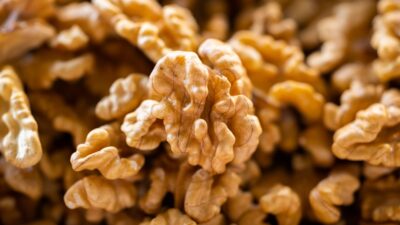
| Walnuts | 185 | 4 | 2 | 4 |
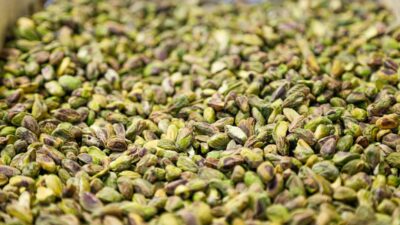
| Pistachios | 159 | 8 | 3 | 6 |
| Cashews | 157 | 9 | 1 | 5 |
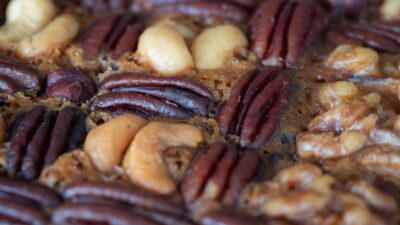
| Pecans | 196 | 4 | 3 | 3 |
| Brazil nuts | 187 | 3 | 2 | 4 |
| Macadamia | 204 | 4 | 2 | 2 |
| Hazelnuts | 178 | 5 | 3 | 4 |
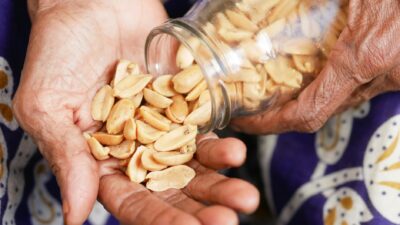
| Peanuts (legume) | 166 | 6 | 2 | 7 |
Pairing Strategies
- 1 oz almonds + medium apple — classic balanced snack.
- Almonds + plain Greek yogurt + berries — protein-rich breakfast.
- Almond butter + celery sticks — low-carb snack.
- Sliced almonds on green salads or roasted vegetables.
- Almond flour for low-carb pancakes, muffins, and chicken breading.
- Unsweetened almond milk in coffee, oatmeal, and smoothies.
- Marcona almonds with cheese as a Mediterranean appetizer.
Who Should Be Careful
- People with tree-nut allergy — avoid all almond products; check ingredient labels carefully.
- People with chronic kidney disease — moderate phosphorus content; portion-control rather than avoidance.
- People pursuing weight loss — calorie density adds up; pre-portion strictly.
- People with diverticulitis — small studies suggest nuts are safe; old guidance to avoid is outdated.
- People watching sodium — choose unsalted versions.
Practical Patterns That Work
- Pre-portion 1-oz bags for grab-and-go snacks.
- Keep raw or dry-roasted unsalted almonds as the default choice.
- Use almond flour for low-carb baking 1 to 2 times per week.
- Switch from dairy milk to unsweetened almond milk for coffee and cereal if reducing carbohydrate.
- Pair almonds with fruit for balanced snacks.
- Add sliced almonds to salads, yogurt, and oatmeal for crunch and healthy fat.
The Bottom Line
Almonds are one of the most evidence-supported foods in diabetes nutrition. Clinical trials show modest A1C improvements (0.3 to 0.4 percentage points), 5 to 10% LDL cholesterol reductions, and 25 to 30% lower post-meal glucose excursions when almonds are eaten alongside carbohydrate-containing meals. A 1-ounce serving (23 almonds) provides 6 grams of carbohydrate, 4 grams of fiber, 6 grams of plant protein, and 14 grams of mostly monounsaturated fat. The glycemic impact is essentially zero. The main practical consideration is calorie density — at 164 calories per ounce, almonds can contribute substantial calories if eaten without portion control. Pre-portioned 1- to 1.5-ounce daily servings deliver the documented benefits without weight-management problems. Almond flour, unsweetened almond milk, and plain almond butter extend the diabetes-friendly uses across baking, beverages, and spreads. For most adults with type 2 diabetes, almonds belong in the daily-staple food rotation. See our broader diabetes diet guide for the framework on nuts and healthy fats.