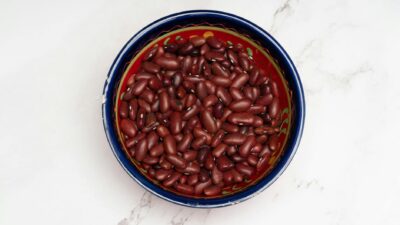
Beans glycemic index is consistently low across nearly every variety — lentils, kidney, black, pinto, chickpeas, and navy beans all fall between 22 and 39, well within the low-GI category. Glycemic load per 1 cup cooked serving runs 5 to 10. The exceptions are canned baked beans and chili beans (GI 40 to 48, GL 15 to 21) because of added sugar in the sauce. Beans owe their low GI to a combination of high resistant starch (30 to 40 percent of total starch), abundant soluble fiber, plant protein, and a tight seed-coat structure that limits enzyme access. For people with diabetes and prediabetes, beans are one of the most evidence-supported foods — consistent consumption is linked to lower A1c, improved insulin sensitivity, and lower long-term diabetes risk.
GI and GL by Bean Variety
| Bean | GI | Carbs per 1 cup cooked (g) | Fiber (g) | Net Carbs (g) | GL | Protein (g) |
|---|---|---|---|---|---|---|
| Lentils, red | 22-26 | 38 | 16 | 22 | 5 | 17 |
| Lentils, green/brown | 28-29 | 40 | 16 | 24 | 7 | 18 |
| Kidney beans | 24-29 | 40 | 13 | 27 | 6-7 | 15 |
| Chickpeas (garbanzo) | 28-36 | 45 | 13 | 32 | 9 | 15 |
| Black beans | 30 | 40 | 15 | 25 | 7-8 | 15 |
| Pinto beans | 33-39 | 45 | 15 | 30 | 10 | 15 |
| Navy beans | 31-38 | 47 | 19 | 28 | 9 | 15 |
| Cannellini (white) beans | 31 | 40 | 11 | 29 | 9 | 17 |
| Lima beans | 32 | 40 | 13 | 27 | 8-9 | 15 |
| Black-eyed peas | 33-38 | 35 | 11 | 24 | 8 | 14 |
| Soybeans (cooked) | 15-20 | 17 | 10 | 7 | 1-2 | 29 |
| Edamame | 15-20 | 14 | 8 | 6 | 1-2 | 18 |
| Baked beans, canned (sweetened) | 40-48 | 54 | 10 | 44 | 17-21 | 13 |
| Refried beans, canned | 38-44 | 45 | 14 | 31 | 12-14 | 14 |
Why Beans Have Such a Low GI
- Resistant starch: roughly 30 to 40 percent of bean starch resists digestion in the small intestine and ferments in the colon, producing short-chain fatty acids and bypassing the bloodstream glucose curve.
- Soluble fiber: 5 to 8 grams of soluble fiber per cup forms a gel in the gut that slows nutrient absorption.
- Plant protein: 15 to 18 grams per cup slows gastric emptying and triggers satiety signaling.
- Seed coat structure: the thick outer hull is rich in polyphenols and resists enzymatic breakdown.
- Amylose-rich starch: bean starch contains more amylose (a slowly digesting starch) than amylopectin.
- Tannins and phytates: plant compounds in beans may slow starch digestion further.
The Resistant Starch Effect
Resistant starch in beans behaves more like fiber than like a digestible carb:
- Resists digestion in the small intestine.
- Ferments in the colon, producing short-chain fatty acids that may improve insulin sensitivity.
- Feeds beneficial gut bacteria (prebiotic effect).
- Slows the appearance of glucose in the bloodstream.
- Creates the characteristic “delayed peak” of beans — glucose may rise 90 to 180 minutes after the meal rather than at the typical 60 minute mark.
Cooking dried beans, then cooling them in the refrigerator, then reheating increases resistant starch further — the same retrograde starch effect that lowers reheated rice and pasta GI.
Canned vs Dried: GI Differences
| Preparation | GI Effect | Practical Notes |
|---|---|---|
| Home-cooked dried, al dente | Lowest GI for variety | Most control over texture and sodium |
| Home-cooked dried, soft | Slightly higher GI | Easier on digestion; mild texture |
| Canned, drained and rinsed | 10-15% higher than dried | Convenient; lower sodium after rinsing |
| Canned in plain liquid | 10-20% higher than dried | Liquid is high in sodium |
| Canned baked beans (sweet sauce) | Much higher GI/GL from added sugar | Treat as a moderate-carb side, not a free legume |
| Refried beans (canned) | Higher GI from mashing and cooking | Often cooked with lard; check label |
| Mashed homemade beans | Slightly higher GI than whole | Better than canned refried |
Glycemic Load: The Numbers That Matter Most
Glycemic load combines GI with the carbohydrate amount per serving. For beans, GL gives the practical picture:
- 1/2 cup cooked beans: GL of 3 to 5 — minimal impact for most people.
- 1 cup cooked beans: GL of 6 to 10 — modest impact.
- 1.5 cups cooked beans: GL of 10 to 15 — meaningful for some people.
- 1 cup canned baked beans: GL of 17 to 21 — substantial; treat as a starchy carb.
- 1 cup cooked lentils: GL of 5 to 7 — among the lowest of all legumes per serving.
Bean Pairings That Lower the Curve Further
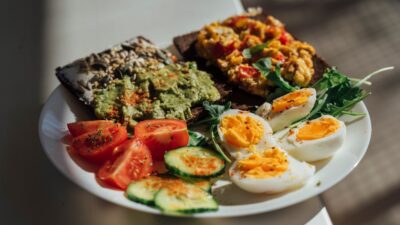
- Olive oil and avocado: fat slows starch digestion further.
- Vinegar (1 to 2 tbsp in dressing or salsa): lowers post-meal glucose 15 to 25 percent.
- Non-starchy vegetables: peppers, onions, leafy greens — adds volume and fiber.
- Animal protein: chicken, fish, or eggs alongside beans further flattens the curve.
- Lemon or lime juice: acidic flavor that also slows starch digestion.
- Herbs and spices: cumin, turmeric, garlic — flavor without carbs.
Bean Pairings to Avoid (or Manage)
- Beans and white rice: doubles the carb load — choose one or use brown rice in smaller portion.
- Beans and tortillas: a burrito wrap adds 30 to 40 grams of carbs on top of the bean carbs.
- Beans and cornbread: classic combo, but two starchy carbs in one meal.
- Beans and chips: nachos or 7-layer dip can pile up the chip carbs quickly.
- Baked beans + bread + corn: a triple-starch plate.
Practical Serving Sizes
| Serving | Carbs | Practical Use |
|---|---|---|
| 1/4 cup cooked | 10-12 g | Topping for salads |
| 1/2 cup cooked | 20-22 g | Side dish; recommended starting portion |
| 3/4 cup cooked | 30-34 g | Main protein portion |
| 1 cup cooked | 40-45 g | Standard adult serving; upper end for many with T2D |
| 1.5 cups cooked | 60-68 g | Too much carb load for most people in one sitting |
Practical Diabetes-Friendly Strategies
- Aim for 4 to 7 servings per week: evidence shows consistent intake improves glycemic control over months.
- Rotate varieties: different beans have different fiber profiles and polyphenols.
- Cook dried in batches: freeze 1/2 cup portions for fast weeknight use.
- Rinse canned beans: reduces sodium by 30 to 40 percent and removes some soluble starch.
- Avoid baked beans and chili-style canned beans daily: added sugar shifts these from “everyday food” to “occasional side.”
- Pair with olive oil and vegetables: the Mediterranean-style approach.
- Walk after meals: 10 to 20 minutes of walking lowers the bean meal peak by 20 to 30 percent.
- Test your personal response: the delayed peak from beans makes 2 and 3 hour readings important.
Long-Term Benefits Beyond Glucose
- Lower A1c in trials with 3 or more servings of legumes per week.
- Lower LDL cholesterol (5 to 10 mg/dL reduction with regular intake).
- Lower blood pressure (modest, 2 to 4 mmHg).
- Improved gut microbiome diversity.
- Higher satiety per calorie — supports weight loss.
- High-quality plant protein — useful for reducing red meat intake.
Personal Response Testing
- Test 1 cup of your usual cooked beans at 30, 60, 90, 120, and 180 minutes.
- The peak is often later than expected — many people miss the bean peak with a single 1 hour test.
- Compare home-cooked dried vs canned drained-and-rinsed at the same portion.
- Compare beans alone vs beans + rice — the difference can be 30 to 50 mg/dL.
- Adding olive oil and vinegar typically flattens the curve by another 15 to 25 percent.
Related Reading
See our broader guides on diet-and-nutrition, do beans raise blood sugar, and why do beans spike my blood sugar.
For additional reading, the American Diabetes Association recommends legumes as a cornerstone carbohydrate source, and the CDC diabetes resources highlight beans for their high fiber and modest glycemic impact.
The Bottom Line
Beans glycemic index is consistently low — lentils at 22 to 29, kidney beans at 24 to 29, chickpeas at 28 to 36, black beans at 30, and pinto beans at 33 to 39. The major exception is canned baked beans at 40 to 48 because of added sugar. Beans owe their low GI to resistant starch, soluble fiber, plant protein, and a tight seed coat structure that slows digestion. For people with diabetes and prediabetes, beans are one of the most evidence-supported foods — aim for 4 to 7 servings per week of 1/2 to 1 cup cooked, choose home-cooked or plain canned over sweetened canned varieties, and pair with olive oil, vinegar, and vegetables for the flattest possible glucose response.