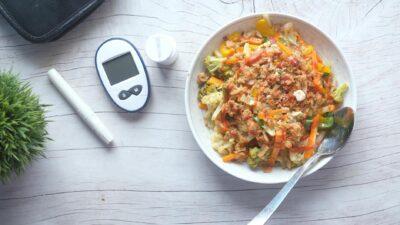
The best breakfast for diabetics combines 15 to 30 grams of protein, 5 to 10 grams of fiber, and healthy fats to keep blood sugar steady. Top choices include scrambled eggs with vegetables, Greek yogurt with nuts and berries, steel-cut oats with chia, and avocado toast on whole-grain bread. Avoid sugary cereals, pastries, and juice-only starts.
What Makes a Breakfast Diabetes-Friendly
A morning meal should blunt the overnight rise in blood sugar (the dawn phenomenon) without triggering a spike of its own. The formula:
- Protein first. 15 to 30 grams slows gastric emptying and reduces glucose response.
- Fiber next. 5 to 10 grams from whole grains, fruit, seeds, or vegetables.
- Healthy fat. A tablespoon or two of nuts, seeds, avocado, or olive oil.
- Moderate carbs. 30 to 45 grams from whole sources, not refined.
For the overall eating framework, review our prediabetes diet plan.
15 Blood-Sugar-Friendly Breakfast Ideas
Egg-Based
1. Veggie scrambled eggs with whole-grain toast. 2 eggs scrambled with spinach, tomato, and mushrooms, plus 1 slice whole-grain toast with 1 tsp butter. (~20g protein, 20g carbs, 5g fiber)
2. Vegetable omelet with feta. 3 eggs, 1 oz feta, peppers, onions, and spinach. Served with half an avocado. (~28g protein, 12g carbs, 7g fiber)
3. Egg muffin cups (make-ahead). Six eggs mixed with chopped broccoli, bell pepper, and 2 oz cheese, baked in a muffin tin. Two muffins = ~15g protein, 3g carbs.
4. Shakshuka with one slice of whole-grain pita. 2 eggs poached in tomato sauce with peppers and onions. (~18g protein, 25g carbs, 6g fiber)
Greek Yogurt-Based
5. Greek yogurt parfait. 3/4 cup plain 2% Greek yogurt, 1/2 cup berries, 2 tbsp chopped walnuts, 1 tbsp chia seeds. (~20g protein, 22g carbs, 7g fiber)
6. Savory yogurt bowl. 3/4 cup Greek yogurt topped with cucumber, cherry tomatoes, olive oil, salt, and pepper. Served with 1/2 cup berries. (~18g protein, 18g carbs, 4g fiber)
Oats
7. Steel-cut oats with almond butter and raspberries. 1/2 cup dry steel-cut oats cooked, 1 tbsp almond butter, 1/2 cup raspberries, cinnamon. (~12g protein, 40g carbs, 9g fiber)
8. Overnight oats with Greek yogurt. 1/3 cup rolled oats + 1/2 cup Greek yogurt + 1/2 cup unsweetened almond milk + 1 tbsp chia + 1/2 cup blueberries, refrigerated overnight. (~20g protein, 35g carbs, 10g fiber)
Chia and Seeds
9. Chia seed pudding. 3 tbsp chia seeds in 1 cup unsweetened almond milk soaked overnight, topped with 1/2 cup berries and 2 tbsp sliced almonds. (~12g protein, 25g carbs, 15g fiber)
10. Flax and walnut yogurt bowl. 3/4 cup Greek yogurt, 2 tbsp ground flax, 2 tbsp walnuts, cinnamon. (~22g protein, 15g carbs, 8g fiber)
Toast and Wrap
11. Avocado toast with smoked salmon. 1 slice whole-grain bread, 1/2 avocado, 2 oz smoked salmon, red onion, capers. (~20g protein, 22g carbs, 8g fiber)
12. Almond butter and banana toast. 1 slice whole-grain bread, 1 tbsp almond butter, 1/2 sliced banana, sprinkle of cinnamon. (~10g protein, 30g carbs, 6g fiber)
13. Breakfast wrap. Small whole-grain tortilla, 2 scrambled eggs, 1 oz cheese, salsa, spinach. (~22g protein, 25g carbs, 5g fiber)
Smoothies and Bowls
14. Berry protein smoothie. 1 scoop whey or pea protein, 1 cup unsweetened almond milk, 1/2 cup frozen berries, 1 tbsp flax, 1 tbsp almond butter, handful spinach. (~30g protein, 18g carbs, 10g fiber)
15. Cottage cheese bowl. 3/4 cup 2% cottage cheese, 1/2 cup diced peach, 2 tbsp sliced almonds, cinnamon. (~20g protein, 15g carbs, 3g fiber)
Macro Summary Table
| Breakfast | Calories | Protein (g) | Carbs (g) | Fiber (g) | Prep Time |
|---|---|---|---|---|---|
| Veggie scrambled eggs + toast | 350 | 20 | 20 | 5 | 10 min |
| Vegetable omelet + avocado | 450 | 28 | 12 | 7 | 12 min |
| Egg muffin cups (2) | 200 | 15 | 3 | 1 | 5 min (batch) |
| Shakshuka + pita | 400 | 18 | 25 | 6 | 15 min |
| Greek yogurt parfait | 320 | 20 | 22 | 7 | 3 min |
| Savory yogurt bowl | 280 | 18 | 18 | 4 | 5 min |
| Steel-cut oats + almond butter | 380 | 12 | 40 | 9 | 15 min |
| Overnight oats w/ Greek yogurt | 380 | 20 | 35 | 10 | 2 min (night before) |
| Chia seed pudding | 350 | 12 | 25 | 15 | 2 min (night before) |
| Flax + walnut yogurt | 350 | 22 | 15 | 8 | 3 min |
| Avocado toast + salmon | 400 | 20 | 22 | 8 | 5 min |
| Almond butter banana toast | 300 | 10 | 30 | 6 | 3 min |
| Breakfast wrap | 380 | 22 | 25 | 5 | 8 min |
| Berry protein smoothie | 340 | 30 | 18 | 10 | 3 min |
| Cottage cheese bowl | 280 | 20 | 15 | 3 | 3 min |
Foods to Avoid or Limit at Breakfast
- Sugary cereals (cornflakes, raisin bran, granola with added sugar) – 25g+ carbs with minimal protein
- Flavored instant oatmeal packets – 12g added sugar per packet
- Flavored yogurt cups – often 20g+ added sugar
- Pastries, muffins, doughnuts – 40 to 70g refined carbs plus trans fats
- Bagels with jam – 60 to 80g carbs with no protein
- Pancakes and waffles with syrup – 60g+ refined carbs and added sugar
- Fruit juice – 25g+ sugar per cup, minus the fiber
- Sweetened coffee drinks – 30 to 60g sugar in a large flavored latte
Tips From the ADA and CDC
The American Diabetes Association recommends building breakfasts around the plate method even when the portions are smaller – protein, produce, and a sensible carb. The CDC notes that skipping breakfast is linked to higher A1C in people with type 2 diabetes, so don’t opt out entirely.
Making It Work on Busy Mornings
- Batch-cook egg muffin cups on Sunday (lasts 5 days)
- Prep overnight oats or chia pudding in jars for 3 to 4 days
- Keep frozen berries, almond butter, and Greek yogurt as staples
- Boil a dozen eggs once a week for grab-and-go protein
- Portion nuts into small containers to prevent overeating
The Bottom Line
The best breakfast for diabetics pairs 15 to 30 grams of protein with 5 to 10 grams of fiber and a bit of healthy fat. Eggs, Greek yogurt, steel-cut oats, chia, and avocado toast on whole grain are reliable, blood-sugar-friendly choices. Skip sugary cereal, pastries, and juice-only starts. For more meal frameworks, explore our prediabetes diet guide.