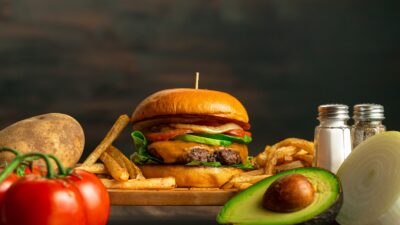
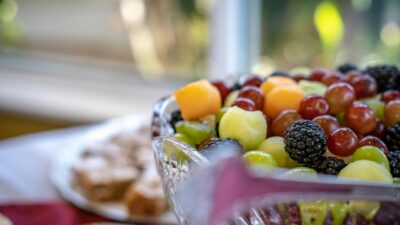
Carbs food simply means any food that contains carbohydrates — the body’s main fuel source. Carbs come from grains, fruits, starchy vegetables, legumes, dairy, and added sugars. Meat, fish, eggs, oils, and most leafy vegetables have almost none. If you have prediabetes, knowing which foods contain carbs (and how many grams) is the single most useful skill for managing blood sugar.
The Six Food Groups That Contain Carbs
- Grains and grain products — bread, rice, pasta, oats, cereal, crackers, tortillas
- Starchy vegetables — potatoes, corn, peas, sweet potatoes, winter squash
- Fruits — fresh, frozen, canned, dried, and juices
- Legumes — beans, lentils, chickpeas, soybeans
- Dairy — milk, yogurt, kefir (cheese has very little)
- Added sugars and sweets — soda, candy, baked goods, syrups, sweetened beverages
Carbs Food Reference Table
Use this as a quick reference. One “carb serving” equals 15 grams of total carbohydrate.
| Food | Serving Size | Carbs (g) |
|---|---|---|
| White bread | 1 slice | 15 |
| Whole-wheat bread | 1 slice | 15 |
| Bagel (plain) | 1 medium (4 oz) | 55 |
| Cooked rice (white or brown) | 1/3 cup | 15 |
| Cooked pasta | 1/2 cup | 20 |
| Oatmeal (cooked) | 1/2 cup | 15 |
| Tortilla (flour, 6 inch) | 1 | 15 |
| Baked potato (with skin) | 1 small (3 oz) | 15 |
| Sweet potato | 1/2 cup mashed | 20 |
| Corn | 1/2 cup | 15 |
| Apple | 1 small | 15 |
| Banana | 1/2 medium | 15 |
| Berries | 3/4 cup | 15 |
| Orange juice | 1/2 cup | 15 |
| Milk (skim, 1%, 2%, whole) | 1 cup | 12 |
| Plain Greek yogurt | 2/3 cup | 7 |
| Black beans (cooked) | 1/2 cup | 20 |
| Lentils (cooked) | 1/2 cup | 20 |
| Sugar (white, granulated) | 1 tablespoon | 12 |
| Regular soda | 12 oz | 39 |
Foods With Almost No Carbs
These foods can fill a plate without raising blood sugar:
- All meats, poultry, fish, and shellfish (unbreaded)
- Eggs
- Hard cheeses (cheddar, Swiss, Parmesan): less than 1 g per oz
- Most oils, butter, mayonnaise
- Non-starchy vegetables: leafy greens, broccoli, cauliflower, peppers, tomatoes, cucumber, asparagus, mushrooms (3-5 g per cup)
- Avocado (small amounts)
- Plain coffee, tea, water, sparkling water
- Most herbs and spices
How Much Carb to Eat at Each Meal
The American Diabetes Association no longer prescribes a one-size-fits-all carb target, but the following is a sensible starting framework for adults with prediabetes:
| Meal | Carbs (g) | Example |
|---|---|---|
| Breakfast | 30-45 | 1 cup oatmeal + 1/2 cup berries + Greek yogurt |
| Lunch | 45-60 | Turkey sandwich on whole wheat + apple |
| Dinner | 45-60 | 4 oz salmon + 1/2 cup quinoa + roasted vegetables |
| Snack (1-2/day) | 15-30 | Cheese + crackers, or hummus + carrots |
Reading the Nutrition Facts Label
Look at the “Total Carbohydrate” line — it includes starches, fibers, and sugars. The fiber subline matters: fiber is technically a carbohydrate but it does not raise blood sugar. Some carb-counting systems subtract fiber to get “net carbs” (Total Carb − Fiber = Net Carb). Either method works; pick one and stay consistent.
Always check the serving size first. A package of crackers may show 22 g per serving, but the package contains 4 servings — if you eat the whole bag, you ate 88 grams of carbs.
Smarter Carb Choices
Not all carbs are equal. Choose carbs that come with fiber, protein, or healthy fat to slow digestion and blunt glucose spikes:
- Swap white rice for brown rice, quinoa, or barley
- Choose whole fruit over juice (the fiber slows sugar absorption)
- Pick steel-cut oats over instant
- Use 100% whole-grain bread with at least 3 g fiber per slice
- Add beans or lentils to soups and salads for fiber + protein
For deeper coverage of carb categories, see our reference on what carbs are and our broader prediabetes diet plan.
Common Carb-Counting Mistakes
- Forgetting that beverages (juice, milk, soda, sweet coffee drinks) contain carbs
- Eyeballing portions instead of measuring at first
- Skipping label-reading on “healthy” packaged foods (granola bars, flavored yogurts, smoothies)
- Treating “sugar-free” as “carb-free” — sugar-free foods can still contain starches
- Underestimating restaurant portions, which are typically 2-3 servings
According to the CDC, consistent carb counting can lower A1C by up to 1 percentage point in motivated patients.
The Bottom Line
Carbs food is any food made primarily of grains, starchy vegetables, fruit, legumes, dairy, or added sugar. The goal is not to eliminate carbs but to choose high-fiber, less-processed sources and keep portions consistent across meals. Use the 15-gram serving rule, read labels, and aim for 45-60 grams per meal. Pair carbs with protein and fat to keep blood sugar steady all day.