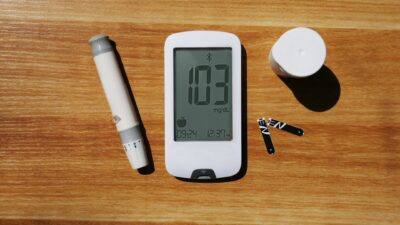
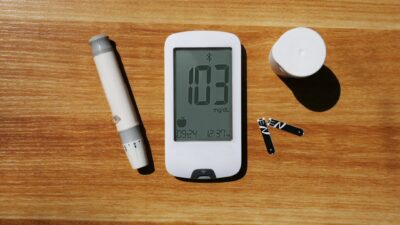
A blood sugar sensor is a small wearable device that measures glucose in the interstitial fluid just beneath your skin, then sends real-time readings to a reader, phone, or insulin pump. Unlike traditional finger-stick meters, a sensor tracks your glucose continuously, so you can see trends, spikes, and dips throughout the day and night without repeated lancing.
What a Blood Sugar Sensor Does
Most modern sensors are part of a continuous glucose monitoring (CGM) system. A thin flexible filament sits a few millimeters below the skin and uses a glucose-oxidase enzyme reaction to generate a tiny electrical signal proportional to the glucose concentration in the fluid around your cells. That signal is processed by a transmitter and converted into a glucose reading, usually every one to five minutes.
Because interstitial glucose lags capillary blood glucose by roughly five to ten minutes, rapid changes can read slightly behind a finger stick. For people tracking patterns related to prediabetes or diabetes, that trade-off is usually worth it because the data density is much higher than isolated finger sticks.
Types of Blood Sugar Sensors
The FDA recognizes several sensor categories, from short-term professional devices worn in the clinic to long-term implantable systems. The most common types used at home in the United States today are:
- Real-time CGM (rtCGM): Abbott FreeStyle Libre 2 and 3, Dexcom G6 and G7, Medtronic Guardian 4 — they push readings automatically to a display device.
- Intermittently scanned CGM (isCGM): Earlier FreeStyle Libre models require the user to scan the sensor with a reader or phone to retrieve data.
- Implantable CGM: The Senseonics Eversense E3 uses a sensor implanted under the skin for up to 180 days, paired with a removable transmitter worn on top.
- Professional / blinded CGM: Worn short term so a clinician can review patterns; the patient may not see live readings.
Accuracy and Calibration
Sensor accuracy is commonly reported as MARD — mean absolute relative difference from a reference blood glucose. Lower MARD means better agreement with a lab or finger-stick value. Most current consumer CGMs report MARD in the single digits to low teens, which is generally accepted for treatment decisions in ambulatory settings.
| Sensor | Wear Time | Typical Reported MARD | Finger-Stick Calibration |
|---|---|---|---|
| FreeStyle Libre 3 | Up to 14 days | Around 7.9 percent (adult arm) | Factory calibrated |
| Dexcom G7 | 10 days plus 12-hour grace | Around 8.2 percent | Factory calibrated, optional |
| Medtronic Guardian 4 | 7 days | Around 10.6 percent | Not required for most uses |
| Eversense E3 (implantable) | Up to 180 days | Around 8.5 to 9.6 percent | Two finger sticks per day |
Published MARD values come from manufacturer pivotal trials and may differ in real-world use. Always review the labeled indications in the user guide for the specific sensor you plan to wear.
Who Benefits From a Sensor
The American Diabetes Association recommends CGM for people with type 1 diabetes, many adults with type 2 diabetes using insulin, and select others based on shared decision-making. People with prediabetes-range A1C sometimes use sensors short term to visualize how meals, sleep, and activity influence glucose trends, though this is not an approved use for most devices.
A sensor can be especially useful if you experience frequent hypoglycemia, have hypoglycemia unawareness, are pregnant with diabetes, or want to reduce the burden of frequent finger sticks. Discuss specific clinical goals with your endocrinologist or primary care clinician before starting.
Where Sensors Fit in Daily Life
You wear a sensor continuously — showering, sleeping, and exercising — so practical factors matter. Adhesive durability, sensor placement on the upper arm or abdomen, phone compatibility, data-sharing features, and alarm customization all vary by brand. Many systems let you share data with family members or your care team through cloud dashboards, which supports better coaching and remote monitoring.
Cost and Insurance
Sensor costs vary widely in the United States. Without insurance, two sensors per month can run from about 150 to 350 dollars. Most private insurers and Medicare cover CGM for people meeting specific criteria, typically including intensive insulin therapy or documented problematic hypoglycemia. Your diabetes care team can help navigate prior-authorization paperwork and assistance programs.
Pairing sensor data with a thoughtful prediabetes diet and consistent exercise is usually more effective than the sensor alone. The sensor is a measuring tool; the lifestyle plan does the real work.
The Bottom Line
A blood sugar sensor turns point-in-time finger sticks into a flowing stream of glucose data, helping you see patterns you would otherwise miss. Today’s options differ in wear time, accuracy, and how they display readings, so choosing the right one is a conversation between you, your clinician, and your insurance plan. Used consistently, a sensor can sharpen your understanding of how food, movement, sleep, and medications shape your glucose every day.
Medical Disclaimer: This article is for informational purposes only and does not constitute medical advice. Always consult a qualified healthcare professional about any medical condition, device, or treatment plan.