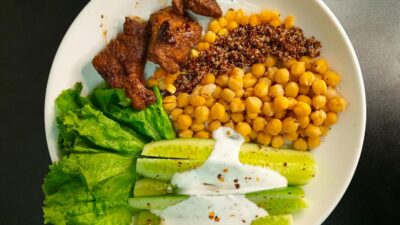
A diabetic food list focuses on non-starchy vegetables, lean proteins, whole grains, low-fat dairy, healthy fats, and fresh fruit — with sugary drinks, refined grains, and processed meats kept off the cart. Use this aisle-by-aisle guide as a printable shopping framework.
How to Build a Diabetic Plate
The American Diabetes Association’s Diabetes Plate Method is the simplest planning tool. On a 9-inch plate:
- 1/2 plate non-starchy vegetables
- 1/4 plate lean protein
- 1/4 plate whole grains or starchy vegetables
- Plus a serving of fruit and/or dairy on the side
- Beverage: water, unsweetened tea, or coffee
Your shopping list should make this plate easy to assemble five nights a week.
Aisle 1: Produce — Non-Starchy Vegetables
Eat freely. Less than 5 g of carbs per cup raw.
- Leafy greens — spinach, kale, romaine, arugula, mixed greens
- Cruciferous — broccoli, cauliflower, Brussels sprouts, cabbage, bok choy
- Bell peppers (all colors)
- Cucumbers, celery, radishes
- Zucchini, summer squash, eggplant
- Mushrooms — button, cremini, portobello, shiitake
- Asparagus, green beans, snap peas
- Tomatoes (technically a fruit)
- Onions, garlic, scallions, leeks
- Carrots (moderate; ~6 g carbs per medium)
Starchy Vegetables (Use 1/4 Plate Portions)
- Sweet potato
- Winter squash (butternut, acorn, kabocha)
- Corn
- Peas
- Beets
- White potato (smaller portions; pair with protein)
Aisle 2: Produce — Fresh Fruit
Choose 2-3 servings per day; one serving is about 15 g of carbs.
| Best choices (lower glycemic load) | Moderate (smaller portions) |
|---|---|
| Berries — strawberries, blueberries, raspberries, blackberries | Banana |
| Apples | Pineapple |
| Pears | Mango |
| Oranges, grapefruit, mandarins | Grapes |
| Cherries | Dried fruit (small amounts) |
| Peaches, plums, apricots | Watermelon |
| Kiwi | Figs |
Aisle 3: Meat, Poultry, Seafood
Aim for 3-4 oz cooked per meal.
- Skinless chicken breast and thighs
- Skinless turkey breast and ground turkey (93% or leaner)
- Lean beef cuts — eye of round, top sirloin, sirloin tip, top round, 93/7 ground beef
- Pork tenderloin and lean pork chops
- Seafood — salmon, tuna, sardines, cod, shrimp, scallops
- Eggs and egg whites
Plant-Based Proteins
- Tofu, tempeh, edamame
- Beans — black, kidney, pinto, navy, chickpeas, lentils
- Hemp, chia, and flax seeds
- Unsweetened nut butters
Aisle 4: Dairy and Refrigerated
- Plain Greek yogurt (0% or 2%) — high protein, low sugar
- Plain low-fat cottage cheese
- Unsweetened almond, soy, or oat milk
- 1% or skim milk
- Reduced-fat cheese — cheddar, mozzarella, feta, Swiss
- Hummus, guacamole, plain yogurt-based dips
Aisle 5: Whole Grains and Starches
| Choose | Limit/Skip |
|---|---|
| 100% whole-wheat bread | White bread, bagels |
| Steel-cut or rolled oats | Instant flavored oatmeal |
| Brown rice, wild rice, basmati | White rice (large portions) |
| Quinoa, farro, barley, bulgur | Sweetened breakfast cereals |
| Whole-grain pasta | Refined white pasta |
| Corn tortillas | Flour tortillas, white pita |
| Air-popped popcorn | Pretzels, crackers |
Aisle 6: Pantry Staples
- Olive oil, avocado oil, sesame oil
- Vinegars — apple cider, balsamic, red wine, rice
- Low-sodium broths and stocks
- Canned beans (no-salt-added or rinsed)
- Canned tomatoes (no added sugar)
- Canned tuna and salmon in water
- Nuts and seeds — almonds, walnuts, pistachios, pumpkin seeds, sunflower seeds, chia, flax
- Nut butters (no added sugar)
- Dried lentils and split peas
- Whole-grain flours — almond, coconut, whole wheat
- Herbs and spices (salt-free blends)
- Mustard, salsa, hot sauce, low-sodium soy sauce
Aisle 7: Frozen
- Frozen vegetables (no added sauce)
- Frozen berries (no added sugar)
- Frozen fish fillets and shrimp
- Frozen edamame
- Frozen riced cauliflower
Beverages
| Best | Limit | Avoid |
|---|---|---|
| Water (still or sparkling) | Diet soda | Regular soda |
| Unsweetened tea, coffee | Light beer (with food) | Sweet tea, lemonade |
| Unsweetened plant milks | Dry wine | Fruit juice |
| Herbal infusions | — | Sports/energy drinks |
Foods to Skip or Strictly Limit
- Sugar-sweetened beverages
- Pastries, cookies, candy, donuts
- Processed meats — bacon, sausage, hot dogs, deli meats
- Fried foods and fast food
- Sweetened breakfast cereals
- Flavored yogurts with added sugar
- White bread, white pasta, white rice (in large portions)
- Full-fat ice cream and milkshakes
- Sugary granola bars and snack bars
Sample 7-Day Meal Outline
| Day | Breakfast | Lunch | Dinner |
|---|---|---|---|
| Mon | Greek yogurt + berries + walnuts | Grilled chicken salad | Salmon, broccoli, quinoa |
| Tue | Veggie omelet + whole-grain toast | Lentil soup + side salad | Turkey chili + cauliflower rice |
| Wed | Steel-cut oats + chia + apple | Tuna salad in lettuce wraps | Pork tenderloin, sweet potato, asparagus |
| Thu | Cottage cheese + peach + flax | Quinoa bowl with chickpeas | Stir-fried shrimp + brown rice |
| Fri | Smoothie: spinach, berries, protein | Turkey + avocado wrap | Baked cod, green beans, farro |
| Sat | Eggs, sauteed spinach, tomato | Chicken & vegetable stir-fry | Lean beef chili + side salad |
| Sun | Whole-grain pancakes + Greek yogurt | Mediterranean platter | Roast chicken, roasted veg, wild rice |
Pair With These Resources
For deeper meal-planning, see our prediabetes diet framework, our complete food for diabetics guide, and a focused high-protein foods list for building meals.
The Bottom Line
A diabetic food list is less a strict prescription and more a sensible default: fill your cart with non-starchy vegetables, lean proteins, whole grains, low-fat dairy, healthy fats, and fresh fruit. Skip the sugary drinks, refined carbs, and ultra-processed snacks. Stock pantry staples once and you will always have the building blocks for a blood-sugar-friendly plate.