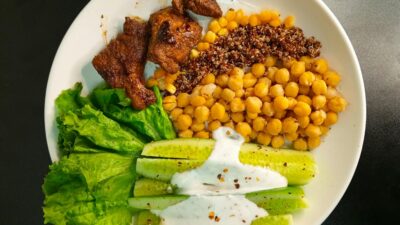
A printable type 2 diabetes diet plan organizes meals around non-starchy vegetables, lean protein, high-fiber carbohydrates, and healthy fats — typically following the American Diabetes Association’s plate method. The 7-day plan below provides balanced meals with roughly 30-60 grams of carbohydrate each, built from everyday grocery store foods. Print it, take it shopping, and review it with your clinician or registered dietitian before making major changes.
The Framework: The ADA Plate Method
The simplest, most evidence-based approach to building a diabetes-friendly plate is the ADA plate method:
- Half the plate: Non-starchy vegetables (leafy greens, broccoli, peppers, zucchini, cauliflower, tomatoes).
- One quarter: Lean protein (chicken, fish, tofu, beans, eggs, low-fat dairy).
- One quarter: Fiber-rich carbohydrate (whole grains, starchy vegetables, legumes, fruit).
- Add: A serving of healthy fat (olive oil, avocado, nuts, seeds).
- Drink: Water, unsweetened coffee, or tea.
This structure works whether you are cooking at home, ordering out, or packing lunch. It also pairs well with intermittent fasting, Mediterranean, DASH, or vegetarian patterns — all of which the ADA accepts as acceptable eating patterns for diabetes.
7-Day Type 2 Diabetes Meal Plan
| Day | Breakfast | Lunch | Dinner | Snack |
|---|---|---|---|---|
| Monday | Greek yogurt + berries + 2 tbsp walnuts | Grilled chicken salad with chickpeas + vinaigrette | Baked salmon + quinoa + roasted broccoli | Apple + 1 tbsp peanut butter |
| Tuesday | 2 eggs + 1 slice whole-grain toast + avocado | Turkey and hummus wrap (whole-wheat tortilla) + carrots | Stir-fry beef + bell peppers + brown rice (½ cup) | String cheese + 10 almonds |
| Wednesday | Overnight oats (½ cup oats, chia, milk, cinnamon) | Lentil soup + side salad + 1 small apple | Grilled chicken + sweet potato (small) + green beans | Celery + 2 tbsp hummus |
| Thursday | Veggie omelet (2 eggs + spinach + tomato) + 1 orange | Tuna salad on greens + whole-grain crackers | Shrimp tacos (2 corn tortillas) + cabbage slaw | Cottage cheese + cucumber slices |
| Friday | Smoothie: spinach, berries, protein powder, almond milk | Chicken and quinoa bowl + roasted vegetables | Baked cod + wild rice + asparagus | Handful of pistachios |
| Saturday | Whole-grain pancake (1) + Greek yogurt + berries | Turkey chili + side salad | Grilled steak + mashed cauliflower + Brussels sprouts | Pear + 1 oz cheddar cheese |
| Sunday | Avocado toast (1 slice whole-grain) + 2 eggs | Mediterranean chickpea salad + hard-boiled egg | Roast chicken + barley + roasted carrots | Greek yogurt + cinnamon + walnuts |
Each meal provides roughly 30-60 grams of carbohydrate, 20-35 grams of protein, and 8-15 grams of fiber. Snacks provide 15-20 grams of carbohydrate with protein or fat. Adjust portions up or down based on your weight goals, medications, and hunger. For more detail on which foods support blood sugar stability, see our diet and nutrition hub.
Grocery List for the Week
Print this list and take it with you. It covers roughly 80% of the ingredients in the plan above:
Produce
- Leafy greens (spinach, mixed salad greens, cabbage)
- Broccoli, cauliflower, Brussels sprouts, asparagus, green beans
- Bell peppers, zucchini, tomatoes, carrots, celery, cucumber
- Sweet potato (1 small), avocados (2)
- Berries (strawberries, blueberries), apples, pears, oranges
Proteins
- Chicken breast, ground turkey, lean steak
- Salmon, cod, shrimp, canned tuna
- Eggs (1 dozen), tofu, canned chickpeas, canned black beans, lentils
Whole Grains and Starches
- Rolled oats, quinoa, brown rice, barley, wild rice
- Whole-grain bread, whole-wheat tortillas, corn tortillas
- Whole-grain crackers
Dairy and Alternatives
- Plain Greek yogurt (nonfat or 2%)
- Low-fat cottage cheese
- String cheese, cheddar
- Unsweetened almond milk or low-fat milk
Fats, Nuts, and Pantry
- Olive oil, vinegar, mustard, lemons
- Almonds, walnuts, pistachios, chia seeds
- Peanut butter (no added sugar), hummus
- Cinnamon, herbs, spices, low-sodium broth
How to Customize This Plan
- For weight loss: Reduce portion sizes by 10-20% and keep carb servings at the lower end of the range.
- For muscle maintenance: Increase protein to 25-35 grams per meal.
- For insulin users: Count carbs precisely and follow your ratio; do not change timing without your clinician’s input.
- For Mediterranean style: Add more fish, olive oil, legumes, and nuts; reduce red meat.
- For lower carb: Replace rice, quinoa, and bread with larger vegetable portions and added protein.
- For plant-based: Swap animal protein for tofu, tempeh, lentils, beans, and edamame.
Tips to Stay on Track
- Meal prep on Sunday: Cook proteins and grains in batches; wash and cut vegetables.
- Use a food scale or measuring cups for carbohydrate-dense foods during the first 2-3 weeks.
- Pair carbs with protein or fat to slow absorption and reduce post-meal glucose spikes.
- Walk 10-20 minutes after meals — even a light stroll reduces post-meal glucose by 20-40 mg/dL.
- Drink water throughout the day — sip regularly, especially before meals.
- Check blood sugar pre-meal and 1-2 hours post-meal for a few days to learn how your body responds.
Foods to Limit or Avoid
- Sugar-sweetened beverages (soda, sweet tea, juice, flavored lattes).
- Refined grains (white bread, white rice, pastries) as the main carb source.
- Fried foods and items high in trans fats.
- Processed meats high in sodium and nitrates (bacon, hot dogs, deli meats) as daily staples.
- Added sugars — read labels; sugar hides as “syrup,” “juice concentrate,” and many other names.
These foods are not strictly forbidden, but frequent intake undermines glucose control and cardiovascular health. Many people do best when these are reserved for occasional treats rather than daily habits.
How Diet Fits Into a Full Diabetes Plan
Diet is one leg of a three-legged stool — together with movement and, for many people, medication. According to the ADA, structured lifestyle change can reduce A1C by 0.5 to 2.0 percentage points in type 2 diabetes, comparable to some medications. Weight loss of 5-10% often drives clinically meaningful improvement; weight loss of 15% or more, achieved early after diagnosis, can produce remission for some people.
If you are still in the prediabetes range, this same meal framework applies — and reversing prediabetes is usually possible with consistent diet and activity changes. For more on what reversal actually looks like, see our guide to whether prediabetes is reversible.
When to See a Registered Dietitian
A registered dietitian or certified diabetes care and education specialist can personalize carbohydrate targets, coordinate meals with medications, and help with specific conditions such as kidney disease, gastroparesis, celiac disease, or pregnancy. Most commercial insurance plans and Medicare cover medical nutrition therapy for diabetes. Ask your primary care clinician for a referral.
The Bottom Line
A type 2 diabetes diet plan built on the plate method — half non-starchy vegetables, a quarter lean protein, a quarter fiber-rich carbohydrate, plus healthy fats — is the most practical framework for most people. Use the 7-day plan above as a printable starting point, then adjust portions and personalize with your care team. Consistency matters more than perfection: small, repeatable changes drive lower A1C, better energy, and healthier weight over time.
Sources
- American Diabetes Association. Standards of Care in Diabetes 2025 — Lifestyle Behaviors.
- Evert AB, Dennison M, Gardner CD, et al. Nutrition Therapy for Adults With Diabetes or Prediabetes. Diabetes Care. 2019;42(5):731-754.
- Centers for Disease Control and Prevention. Diabetes Meal Planning.
- National Institute of Diabetes and Digestive and Kidney Diseases. Diabetes Diet, Eating, and Physical Activity.