Yes, do bananas spike blood sugar has a short answer: bananas do raise glucose, but usually moderately and manageably. A medium banana carries about 27 g of carbohydrate with a glycemic index near 51. Ripeness, portion size, and what you pair it with all shift the response. For most people with prediabetes, bananas can fit—just not in every form.
Bananas at a Nutritional Glance
Per USDA FoodData Central, a medium banana (118 g) provides:
| Nutrient | Amount |
|---|---|
| Calories | 105 |
| Carbohydrate | 27 g |
| Sugars | 14 g |
| Fiber | 3.1 g |
| Net carbs | ~24 g |
| Protein | 1.3 g |
| Potassium | 422 mg |
| Vitamin B6 | 0.4 mg |
Glycemic Index and Load
Banana’s glycemic index is roughly 51 (low-moderate), per the Harvard T.H. Chan School of Public Health. Glycemic load, which accounts for portion, is about 13 for a medium fruit—lower than white bread (GL ~20) but higher than berries (GL ~3).
Why Ripeness Changes Everything
A green banana and a brown-speckled banana produce very different glucose responses.
| Ripeness | Starch vs. Sugar | Glucose Impact |
|---|---|---|
| Green (firm) | Mostly resistant starch | Minimal spike |
| Yellow (even) | Mixed starch/sugar | Moderate spike |
| Yellow, few spots | More sugar | Moderate–high |
| Brown-speckled | Mostly free sugars | Larger spike |
Resistant starch resists digestion in the small intestine and ferments in the colon, behaving more like fiber. Research links regular resistant-starch intake to better insulin sensitivity over time.
How to Eat Bananas Without Big Spikes
Pair With Protein or Fat
- Banana + 1 tablespoon peanut or almond butter
- Half a banana sliced into full-fat Greek yogurt
- Banana with a handful of walnuts or almonds
- Banana with cheese (an under-used combination)
These pairings slow digestion and flatten the curve by 20–40%.
Choose Less Ripe
Buy green or barely yellow. Eat within 2–3 days, then let the remainder ripen only if you plan to use them in a cooked recipe.
Portion Control
A small banana (6–7 inches) has ~19 g carbs; a large one (over 9 inches) has ~35 g. For people watching carbs tightly, half a banana is usually the sweet spot.
Walk After
A 10–15 minute walk within 30 minutes of eating reduces the peak by 20–50 mg/dL, per multiple meta-analyses.
Time It Right
Mid-morning or as a pre-workout snack typically works better than bedtime, when insulin sensitivity is lower.
When Bananas Are a Worse Choice
- Smoothies with banana + juice + honey + yogurt — easy 60–80 g carb load
- Banana bread and muffins — refined flour and added sugar
- Overripe bananas eaten alone as a snack
- Large bananas daily with no protein or fat pair
Do Bananas Fit in a Prediabetes Diet?
The ADA encourages whole fruit as part of a healthy eating pattern for people with and without diabetes. A half or small banana, paired with protein or fat, is compatible with most prediabetes plans.
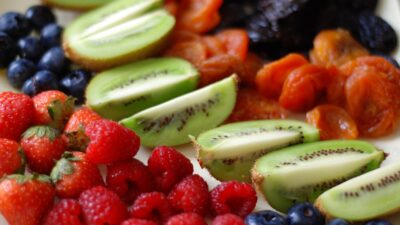
That said, fruit choice matters. Berries, apples, pears, kiwi, oranges, and cherries typically produce smaller spikes than bananas, mango, pineapple, or grapes. Variety wins over any single fruit.
Testing Your Personal Response
Responses vary widely between people. One person peaks at 130 mg/dL with a whole ripe banana; another hits 180. Check with a meter or CGM:
- Fast for 2 hours beforehand.
- Test just before eating.
- Eat the banana (alone first, paired second day).
- Re-test at 60 and 120 minutes.
- Aim for a rise under 40 mg/dL from baseline for most prediabetes plans.
If your banana alone causes a 60+ mg/dL rise but banana with peanut butter causes 25, that is useful intel.
Other Fruits to Rotate In
- Berries (blueberries, strawberries, raspberries): lowest glucose impact, high fiber, high antioxidants.
- Apples and pears: pectin slows absorption.
- Citrus: oranges, grapefruit, mandarins — moderate and high in vitamin C.
- Stone fruits: peaches, plums, cherries.
- Kiwi: high fiber relative to sugar.
Our diet and nutrition hub breaks down meal-building principles, and our prediabetes 101 hub covers the bigger picture of managing glucose through food.
The Bottom Line
Bananas do spike blood sugar, but the spike is moderate and very modifiable. Pick less-ripe fruit, keep portions to half or small bananas, pair with protein or fat, and walk after. Bananas are not “forbidden” on prediabetes plans—they are simply one fruit among many, best used with a little strategy rather than avoidance.
This article is educational and not a substitute for personalized medical advice. Always consult your healthcare provider about symptoms, testing, and treatment.