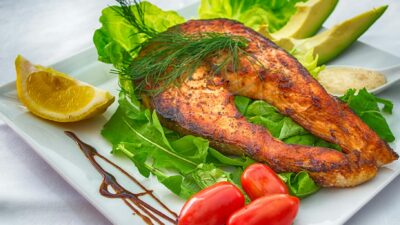
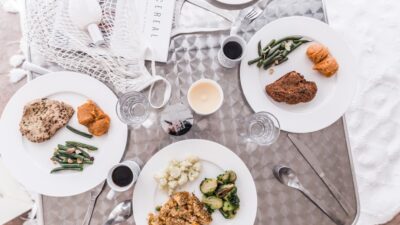
A keto meal plan for diabetics targets 20 to 30 g of net carbs per day to keep the body in nutritional ketosis — directly lowering blood glucose, insulin demand, and insulin resistance. This guide gives you a complete 7-day plan with breakfasts, lunches, dinners, snacks, a grocery list, batch-cooking strategy, and macros. The meals are built around eggs, fatty fish, poultry, leafy greens, non-starchy vegetables, avocado, olive oil, full-fat dairy, and nuts. Before starting, coordinate medication adjustments with your doctor — sulfonylureas, SGLT2 inhibitors, and insulin all need attention within the first week to prevent hypoglycemia.
Daily Targets
| Macro | Target | Sources |
|---|---|---|
| Net carbs | 20–30 g | Non-starchy vegetables, nuts, seeds, small berry portions, dairy |
| Protein | 90–120 g | Eggs, fish, poultry, beef, pork, cheese |
| Fat | 140–170 g | Olive oil, butter, avocado, fatty cuts, nuts, full-fat dairy |
| Calories | 1,700–2,100 | Adjust to satiety; not typically calorie-counted |
| Sodium | 3–5 g | Salt food liberally; broth daily |
| Magnesium | 300–400 mg | Pumpkin seeds, almonds, leafy greens, supplement |
| Potassium | 3–4 g | Avocado, salmon, spinach, mushrooms |
| Water | 2–3 L | Plain water, sparkling water, herbal tea, broth |
7-Day Keto Meal Plan for Diabetics
| Day | Breakfast | Lunch | Dinner | Net Carbs |
|---|---|---|---|---|
| Mon | 3-egg omelet with spinach, mushrooms, cheddar; 1/2 avocado; coffee with heavy cream | Chicken Caesar salad (no croutons), olive oil and lemon dressing, parmesan, anchovies | Pan-seared salmon, roasted broccoli with butter, side salad | ~18 g |
| Tue | Full-fat Greek yogurt (3/4 cup), 2 tbsp chia seeds, 1/4 cup raspberries, 1 tbsp almond butter | Tuna salad on butter lettuce cups with avocado, celery, olive oil mayo | Ribeye steak, roasted asparagus, garlic butter mushrooms | ~22 g |
| Wed | 2 eggs scrambled in butter, 2 sausage links, sauteed spinach | Egg salad on lettuce wraps with sliced cucumber and olives | Baked chicken thighs (skin on), roasted Brussels sprouts with bacon | ~16 g |
| Thu | Keto smoothie: 1/2 avocado, 1 cup unsweetened almond milk, 1 scoop whey, 1 tbsp MCT oil, ice | Cobb salad: greens, chicken, bacon, blue cheese, egg, avocado, ranch (no sugar) | Pork chops, cauliflower mash with butter, sauteed kale | ~19 g |
| Fri | 2 eggs over-easy on bed of sauteed greens, 2 strips bacon, 1/4 avocado | Zucchini “noodles” with pesto and grilled shrimp | Bunless burger with cheese, lettuce, tomato; side salad with olive oil dressing | ~20 g |
| Sat | Crustless quiche with bacon, spinach, gruyere (2 slices) | Cauliflower rice bowl with grilled steak, salsa, sour cream, avocado | Baked cod with lemon butter, roasted broccoli, mixed greens | ~17 g |
| Sun | 3 eggs scrambled with smoked salmon, cream cheese, chives; cucumber slices | Antipasto plate: prosciutto, salami, mozzarella, olives, marinated artichokes, greens | Slow-cooked beef pot roast with mushrooms, leftover cauliflower mash | ~21 g |
Snack options (1 to 2 per day if hungry): 1 oz macadamia nuts (2 g net carbs), 2 hard-boiled eggs (1 g), 1 oz cheese (1 g), 2 tbsp almond butter with celery (3 g), 1/4 cup pumpkin seeds (3 g), 2 tbsp full-fat sour cream with cucumber (2 g), 1/2 avocado with salt (2 g), olives (1 g per 10 olives).
Grocery List for One Week
| Category | Items |
|---|---|
| Proteins | 18 eggs, 1 lb salmon, 1 lb chicken thighs, 1 lb chicken breast, 1 lb ribeye, 1 lb ground beef, 8 oz pork chops, 1 lb cod, 8 oz bacon, 8 oz Italian sausage, 8 oz tuna (cans or fresh), 4 oz smoked salmon |
| Dairy | 1 lb butter, 1 pint heavy cream, 16 oz full-fat Greek yogurt, 8 oz cheddar, 8 oz parmesan, 8 oz gruyere, 8 oz cream cheese, 8 oz blue cheese, 8 oz mozzarella, 8 oz sour cream |
| Vegetables | 2 bags spinach, 2 heads broccoli, 1 head cauliflower, 1 lb Brussels sprouts, 2 bunches kale, 1 lb asparagus, 8 oz mushrooms, 2 zucchini, 2 cucumbers, 2 heads romaine, 2 heads butter lettuce, mixed greens (large bag), 2 bell peppers, 2 tomatoes |
| Fats and oils | 1 bottle extra virgin olive oil, 1 jar olive oil mayo, 1 jar pesto, 1 jar olives, 6 avocados, 1 bottle avocado oil, 1 jar coconut oil |
| Nuts and seeds | 1 lb macadamia nuts, 8 oz almonds, 4 oz pumpkin seeds, 4 oz chia seeds, 1 jar almond butter |
| Pantry | Salt (kosher and finishing), pepper, garlic, lemon, herbs and spices, vinegar, mustard, unsweetened almond milk, electrolyte powder (no sugar), bone broth |
| Berries (small) | 1/2 pint raspberries or strawberries |
Sunday Batch Prep — 90 Minutes
- Hard-boil 8 eggs: Snack-ready protein for the week.
- Cook 1 lb chicken breasts: Bake at 400°F for 22 to 25 minutes; slice for salads.
- Make cauliflower mash: Steam 1 head, blend with 4 tbsp butter, salt, garlic. Refrigerate 3 to 4 servings.
- Roast 2 trays of vegetables: Broccoli, Brussels sprouts, asparagus tossed in olive oil at 425°F for 20 minutes.
- Pre-portion macadamia nuts: Five 1-oz bags for the week.
- Make a vinaigrette: Olive oil, vinegar, mustard, salt, pepper in a jar — lasts 7 days.
- Cook bacon: Bake 1 lb on a sheet at 400°F for 15 to 18 minutes; refrigerate, crumble onto salads or reheat in microwave.
Breakfast Templates (Pick One)
- Classic: 2 to 3 eggs + fatty protein (bacon, sausage, smoked salmon) + avocado or greens.
- Yogurt bowl: Full-fat Greek yogurt + chia/flax seeds + small berry portion + nut butter.
- Smoothie: Unsweetened almond milk + avocado or coconut cream + whey protein + MCT oil + ice.
- Crustless quiche: Eggs + cream + cheese + cooked vegetables + bacon — bake Sunday, eat all week.
- Coffee fasting: Black coffee or coffee with heavy cream — skip food until lunch (intermittent fasting overlay).
Lunch Templates
- Big salad: Greens + 4 to 6 oz protein + cheese + avocado + olive oil dressing.
- Lettuce wraps: Butter lettuce with tuna, egg, or chicken salad.
- Leftover dinner: Often the easiest — make extra dinner protein and veggie.
- Cauliflower rice bowl: Cauli rice + protein + salsa + sour cream + cheese.
- Antipasto plate: Cured meats + cheese + olives + marinated vegetables + greens.
Dinner Templates
- Protein + 2 vegetables: 6 to 8 oz protein + non-starchy vegetable + side salad.
- One-pan sheet meal: Salmon or chicken thighs with vegetables roasted on the same tray.
- Soup or stew: Slow-cooked beef, lamb, or chicken with low-carb vegetables and broth.
- Zucchini noodles: Spiralized zucchini with pesto, meatballs, or shrimp.
- Cauliflower swap: Cauliflower mash, rice, pizza crust replaces starchy sides.
Net Carb Quick Reference for Common Foods
| Food | Serving | Net Carbs (g) |
|---|---|---|
| Egg | 1 large | 0.4 |
| Salmon | 4 oz | 0 |
| Chicken breast | 4 oz | 0 |
| Ground beef 85/15 | 4 oz | 0 |
| Avocado | 1/2 medium | 2 |
| Spinach (cooked) | 1 cup | 2 |
| Broccoli | 1 cup cooked | 4 |
| Cauliflower | 1 cup cooked | 3 |
| Brussels sprouts | 1 cup cooked | 5 |
| Asparagus | 1 cup cooked | 2 |
| Mushrooms | 1 cup cooked | 2 |
| Heavy cream | 2 tbsp | 0.8 |
| Cheddar cheese | 1 oz | 0.4 |
| Greek yogurt (full-fat unsweetened) | 3/4 cup | 5 |
| Almond butter | 2 tbsp | 3 |
| Macadamia nuts | 1 oz | 2 |
| Raspberries | 1/4 cup | 2 |
| Strawberries | 1/4 cup sliced | 2 |
| Olives | 10 olives | 1 |
Eating Out on Keto
- Steakhouse: Steak + non-starchy vegetable + side salad. Skip bread basket and potato.
- Italian: Antipasto + grilled fish or chicken + side vegetables. Skip pasta, bread, polenta.
- Mexican: Fajita meat + lettuce + cheese + sour cream + guacamole + salsa. Skip tortillas, rice, beans, chips.
- Asian: Sashimi (skip rice), Korean BBQ with lettuce wraps, Vietnamese pho without noodles. Watch sugary sauces.
- Burger places: Bunless burger with cheese + side salad with oil and vinegar. Skip fries, ketchup, sweet sauces.
- Breakfast diners: Eggs any style + bacon/sausage + side of fruit (small). Skip toast, pancakes, hash browns.
Common Pitfalls to Avoid
- Too much protein: Excess protein converts to glucose via gluconeogenesis. Stay at 0.7 to 1.0 g per pound of lean mass.
- Not enough fat: Without fat, you stay hungry and the diet feels like deprivation.
- Skipping electrolytes: The #1 cause of keto flu and giving up in week 1.
- Hidden carbs in sauces: BBQ sauce, ketchup, teriyaki, sweet salad dressings can add 10 to 20 g carbs per meal.
- Too many “keto products”: Keto bars, cookies, ice creams — many spike glucose despite the marketing. Stick to whole foods.
- Not adjusting medications: The single most dangerous mistake. Coordinate doses with your doctor before day one.
- Inadequate fiber: Without grains, fiber comes from non-starchy vegetables, chia, flax, and avocado. Aim for 25 to 30 g daily.
Related Reading
For background, see our deep dives on the keto diet for diabetics, keto for prediabetes, low-carb meal planning for prediabetes, and keto vs Mediterranean diet. For background on metabolic markers, see A1C levels. For published trial data, the Virta Health research page documents 1- and 2-year keto outcomes in type 2 diabetes.
The Bottom Line
A keto meal plan for diabetics is structured around 20 to 30 g of net carbs per day, with calories driven primarily by fat and adequate protein from eggs, fish, poultry, beef, and full-fat dairy. The 7-day plan above keeps net carbs in target while delivering satisfying meals built from whole foods. Sunday batch cooking turns weekday meals into 5- to 10-minute assembly. Pay attention to electrolytes — sodium, magnesium, and potassium prevent most adaptation symptoms. Coordinate medication changes with your doctor before starting, because diabetes medication doses typically need to drop within the first week. Get baseline labs and re-test at 3 and 6 months to track your progress.