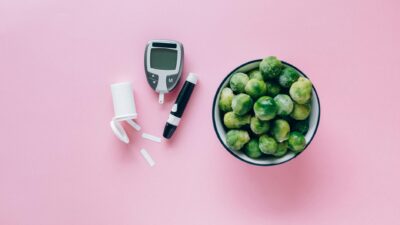
Late-night eating is one of the more consistently documented diabetes-worsening behaviors, even though it rarely gets the attention given to specific foods. The mechanism is well established: human insulin sensitivity follows a circadian rhythm, and by 9 to 10 pm the same carbohydrate load produces a meaningfully higher and longer glucose peak than it would at noon. Late eating also worsens sleep quality, increases reflux risk, and amplifies the dawn phenomenon — the natural morning glucose rise driven by cortisol. For adults with type 2 diabetes, the cumulative effect of habitual late eating can be a 0.2 to 0.5 percentage point higher A1C compared with the same diet eaten earlier.
The Circadian Mechanism
| Time | Insulin sensitivity | Melatonin level | Same-meal glucose response |
|---|---|---|---|
| 12 pm | High | Low | Smallest peak |
| 4 pm | Moderate-high | Low | Modest peak |
| 7 pm | Moderate | Rising | Higher peak |
| 9 pm | Lower | Rising sharply | Substantially higher peak |
| 11 pm | Lowest | Peak | Largest peak |
| Overnight | Lowest | Peak | Lingering elevation |
| 4-8 am | Variable; dawn rise | Falling | Glucose rises without eating |
Why Insulin Sensitivity Drops in the Evening
- Melatonin release at dusk directly suppresses pancreatic insulin secretion.
- Circadian rhythm of glucose tolerance evolved to support fasting overnight.
- Reduced peripheral tissue glucose uptake in the evening.
- Cortisol rises in late afternoon and early evening, opposing insulin action.
- Net effect: identical meals produce 25 to 50% higher glucose peaks at 9 pm than at noon.
The Dawn Phenomenon Overlap
- Late eating raises the baseline glucose entering the overnight fasting period.
- The dawn phenomenon then adds 20 to 50 mg/dL on top of that elevated baseline.
- CGM users often see the worst morning glucose readings on days following late dinners.
- The combination effect is larger than either factor alone.
- Finishing dinner 2 to 3 hours before bed allows glucose to return toward baseline before the dawn rise.
Sleep Disruption
- Late eating delays sleep onset and reduces deep-sleep duration.
- Poor sleep independently worsens glycemic control — usually 10 to 20% reduction in insulin sensitivity the next day.
- The combined effect compounds: late meal + poor sleep + dawn phenomenon = worst morning glucose.
- Heavy or spicy late meals make reflux worse, further disrupting sleep.
- Sleeping fewer than 6 hours regularly is independently linked to higher A1C.
Late-Night Cravings — What Actually Drives Them
- Insufficient dinner — eating too small or too low-protein leaves real hunger by bedtime.
- Habit and stress — TV-watching, decompressing, emotional regulation.
- Sleep restriction — short sleep increases ghrelin and decreases leptin, driving appetite.
- Alcohol — disinhibits eating decisions; also lowers blood glucose, prompting hunger.
- Highly processed food availability — convenience drives intake.
- Fix the upstream cause when possible rather than only managing the late snack.
If You Must Eat Late
| Snack option | Carbs (g) | Protein (g) | Diabetes verdict |
|---|---|---|---|
| Hard-boiled egg | 1 | 6 | Best option |
| Plain Greek yogurt (½ cup) | 5 | 11 | Excellent |
| Cottage cheese (½ cup) | 5 | 12 | Excellent |
| String cheese | 1 | 7 | Excellent |
| Almonds (small handful) | 3 | 3 | Good |
| Nut butter on celery | 4 | 4 | Good |
| Plain popcorn (1 cup) | 6 | 1 | Moderate |
| Bowl of cereal | 30-50 | 2 | Avoid |
| Ice cream (½ cup) | 20-30 | 3 | Avoid |
| Chips/crackers | 20-30 | 2 | Avoid |
Connection to Other Patterns
Late-night eating intersects directly with meal timing more broadly — see our guide to intermittent fasting and diabetes for how time-restricted eating addresses this. Carbohydrate distribution matters too — see carb counting for how to plan daily intake. Sleep quality and glycemic control are tightly linked; improving one often improves the other.
Who Should Be Careful
- People on insulin or sulfonylureas who skip dinner may be at risk of nighttime hypoglycemia — work with the care team if eating windows shift.
- People with a history of eating disorders — restrictive eating windows can trigger problems.
- Shift workers — circadian misalignment is unavoidable; protein-rich meals before night shifts may help.
- People with severe GERD — late eating worsens reflux dramatically.
- People with gastroparesis — irregular eating can worsen symptoms.
Practical Strategies That Work
- Finish dinner 2 to 3 hours before bed as the default daily target.
- Make dinner protein-rich and fiber-rich to reduce late hunger.
- Avoid TV-with-snack patterns — eat at the table, not on the couch.
- Brush your teeth right after dinner — a behavioral signal to stop eating.
- Drink water, herbal tea, or sparkling water if cravings hit late.
- If you genuinely need a late snack, choose protein-rich, low-carb options.
- Track CGM data across days with and without late eating to see your own response.
Special Situations
- Shift work: circadian misalignment is unavoidable for night shifts; protein-rich meals before the shift and small protein snacks during are reasonable.
- Social events and travel: occasional late dinners are not a crisis; return to normal timing the next day.
- Bedtime snacks for overnight hypoglycemia: people on insulin who experience overnight lows may need a specific bedtime snack; work with the care team on this.
- Holiday meals: a 9 pm Thanksgiving dinner is not catastrophic; the daily pattern matters more than one event.
- Reflux at night: independent reason to avoid late eating regardless of diabetes status.
The Bottom Line
Late-night eating is a consistently documented diabetes-worsening behavior. Insulin sensitivity is lower in the evening, melatonin suppresses insulin secretion, and the post-meal glucose elevation persists into the overnight period and overlaps with the dawn phenomenon. The cumulative effect of habitual late eating can be a 0.2 to 0.5 percentage point higher A1C compared with the same diet eaten earlier. The simplest single fix is to finish dinner 2 to 3 hours before bed. If late eating is unavoidable, choose protein-rich, low-carbohydrate options like Greek yogurt, hard-boiled eggs, or cottage cheese rather than cereal, ice cream, or chips. Improving sleep and reducing reflux are downstream benefits. None of this is a treatment for diabetes on its own, but earlier eating consistently sits among the highest-yield single-habit changes available at low cost. See our broader diabetes diet guide for the framework on daily eating patterns.