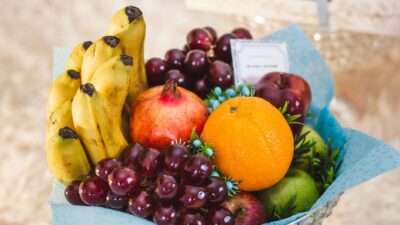
Low glycemic index fruits are those with a GI of 55 or less on the 0-to-100 scale. Cherries, berries, apples, pears, plums, peaches, kiwi, and most citrus all qualify. Eaten whole, raw, and at normal portion sizes, they raise blood sugar slowly and belong in nearly every diabetes-friendly meal pattern.
The Full Low-GI Fruit Reference Table
Values below are from the 2021 international GI tables. Individual produce varies by variety, ripeness, and growing conditions — consider these averages, not absolutes.
| Fruit | Typical GI | Grams Carbs per Serving | Glycemic Load (GL) | Serving Size |
|---|---|---|---|---|
| Cherries (fresh) | 20 | 17 | 3 | 1 cup |
| Grapefruit | 25 | 13 | 3 | 1/2 medium |
| Blackberries | 25 | 14 | 4 | 1 cup |
| Raspberries | 32 | 15 | 5 | 1 cup |
| Strawberries | 40 | 11 | 4 | 1 cup |
| Apple (with skin) | 36 | 21 | 8 | 1 medium |
| Pear | 38 | 24 | 9 | 1 medium |
| Plum | 40 | 16 | 6 | 2 small |
| Peach (fresh) | 42 | 15 | 6 | 1 medium |
| Apricot (fresh) | 34 | 12 | 4 | 3 small |
| Orange | 43 | 15 | 6 | 1 medium |
| Clementine / mandarin | 47 | 9 | 4 | 1 medium |
| Kiwi (green) | 52 | 14 | 7 | 2 small |
| Blueberries | 53 | 16 | 9 | 3/4 cup |
| Banana (firm, yellow-green) | 42 | 27 | 11 | 1 medium |
| Banana (ripe, spots) | 62 | 27 | 17 | 1 medium |
| Mango | 51 | 28 | 14 | 1 cup |
| Papaya | 60 | 16 | 10 | 1 cup |
Understanding GI vs GL
Glycemic index measures the speed of glucose rise; glycemic load accounts for how much you actually eat. GL = (GI × grams of carbs) ÷ 100. Categories:
- Low GL: 10 or less per serving
- Medium GL: 11 to 19
- High GL: 20 or more
Watermelon has high GI but low GL at one cup. A ripe banana has moderate GI but medium GL because of its larger carb load. Both numbers tell you something — use them together. For the underlying math, see our reference on the glucose equation.
How Ripeness Changes the Numbers
As fruit ripens, enzymes break resistant starches into simple sugars. That is why the same banana can score 30 one day and 62 a few days later.
| Fruit | Unripe / Just Ripe GI | Fully Ripe / Overripe GI |
|---|---|---|
| Banana | 30 to 42 | 51 to 62 |
| Mango | 45 | 55 to 60 |
| Papaya | 50 | 65 |
| Pear | 38 | 42 |
Practical tip: choose fruit that is ripe enough to be palatable but still slightly firm.
Processing Always Raises the Number
- Juicing removes fiber; even 100% fruit juice is absorbed much faster than whole fruit.
- Drying removes water and concentrates sugar — raisins score 64, dates 42 to 55, with GL in the double digits per small handful.
- Canning in syrup adds sucrose on top of the fruit’s own sugar.
- Smoothies function like juice once the fiber is fully pureed.
- Cooking breaks down cell walls; apple sauce has a higher GI than a raw apple.
Whole, raw fruit in normal portions is the lowest-impact form.
How to Pair Fruit to Flatten the Curve
- Greek yogurt + berries — protein slows the glucose rise
- Apple slices + nut butter — fat and protein extend digestion
- Cottage cheese + peach — same principle
- Pear + a handful of walnuts — satiety and healthy fat
- Cherries + small piece of cheese — portable, balanced
Eating fruit alone at a large portion produces the steepest spike; pairing is nearly always better.
High GI Fruits to Use Carefully
- Pineapple (GI 66) — cap at 1/2 cup
- Watermelon (GI 72) — fine at 1 cup; problematic at 2+ cups
- Ripe banana (GI 62)
- Dates (GI 42 to 55; high GL due to concentrated sugar) — 2 to 3 at most
- Dried fruit generally
- Fruit-juice concentrates
Fruit and Diabetes Risk
Large prospective studies — the Nurses’ Health Study, Health Professionals Follow-up Study, and EPIC-InterAct — consistently find that higher whole-fruit intake is associated with lower type 2 diabetes risk. Fruit juice is associated with higher risk. The ADA encourages whole fruit as part of a balanced diabetes meal plan. See our diet and nutrition hub and the companion low glycemic fruit overview.
Sample One-Day Low-GI Fruit Plan
- Breakfast: Greek yogurt with 3/4 cup blueberries and 1 tablespoon chia seeds
- Mid-morning: 1 medium apple with 1 tablespoon almond butter
- Lunch: Mixed salad; dessert = 1 cup strawberries with ricotta
- Afternoon: 2 plums + a small handful of walnuts
- Dinner: Protein + vegetables; dessert = 1/2 cup cherries + a piece of dark chocolate
This pattern delivers 5 to 6 fruit servings and stays within a moderate carb load.
The Bottom Line
A fruit counts as low glycemic when its GI is 55 or less. Berries, cherries, apples, pears, plums, peaches, and most citrus reliably qualify. Ripeness, processing, and portion size matter at least as much as the raw GI number. Choose whole, raw, just-ripe fruit; pair it with a protein or fat source; and use glycemic load to compare real-world impact. Do not cut fruit out of your diet — the research is unambiguous that whole fruit helps rather than harms long-term glucose control.