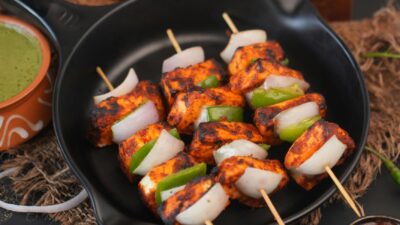
Pakistani cuisine shares roots with North Indian and Persian cooking but distinct in its emphasis on grilled meats (tikka kebab, seekh kebab, karahi), Mughlai dishes (rich, creamy), and breads. Healthy components – lentils (daal – chana, masoor, moong, urad, mash); vegetables (palak/spinach, baingan/eggplant, bhindi/okra, gobi/cauliflower, gajar/carrot); lean meats grilled (chicken tikka, fish, lamb); spices with health properties (turmeric, cumin, coriander, cardamom, cinnamon, fenugreek, black pepper); yogurt (dahi, raita); fresh herbs (cilantro, mint); legumes (chana/chickpea, rajma/kidney beans). Concerns – white basmati rice (biryani, pulao, plain) – large portions; naan bread (white flour, often with ghee/butter); ghee (clarified butter) used liberally; sweets (mithai – halwa, jalebi, gulab jamun, ras malai) very high sugar; fried snacks (pakora, samosa, kachori); creamy curries (korma, butter chicken style). South Asian populations have 35-40% lifetime diabetes risk – cultural-adapted choices matter. Diabetes-friendly dishes – chicken tikka or fish tikka (grilled, no rice or minimal); seekh kebab (grilled ground meat skewers); karahi (chicken or fish stir-fry with tomatoes, ginger, garlic – watch oil); palak chicken or palak paneer (spinach curry); bhindi (okra) sabzi; baingan bharta (smashed eggplant); chana masala (chickpea curry); daal (lentil dishes); raita (yogurt sauce); kachumber salad (cucumber-tomato-onion); shami kebab (lentil-meat); chapli kebab; chicken/fish handi without cream; haleem (slow-cooked lentil-meat moderate portion). White basmati rice in biryani/pulao – GI 50-70 (somewhat lower than other white rice due to amylose content); but portions enormous – one biryani plate often 2-3 cups (60-90 g carb plus meat and toppings). Strategies – share biryani or take half home; substitute brown basmati at home; use cauliflower rice for chicken pulao; ensure protein and vegetables fill plate not just rice; eat raita and salad first. Ghee (clarified butter) is traditional cooking fat, served on roti/rice/daal, and used liberally in restaurant cooking. Mostly saturated fat (~60%); ~120 calories per tbsp; lactose-free; high smoke point. Strategies for diabetes – limit ghee to 1-2 tsp per meal; cook at home with olive oil, mustard oil, or limited ghee; choose grilled rather than fried preparations; ask for less oil at restaurants (“kam tel mein”); request curries cooked without cream. Roti (whole-wheat unleavened bread) is better than naan/paratha for diabetes – lower GI; 1-2 small roti per meal.
Typical Pakistani Foods
| Category | Examples |
|---|---|
| Lentils (daal) | Chana, masoor, moong, urad, mash |
| Vegetables | Palak, baingan, bhindi, gobi, gajar, aloo |
| Lean grilled meats | Chicken tikka, seekh kebab, fish tikka, chapli kebab |
| Spices | Turmeric, cumin, coriander, cardamom, fenugreek, cinnamon, black pepper |
| Dairy | Dahi (yogurt), raita, paneer, ghee (limit) |
| Carbs (limit) | Basmati rice, naan, paratha, biryani, pulao |
| Sweets (limit) | Halwa, jalebi, gulab jamun, ras malai, kheer |
| Fried snacks (limit) | Pakora, samosa, kachori |
Best Diabetes-Friendly Choices
- Chicken tikka or fish tikka with minimal rice and salad.
- Seekh kebab (grilled ground meat) with raita and salad.
- Karahi chicken or karahi fish (request less oil).
- Palak chicken or palak paneer (spinach curry).
- Daal (any color lentils) with small portion roti.
- Chana masala (chickpea curry).
- Baingan bharta (smashed eggplant curry).
- Bhindi (okra) sabzi.
- Raita (yogurt-cucumber sauce) as side.
- Kachumber salad (fresh cucumber-tomato-onion).
- Whole-wheat roti (1-2 small pieces per meal).
- Shami kebab (lentil-meat).
Foods to Limit
- Biryani and pulao – portion enormous; share or half portion.
- Naan and paratha – white flour, ghee; use roti instead.
- Korma, butter chicken, makhani dishes – creamy, ghee-heavy.
- Halwa (any variety – sooji, gajar, etc).
- Jalebi, gulab jamun, ras malai (mithai sweets).
- Kheer (rice pudding).
- Pakora, samosa, kachori (fried snacks).
- Dahi bhalla, chaat (sweet-savory snacks).
- Sweetened lassi (sweet yogurt drink).
- Sweet rooh afza or sherbets.
- Nihari (rich slow-cooked stew) – small portion.
Rice and Bread Strategy
- Limit basmati rice to ½ cup per meal.
- Share biryani or order plain rice with curry.
- Cauliflower rice substitution at home.
- Whole-wheat roti instead of naan/paratha.
- 1-2 small roti per meal maximum.
- Whole-wheat alternatives – chapati from atta flour.
- Use roti for scooping protein/vegetables, not as main filler.
- Eat protein and salad first before carbs.
Ghee and Oil Strategy
- Limit ghee to 1-2 tsp per meal.
- Cook at home with olive oil or mustard oil.
- Choose grilled (tandoori, tikka) over fried.
- Ask “kam tel mein” (less oil) at restaurants.
- Skip cream-based dishes; choose tomato-based.
- Mustard oil – omega-3; popular in Punjabi cooking.
- Tandoor cooking adds no oil.
- Limit fried snacks.
Pakistani Spices and Diabetes
- Turmeric – curcumin has anti-inflammatory effects.
- Cinnamon – some glucose research; commonly used.
- Fenugreek (methi) – some glucose research; common ingredient.
- Cumin – widely used; antioxidant.
- Black pepper – enhances turmeric absorption.
- Cardamom – antioxidant; flavor.
- Ginger – widely used; some glucose effects.
- Garlic – cardiovascular benefits.
- Coriander – widely used; mild glucose effects.
The Bottom Line
Pakistani cuisine shares roots with North Indian and Persian cooking but distinct in its emphasis on grilled meats (tikka kebab, seekh kebab, karahi), Mughlai dishes (rich, creamy), and breads. Healthy components – lentils (daal – chana, masoor, moong, urad, mash); vegetables (palak/spinach, baingan/eggplant, bhindi/okra, gobi/cauliflower, gajar/carrot); lean meats grilled (chicken tikka, fish, lamb); spices with health properties (turmeric, cumin, coriander, cardamom, cinnamon, fenugreek, black pepper); yogurt (dahi, raita); fresh herbs (cilantro, mint); legumes (chana/chickpea, rajma/kidney beans). Concerns – white basmati rice (biryani, pulao, plain) large portions; naan bread (white flour, often with ghee/butter); ghee (clarified butter) used liberally; sweets (mithai – halwa, jalebi, gulab jamun, ras malai) very high sugar; fried snacks (pakora, samosa, kachori); creamy curries (korma, butter chicken style). South Asian populations have 35-40% lifetime diabetes risk – cultural-adapted choices matter. Diabetes-friendly dishes – chicken tikka or fish tikka (grilled, no rice or minimal); seekh kebab (grilled ground meat skewers); karahi (chicken or fish stir-fry with tomatoes, ginger, garlic – watch oil); palak chicken or palak paneer (spinach curry); bhindi (okra) sabzi; baingan bharta (smashed eggplant); chana masala (chickpea curry); daal (lentil dishes – any color – moong, chana, masoor, urad); raita (yogurt sauce); kachumber salad (cucumber-tomato-onion); shami kebab (lentil-meat); chapli kebab; chicken/fish handi without cream; haleem (slow-cooked lentil-meat moderate portion). Watch portions of biryani (basmati rice with meat), pulao, naan, paratha (layered flatbread with ghee), nihari (rich slow-cooked stew), korma (creamy curry), butter chicken, mithai sweets, jalebi, gulab jamun, halwa, samosas, pakoras, dahi bhalla, chaat. Biggest carb consideration – white basmati rice in biryani/pulao. Strategies – share biryani or take half home; substitute brown basmati at home; use cauliflower rice for chicken pulao; ensure protein and vegetables fill plate not just rice; eat raita and salad first. Ghee (clarified butter) is traditional cooking fat. Strategies – limit ghee to 1-2 tsp per meal; cook at home with olive oil, mustard oil, or limited ghee; choose grilled rather than fried preparations; ask for less oil at restaurants (“kam tel mein”); request curries cooked without cream; tandoor cooking adds no oil; mustard oil (omega-3 source, popular in Punjabi cooking). Roti (whole-wheat unleavened bread) is better than naan/paratha for diabetes – lower GI; 1-2 small roti per meal. Pakistani spices have research support – turmeric (curcumin anti-inflammatory), cinnamon (glucose research), fenugreek/methi (glucose research), cumin, black pepper. For adults with type 2 diabetes – Pakistani diet adapts well with smart rice/bread/ghee management; grilled tikka and kebabs, daal, and vegetable curries are diabetes-friendly staples. See our broader diabetes diet guide for context.