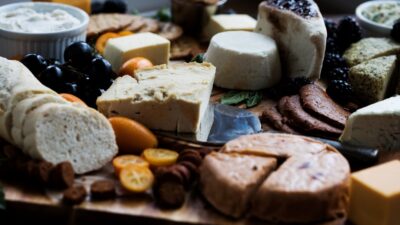
Paneer is fresh, non-aged Indian cheese made by acid-curdling cow or buffalo milk (typically with lemon juice or vinegar) and pressing the curds; firm white cheese that doesn’t melt; holds shape in cooking. Per 1 oz (28 g) – 90 calories, less than 1 g carb, 7 g protein, 7 g fat (4-5 g saturated), 170 mg calcium (13% DV), 18 mg sodium (very low – LOW), 0 sugar, 0 fiber. Very low glycemic impact – paneer doesn’t raise blood sugar. Excellent for diabetes meal planning especially for vegetarian South Asian patients. Benefits – very high protein for vegetarian source; doesn’t melt – cooks well in curries, grills well; very LOW sodium (huge advantage over most cheeses); not aged so no rind/bacterial concerns; can be made at home easily; calcium for bone health. Concerns – moderate saturated fat (5 g per 2 oz serving); restaurant preparations often fry paneer first (significantly increases calories and oil); creamy curries (malai paneer, butter paneer) high in cream and oil. Simple traditional process – heat whole milk to almost boiling, add lemon juice or vinegar gradually, milk curdles, strain curds through cheesecloth, press into block, weight several hours. Homemade paneer takes 30-60 minutes; commercial widely available in Indian grocery stores and some U.S. supermarkets. Texture – firm, white, mild milky flavor, slight tang from acid curdling. Doesn’t melt because lacks rennet processing of aged cheeses. Common dishes – palak paneer (spinach curry with paneer) diabetes-friendly with smart oil management; matar paneer (peas and paneer curry); paneer tikka (grilled paneer cubes with yogurt and spices); paneer bhurji (scrambled paneer with vegetables); shahi paneer (royal style with cream – limit); butter paneer/paneer makhani (creamy – limit); karahi paneer; paneer kofta (paneer balls in sauce); kadai paneer; paneer pakora (fried – limit); chilli paneer (Indo-Chinese – often fried with sweet sauce, limit). Paneer tikka and palak paneer are diabetes-friendliest. Can substitute paneer for chicken in many curries. Paneer is the LOWEST sodium cheese option – significant advantage for adults with hypertension.
Paneer Nutrition Per Ounce
| Nutrient | Amount |
|---|---|
| Calories | 90 |
| Carbohydrate | Less than 1 g |
| Protein | 7 g |
| Fat (total) | 7 g |
| Saturated fat | 4-5 g |
| Calcium | 170 mg (13% DV) |
| Sodium | 18 mg (LOWEST among common cheeses) |
| Lactose | Low (most drained off with whey) |
Sodium Comparison (per oz)
| Cheese | Sodium (mg) |
|---|---|
| Paneer | 18 (lowest) |
| Monterey Jack | 150 |
| Mozzarella (fresh) | 175 |
| Cheddar | 180-200 |
| Provolone | 250 |
| Feta | 320 |
| Parmesan | 450 |
Best Diabetes-Friendly Paneer Dishes
- Paneer tikka – marinated and grilled cubes.
- Palak paneer (spinach curry with paneer).
- Matar paneer (peas and paneer curry).
- Paneer bhurji (scrambled paneer with vegetables).
- Kadai paneer (with bell peppers and onions).
- Paneer with vegetables stir-fry (cabbage, beans).
- Paneer in salads (cubed and marinated).
- Paneer with tomato curry (less cream).
- Paneer skewers on grill with vegetables.
- Paneer with broccoli (Western fusion).
- Paneer in soups (replaces meat).
- Paneer-stuffed bell peppers.
- Whole-wheat paneer wraps (small portion bread).
Paneer Dishes to Limit
- Butter paneer/paneer makhani (cream-heavy).
- Shahi paneer (royal style with cream and nuts).
- Malai paneer (cream-based).
- Paneer pakora (fried).
- Chilli paneer (Indo-Chinese – fried, sweet sauce).
- Paneer 65 (fried with red coating).
- Paneer-stuffed naan (white bread + cheese).
- Sweet paneer dishes (rasmalai, sandesh, ras malai).
- Restaurant paneer often pre-fried – request “not fried.”
Making Paneer at Home
- Heat 1 quart (4 cups) whole milk to almost boiling.
- Add 2-3 tbsp lemon juice or vinegar gradually.
- Stir gently until milk curdles (forms separate curds and whey).
- Pour through cheesecloth-lined strainer.
- Rinse with cold water.
- Gather cheesecloth, twist to remove excess whey.
- Press under weight for 1-2 hours.
- Refrigerate up to 3-4 days.
- Yields about 8 oz from 1 quart milk.
- Control salt content yourself (very low naturally).
Paneer vs Other Cheeses
- Paneer vs cheddar – similar calories and protein; much lower sodium.
- Paneer vs cottage cheese – similar protein; firmer, holds shape.
- Paneer vs ricotta – both fresh; similar protein; different cultures.
- Paneer vs mozzarella – paneer doesn’t melt; mozzarella does.
- Paneer vs tofu – paneer dairy; tofu soy; both diabetes-friendly.
- Lowest sodium of common cheeses – hypertension advantage.
- Highest fresh-cheese protein density alongside ricotta and queso fresco.
The Bottom Line
Paneer is fresh, non-aged Indian cheese made by acid-curdling cow or buffalo milk (typically with lemon juice or vinegar) and pressing the curds; firm white cheese that doesn’t melt; holds shape in cooking. Per 1 oz (28 g) – 90 calories, less than 1 g carb, 7 g protein, 7 g fat (4-5 g saturated), 170 mg calcium (13% DV), 18 mg sodium (very low – LOW), 0 sugar, 0 fiber. Very low glycemic impact – paneer doesn’t raise blood sugar. Excellent for diabetes meal planning especially for vegetarian South Asian patients. Benefits – very high protein for vegetarian source; doesn’t melt – cooks well in curries, grills well; very LOW sodium (huge advantage over most cheeses); not aged so no rind/bacterial concerns; can be made at home easily; calcium for bone health. Concerns – moderate saturated fat (5 g per 2 oz serving); restaurant preparations often fry paneer first (significantly increases calories and oil); creamy curries (malai paneer, butter paneer) high in cream and oil. Method – heat whole milk to almost boiling, add lemon juice or vinegar gradually, milk curdles, strain curds through cheesecloth, press into block, weight several hours. Homemade paneer takes 30-60 minutes; commercial widely available. Common dishes – palak paneer (spinach curry with paneer) diabetes-friendly with smart oil management; matar paneer; paneer tikka (grilled paneer cubes with yogurt and spices); paneer bhurji (scrambled paneer with vegetables); shahi paneer (royal style with cream – limit); butter paneer/paneer makhani (creamy – limit); karahi paneer; paneer kofta; kadai paneer; paneer pakora (fried – limit); chilli paneer (Indo-Chinese – limit). Paneer tikka and palak paneer are diabetes-friendliest. Can substitute paneer for chicken in many curries. Best preparations – paneer tikka, palak paneer, matar paneer, paneer bhurji, paneer with vegetables stir-fry, kadai paneer, paneer in salads, paneer with tomato curry (less cream), paneer kofta (smaller portions, baked not fried), paneer stuffed paratha (limit paratha portion; whole-wheat), paneer with broccoli, paneer skewers on grill. Limit butter paneer, malai paneer, shahi paneer, paneer pakora (fried), chilli paneer, paneer in heavy ghee preparations. Restaurant paneer often pre-fried – request “not fried” if possible. Homemade paneer with controlled oil is healthier. Sodium comparison – paneer 18 mg/oz is LOWEST among common cheeses (vs cheddar 180 mg, mozzarella 175 mg, feta 320 mg, parmesan 450 mg). Significant advantage for adults with hypertension. For vegetarian South Asians with diabetes – paneer is the cornerstone protein, paired with daal (lentils), vegetables, and small portions of whole-grain roti. For adults with type 2 diabetes – paneer is an excellent vegetarian protein source with very low carb and sodium content; great for grilling and curries. See our broader diabetes diet guide for context.