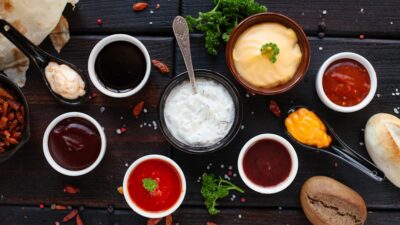
Soy sauce is a paradoxical condiment in diabetes nutrition. From a pure carbohydrate standpoint, it is fine — essentially zero carbohydrate, zero sugar, and no measurable glucose response. The complication is sodium. A single tablespoon delivers about 900 milligrams, which is roughly 40% of the American Heart Association recommended 2,300 mg daily limit, or 60% of the more aggressive 1,500 mg limit for adults with hypertension. For adults with type 2 diabetes who also have hypertension (a common combination), soy sauce sodium becomes the limiting factor rather than the carbohydrate content. Reduced-sodium versions, coconut aminos, and careful portion management make soy sauce a manageable rather than off-limits condiment.
Nutrition Profile by Type
| Soy sauce type (1 Tbsp) | Calories | Carbs (g) | Sugar (g) | Sodium (mg) |
|---|---|---|---|---|
| Standard soy sauce (Kikkoman) | 8 | 1 | 0 | 920 |
| Reduced-sodium soy sauce | 10 | 1 | 0 | 575 |
| Tamari (San-J) | 11 | 1 | 0 | 940 |
| Tamari, reduced-sodium | 10 | 1 | 0 | 700 |
| Light soy sauce (Chinese) | 8 | 1 | 0 | 900 |
| Dark soy sauce (Chinese) | 15 | 2 | 1 | 825 |
| Coconut aminos | 5 | 1 | 1 | 260 |
| Liquid aminos (Bragg) | 10 | 1 | 0 | 320 |
Glycemic Impact
Soy sauce produces no measurable glucose response. The carbohydrate content is essentially zero (under 1 gram per tablespoon), and the fermentation process produces no free sugars in significant amounts. CGM users see no spike from soy sauce use in marinades, stir-fries, or as a table condiment. Dark Chinese soy sauces may contain modest molasses or caramel additions that increase carbohydrate slightly but still produce negligible glycemic effect at typical use levels.
The Sodium Reality
- Standard soy sauce: 900 to 1,000 mg sodium per tablespoon.
- For context, that’s more sodium than a Big Mac (970 mg) in a single condiment serving.
- Stir-fry recipes often call for 2 to 4 tablespoons, delivering 1,800 to 4,000 mg sodium.
- The American Heart Association recommends limiting daily sodium to 2,300 mg, or 1,500 mg for adults with hypertension.
- Adults with type 2 diabetes plus hypertension may consume more than a full day’s allowance in a single soy-sauce-heavy meal.
- Reduced-sodium versions cut sodium by about 37% — meaningful but still substantial.
The Wheat Distinction
- Tamari: traditionally made without wheat; suitable for celiac and gluten-sensitive adults.
- Standard shoyu and Chinese soy sauces: contain wheat; not safe for celiac disease.
- San-J Tamari is certified gluten-free; widely available in US grocery stores.
- For most people without gluten issues, the choice between tamari and shoyu is purely culinary — tamari is slightly thicker and more concentrated.
- Always check tamari labels for gluten-free certification; some brands use small amounts of wheat.
Coconut Aminos — A Closer Look
- Made from fermented coconut sap and sea salt — naturally gluten-free and soy-free.
- Sodium content: 200 to 300 mg per tablespoon — about a third of standard soy sauce.
- Slightly sweeter flavor profile due to natural sugars in coconut sap.
- Carbohydrate: about 1 to 2 grams per tablespoon — still very low.
- More expensive than standard soy sauce (typically 2-3x).
- Brand examples: Bragg, Coconut Secret, Big Tree Farms.
- Useful for adults with diabetes plus hypertension or soy allergy.
Soy Sauce in Diabetes-Friendly Cooking
| Use | Typical amount | Sodium contribution | Diabetes verdict |
|---|---|---|---|
| Sushi dipping | 1-2 tsp | 300-600 mg | Manageable in moderation |
| Stir-fry sauce | 1-2 Tbsp | 900-1,800 mg | High; use reduced-sodium |
| Marinade for chicken | 2-3 Tbsp | 1,800-2,700 mg | High; not all stays on food |
| Asian dressing | 1 Tbsp | 900 mg | Manageable in single serving |
| Soup base (miso, noodle) | 1-2 Tbsp | 900-1,800 mg | High; combined with broth sodium |
| Drizzle over rice/eggs | 1 tsp | 300 mg | Low impact |
Reducing Sodium Strategies
- Switch to reduced-sodium soy sauce for daily use — meaningful sodium cut without much taste change.
- Dilute soy sauce with water 1:1 in dipping sauces and dressings.
- Use coconut aminos when sodium is the main concern.
- Add soy sauce at the end of cooking rather than throughout — full flavor with less needed.
- Pair with low-sodium ingredients (fresh ginger, garlic, vinegar) to compensate for less soy sauce.
- Track soy sauce as part of total daily sodium budget.
Soy Sauce vs Other Asian Condiments
| Condiment (1 Tbsp) | Carbs (g) | Sugar (g) | Sodium (mg) |
|---|---|---|---|
| Standard soy sauce | 1 | 0 | 920 |
| Reduced-sodium soy sauce | 1 | 0 | 575 |
| Coconut aminos | 1 | 1 | 260 |
| Fish sauce | 0 | 0 | 1,400 |
| Oyster sauce | 4 | 3 | 490 |
| Hoisin sauce | 8 | 7 | 250 |
| Teriyaki sauce | 8 | 7 | 690 |
| Sriracha | 1 | 1 | 100 |
Other Sodium-Heavy Asian Sauces
- Fish sauce: even higher sodium than soy sauce (about 1,400 mg per tablespoon); use sparingly.
- Oyster sauce: lower sodium than soy but contains 3 g sugar per tablespoon.
- Hoisin sauce: lower sodium but 7 g sugar per tablespoon — closer to BBQ sauce in profile.
- Teriyaki sauce: contains both sugar and sodium; usually 7 g sugar and 690 mg sodium per tablespoon.
- For diabetes meal planning, plain soy sauce is often the cleanest of the Asian condiment options.
Practical Patterns That Work
- Switch to reduced-sodium soy sauce for daily use.
- Use coconut aminos in stir-fries when sodium is a concern.
- Measure soy sauce portions rather than free-pouring.
- Dilute with water in dipping sauces.
- Avoid teriyaki, hoisin, and oyster sauces with their sugar load when possible.
- Build flavor with fresh ginger, garlic, rice vinegar, and chili instead of more soy sauce.
Who Should Be Careful
- People with hypertension — soy sauce sodium is the main limit; use reduced-sodium or coconut aminos.
- People with chronic kidney disease — sodium and potassium balance matter; check with care team.
- People with celiac disease or gluten sensitivity — use certified gluten-free tamari.
- People with soy allergy — use coconut aminos as the substitute.
- People on monoamine oxidase inhibitors — soy sauce contains tyramine; check with prescriber.
Connection to Broader Eating Patterns
Soy sauce fits naturally into Asian-style eating patterns, which can be diabetes-friendly when based on vegetables, lean proteins, and modest rice portions. The DASH diet — designed for hypertension management — emphasizes very low sodium intake, which makes soy sauce challenging unless reduced-sodium versions are used. For adults with type 2 diabetes plus hypertension (a common comorbidity pair), watching soy sauce as part of total daily sodium intake matters. See our broader diabetes diet guide for the framework on flavor and sodium balance.
The Bottom Line
Soy sauce is diabetes-friendly from a glycemic standpoint — essentially zero carbohydrate, zero sugar, and no measurable glucose response. The real concern is sodium content: a tablespoon of standard soy sauce delivers about 900 milligrams, roughly 40% of the AHA daily limit or 60% of the more aggressive 1,500 mg limit. For adults with type 2 diabetes plus hypertension, sodium becomes the binding constraint rather than carbohydrate. Reduced-sodium versions cut sodium by about 37%; coconut aminos cut it by about two-thirds while adding a slight sweetness. Tamari is the wheat-free option for adults with celiac disease or gluten sensitivity. Used in measured portions, switched to reduced-sodium versions for daily use, and balanced against other sodium sources across the day, soy sauce fits comfortably into a diabetes meal plan. Watch out for higher-sugar alternatives like teriyaki, hoisin, and oyster sauces, which combine sugar with the sodium load. See our broader diabetes diet guide for the framework on sodium and condiments.