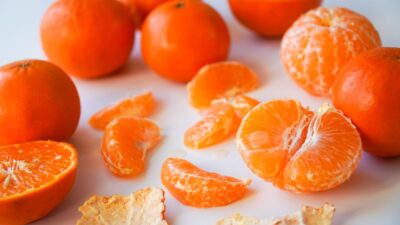
Tangerines are diabetes-friendly in moderate portions. One small tangerine (about 76 g) contains 9 g carbohydrate with 1.5 g fiber (net 7.5 g) and 40 calories. A medium tangerine has 13 g carb. Glycemic index around 45 — moderate. Tangerines provide high vitamin C (40% DV per fruit), folate, vitamin A, and modest fiber. Convenient: portable, peel-and-eat. For diabetes meal planning, 1 small or ½ medium tangerine fits as snack or fruit serving with protein. Watch for tangerine juice (concentrated sugar without fiber); whole fruit much better. Tangerines vs mandarins: closely related but distinguishable. Mandarins (Citrus reticulata) — broader category including many varieties; generally smaller and easier to peel than regular oranges. Tangerines — type of mandarin, but in U.S. tradition specifically refers to deeper orange-red varieties with looser skin (Dancy, Murcott). Clementines — small mandarins, thin skin, very easy peel, often seedless. Satsumas — Japanese variety, very easy to peel, less sweet. Tangors and tangelos — hybrids. All have similar nutrition profiles. Diabetes-friendly applications: snack with protein (1 small tangerine + handful nuts), on plain Greek yogurt with cinnamon, cottage cheese with tangerine sections, salad with mixed greens and walnuts and vinaigrette, garnish for grilled chicken or fish, tangerine-flavored water (slices in pitcher), mixed citrus salad with grapefruit and oranges (small portions), Asian-inspired salad with cabbage and peanuts, tangerine vinaigrette (juice + olive oil + Dijon), smoothie with protein powder. Watch for: tangerine juice (concentrated sugar — very small portions or skip), large fruit salads with multiple high-carb fruits, tangerine candies and gummies. Tangerine peel (zest, dried) is edible and used in some traditional cuisines (Chinese chenpi); adds flavor without significant carbs; choose organic for peel use.
Tangerine Nutrition Profile
| Nutrient (1 small tangerine, 76 g) | Amount | % DV |
|---|---|---|
| Calories | 40 | — |
| Carbohydrate | 9 g | — |
| Fiber | 1.5 g | 5% |
| Net carbs | 7.5 g | — |
| Protein | 0.5 g | — |
| Vitamin C | 20 mg | 22% |
| Vitamin A | 500 IU | 10% |
| Folate | 12 mcg | 3% |
| Potassium | 125 mg | 3% |
Citrus Variety Comparison
| Variety | Size | Carbs (per fruit) | Peel Difficulty |
|---|---|---|---|
| Tangerine (small) | Small | 9 g | Easy |
| Mandarin (medium) | Small-medium | 11 g | Easy |
| Clementine (small) | Very small | 8 g | Very easy; often seedless |
| Satsuma | Small-medium | 10 g | Very easy |
| Murcott (tangor) | Medium | 13 g | Easy |
| Honeybell tangelo | Large | 15 g | Easy |
| Sumo (dekopon) | Very large | 15-20 g | Very easy |
| Orange (regular) | Medium | 15 g | Harder |
Diabetes-Friendly Applications
- Snack with handful of almonds or walnuts.
- On plain Greek yogurt with cinnamon.
- Cottage cheese with tangerine sections.
- Salad with mixed greens, walnuts, vinaigrette.
- Garnish for grilled chicken or fish.
- Tangerine-flavored water in pitcher.
- Mixed citrus salad with grapefruit (small) and oranges.
- Asian-inspired salad with cabbage, peanuts, tangerine.
- Tangerine vinaigrette: juice + olive oil + Dijon + herbs.
- Smoothie with protein powder, spinach, almond milk.
- Snack: 1 small tangerine + 1 oz cheese.
- Roasted Brussels sprouts with tangerine slices.
What to Watch For
- Tangerine juice — concentrated sugar; very small portions or skip.
- Multiple tangerines at one sitting — carbs add up quickly.
- Tangerine candies and gummies.
- Sweetened canned mandarin oranges (in syrup).
- Fruit cups with mixed high-sugar fruits.
- Tangerine-flavored sodas and drinks.
- Pre-peeled and sold in syrup — added sugar.
- Tangerine-flavored yogurt with added sugar.
The Bottom Line
Tangerines are diabetes-friendly in moderate portions. One small tangerine (about 76 g) contains 9 g carbohydrate with 1.5 g fiber (net 7.5 g) and 40 calories. A medium tangerine has 13 g carb. Glycemic index around 45 — moderate. Tangerines provide high vitamin C (22% DV per small fruit, 40% per medium), folate, vitamin A, and modest fiber. Portable, peel-and-eat convenience. For diabetes meal planning, 1 small or ½ medium tangerine fits as snack or fruit serving with protein. Watch for tangerine juice (concentrated sugar without fiber); whole fruit much better. Tangerines vs mandarins: closely related; mandarins broader category (Citrus reticulata) including many varieties; tangerines specifically deeper orange-red varieties with looser skin (Dancy, Murcott) in U.S. tradition. Other related citrus: clementines (small, very easy peel, often seedless), satsumas (Japanese, very easy to peel), tangors and tangelos (hybrids), Sumo (dekopon — very large Japanese variety). All have similar nutrition profiles for diabetes (8-15 g carb per fruit depending on size). Diabetes-friendly applications: snack with protein (1 small tangerine + handful nuts), on plain Greek yogurt with cinnamon, cottage cheese with tangerine sections, salad with mixed greens and walnuts and vinaigrette, garnish for grilled chicken or fish, tangerine-flavored water (slices in pitcher), mixed citrus salad with grapefruit and oranges (small portions), Asian-inspired salad with cabbage and peanuts, tangerine vinaigrette (juice + olive oil + Dijon + herbs), smoothie with protein powder and spinach, snack of 1 small tangerine + 1 oz cheese, roasted Brussels sprouts with tangerine slices. Watch for: tangerine juice (concentrated sugar — very small portions or skip), multiple tangerines at one sitting (carbs add up), tangerine candies and gummies, sweetened canned mandarins in syrup, sweetened fruit cups, tangerine-flavored sodas, pre-peeled in syrup, tangerine-flavored yogurt with added sugar. Tangerine peel (zest, dried) is edible and used in some traditional cuisines (Chinese chenpi); fresh zest or dried peel adds flavor without significant carbs; choose organic for peel use. For adults with type 2 diabetes, tangerines are convenient portable fruit serving — pair with protein for satiety. The whole-fruit fiber moderates glucose response. See our broader diabetes diet guide for context.