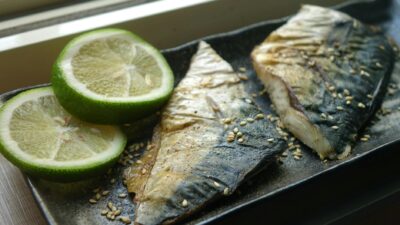
Trout is excellent for diabetes meal planning. It contains zero carbohydrates and provides 20-22 g protein per 3-oz cooked serving. Trout is a fatty fish with high omega-3 content (0.8-1.5 g per 3-oz serving) — supporting cardiovascular health and possibly reducing inflammation. American Heart Association recommends 2 servings of fatty fish weekly; trout counts toward this goal. Trout also provides substantial B12 (particularly relevant for adults on metformin at B12 deficiency risk), niacin, selenium, and phosphorus. Several species commonly available: Rainbow trout (most common, freshwater, mild flavor, pink flesh), Steelhead trout (sea-going variety of rainbow, resembles salmon), Brook trout (smaller, very mild), Brown trout (richer flavor), Lake trout (larger, higher fat content), and Cutthroat trout (Western U.S.). All are diabetes-friendly. Farm-raised rainbow trout is rated “Best Choice” by Monterey Bay Aquarium’s Seafood Watch — sustainable, affordable, available year-round. Cooking methods include pan-searing with lemon and herbs (4-5 min per side), baking at 400°F for 10-12 min, grilling, smoking, almond-crusted (classic French preparation), en papillote with vegetables, and trout salad with Greek yogurt. Pair with non-starchy vegetables, lemon, and herbs.
Nutrition by Type (3 oz cooked)
| Type | Calories | Protein (g) | Fat (g) | Omega-3 (mg) |
|---|---|---|---|---|
| Rainbow trout (farmed) | 143 | 21 | 6 | 1,000 |
| Rainbow trout (wild) | 128 | 19 | 5 | 840 |
| Steelhead trout | 140 | 20 | 6 | 1,500 |
| Brook trout | 120 | 22 | 3 | 700 |
| Brown trout | 180 | 22 | 10 | 1,200 |
| Lake trout | 160 | 20 | 9 | 1,000 |
| Smoked trout | 140 | 21 | 6 | 900 |
Health Benefits
- Omega-3 fatty acids (EPA + DHA) support cardiovascular health.
- Lower triglycerides — modest effect.
- Anti-inflammatory effects.
- Possible reduction in cardiovascular events with regular fish consumption.
- B12 — supports nerve function (relevant for diabetic neuropathy prevention).
- Selenium — antioxidant defense.
- High-quality complete protein.
- Lower mercury than larger predatory fish (tuna, swordfish, shark).
Cooking Methods
- Pan-seared: whole boneless butterflied trout with lemon and herbs; 4-5 min per side.
- Baked: 400°F for 10-12 min; with olive oil, lemon, herbs.
- Grilled: whole or fillets; brush with oil; 3-4 min per side.
- Smoked: popular preparation; appetizer with vegetables.
- Poached: in broth, wine, herbs; gentle cooking.
- En papillote: wrapped in parchment with vegetables.
- Almond-crusted: classic French preparation (Truite Amandine).
- Stuffed: with lemon, garlic, herbs.
- Steamed: with ginger and scallions (Asian style).
Diabetes-Friendly Recipe Ideas
- Pan-seared trout with lemon, capers, parsley.
- Baked trout with vegetables on sheet pan.
- Grilled trout with herb-yogurt sauce.
- Trout almondine (small amount of butter, lemon, almonds).
- Smoked trout with cucumber, dill, and small portion of whole-grain crackers.
- Trout en papillote with asparagus and lemon.
- Trout salad (similar to tuna salad) with Greek yogurt, celery, dill on greens.
- Whole trout stuffed with lemon, garlic, fresh herbs.
- Trout with cauliflower mash and roasted vegetables.
- Steamed trout with ginger, scallions, sesame oil.
- Trout tacos with cabbage slaw and salsa (2 corn tortillas).
- Cold smoked trout salad with mixed greens and vinaigrette.
Flavor Pairings
- Lemon — classic acidic pairing.
- Fresh herbs: dill, parsley, tarragon, chives, thyme.
- Almonds and other nuts.
- Capers.
- Butter or olive oil (moderate amounts).
- White wine (in cooking).
- Garlic.
- Cucumber and yogurt-based sauces.
- Mustard — Dijon for sauces.
- Bacon (small amount) — classic with trout.
- Tomato — grilled or fresh.
Buying and Storage
- Choose trout with firm flesh, mild ocean/freshwater smell.
- Eyes should be clear and slightly bulging (for whole fish).
- Gills bright red or pink.
- Refrigerate for use within 1-2 days.
- Freeze for up to 3 months.
- Smoked trout: refrigerate; use within 1 week of opening.
- Whole gutted trout: 1-2 days fresh.
- Filleted trout: similar.
- Farm-raised trout available year-round.
- Wild trout seasonal availability varies by location.
Sustainability
- Farm-raised rainbow trout: rated “Best Choice” by Monterey Bay Seafood Watch.
- U.S. and Canadian farm-raised: excellent sustainability.
- Raceway systems with good water quality.
- Lower antibiotic use than salmon farming.
- Wild lake trout: sustainable from most regulated North American fisheries.
- Wild brown trout from clean rivers: limited harvest; check local regulations.
- For consistent supply and good environmental profile, U.S.-farmed rainbow trout is ideal.
Mercury and Other Contaminants
- Lower mercury than larger predatory fish (tuna, swordfish, shark, king mackerel).
- Safe for pregnant women in normal portions (2-3 servings per week).
- Suitable for children.
- PCBs lower than wild Atlantic salmon historically.
- Farm-raised trout has very low contaminant levels.
- For wild-caught from specific waters, check state advisories.
The Bottom Line
Trout is excellent for diabetes meal planning. It contains zero carbohydrates and provides 20-22 g protein per 3-oz cooked serving. Trout is a fatty fish with high omega-3 content (0.8-1.5 g per 3-oz serving) — supporting cardiovascular health and possibly reducing inflammation. American Heart Association recommends 2 servings of fatty fish weekly; trout counts. Trout also provides substantial B12 (particularly relevant for adults on metformin at B12 deficiency risk), niacin, selenium, and phosphorus. Species commonly available include Rainbow trout (most common, freshwater, mild flavor), Steelhead trout (sea-going variety, resembles salmon), Brook trout (very mild), Brown trout (richer flavor), Lake trout (higher fat content), and Cutthroat trout. All are diabetes-friendly. Farm-raised rainbow trout is rated “Best Choice” by Monterey Bay Aquarium’s Seafood Watch — sustainable, affordable, available year-round. Lower mercury than larger predatory fish (tuna, swordfish, shark) — safe for pregnant women and children. Cooking methods include pan-searing with lemon and herbs (4-5 min per side), baking at 400°F for 10-12 min, grilling, smoking, almond-crusted (classic Truite Amandine), en papillote with vegetables, and trout salad with Greek yogurt. Diabetes-friendly applications include pan-seared trout with lemon and capers, baked trout with vegetables on sheet pan, grilled trout with herb-yogurt sauce, smoked trout with cucumber and dill, trout en papillote with asparagus, and steamed trout with ginger (Asian style). Pair with non-starchy vegetables, lemon, herbs; avoid heavy cream sauces and breading. For adults with type 2 diabetes, trout fits well into a Mediterranean-style eating pattern with regular fish consumption. See our broader diabetes diet guide for context.