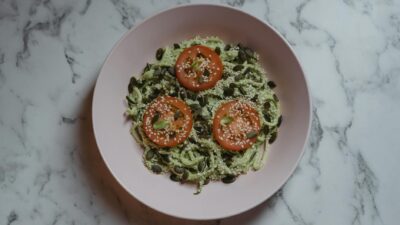
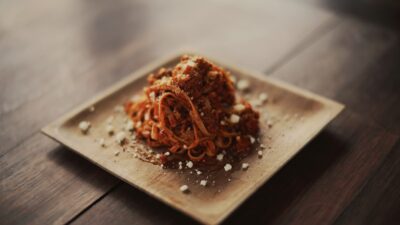
Whole wheat pasta is significantly better than white pasta for diabetes. Half cup of cooked whole wheat pasta contains 19 g carbohydrate with 3 g fiber and 87 calories. Glycemic index is 35-42 — lower than white pasta (50-58) due to fiber content and minimal processing. The fiber slows glucose absorption and supports satiety. Whole wheat pasta provides B vitamins, magnesium, and modest protein. For diabetes meal planning: limit portion to ½-1 cup cooked, cook al dente (slightly firm) for additional 10-15% glycemic benefit compared with soft-cooked, pair with protein-rich sauces and vegetables. Pasta alternatives with even lower glycemic impact: chickpea pasta (GI 30-35, high protein 14 g per 2 oz dry, 5 g fiber), lentil pasta (similar profile), edamame pasta (high protein, lower carb), konjac noodles/shirataki (very low carb, mostly fiber), zucchini noodles (4 g carb per cup), and spaghetti squash (10 g carb per cup). Diabetes-friendly preparations include whole wheat pasta with marinara and lean protein, olive oil-garlic-herb pasta with shrimp, primavera with abundant vegetables, pesto pasta with chicken, half-pasta-half-zucchini-noodle preparations, and pasta salads with vegetables and lean protein. Avoid pasta as the dominant component of meals; aim for at least equal volume of vegetables.
Pasta Type Comparison
| Pasta Type (½ cup cooked) | Carbs (g) | Fiber (g) | Protein (g) | GI |
|---|---|---|---|---|
| Whole wheat pasta | 19 | 3 | 4 | 35-42 |
| White pasta | 20 | 1 | 3.5 | 50-58 |
| Chickpea pasta | 16 | 4 | 7 | 30-35 |
| Lentil pasta | 16 | 4 | 7 | 30-35 |
| Edamame pasta | 10 | 6 | 12 | ~25 |
| Konjac/shirataki noodles | 2 | 2 | 0 | 0 |
| Zucchini noodles (1 cup) | 4 | 1 | 1 | 15 |
| Spaghetti squash (1 cup) | 10 | 2 | 1 | 20-25 |
| Quinoa pasta | 21 | 2 | 4 | ~40 |
| Rice pasta | 22 | 1 | 2 | 50-65 |
Diabetes-Friendly Pasta Meals
- Whole wheat spaghetti with marinara, lean ground turkey, vegetables.
- Whole wheat pasta primavera (abundant vegetables).
- Olive oil-garlic-herb whole wheat pasta with shrimp.
- Whole wheat penne with chicken and broccoli.
- Chickpea pasta with pesto and vegetables.
- Lentil pasta with marinara and ground beef.
- Whole wheat pasta salad with vegetables, tuna, vinaigrette.
- Half whole wheat pasta + half zucchini noodles with sauce.
- Whole wheat pasta puttanesca with capers, olives, tomato.
- Lasagna with whole wheat noodles, ricotta, lean protein, lots of vegetables.
- Pasta with chicken-vegetable broth (brothy preparation).
- Whole wheat orzo (rice-shaped pasta) in vegetable soup.
Sauce Strategies
- Marinara/tomato-based: low-fat; check for added sugar.
- Olive oil-garlic-herb: simple; antioxidant-rich.
- Pesto: basil + olive oil + garlic + pine nuts + parmesan; flavorful, moderate calorie.
- Tomato-vegetable: marinara plus chopped vegetables.
- Bolognese (lean): ground turkey or 90% lean beef in tomato sauce.
- Vegetable-loaded: peppers, mushrooms, zucchini, spinach in tomato.
- Limit: heavy cream sauces (Alfredo, vodka sauce, four cheese).
- Limit: butter-heavy preparations.
- Limit: sweet jarred sauces with added sugar.
- Make at home: control sodium, sugar, and ingredients.
Cooking Tips
- Al dente: 2-3 minutes less than package directions.
- Test by biting: should have slight resistance in center.
- Don’t overcook — texture is part of satisfaction.
- Drain immediately; reserve ½ cup pasta water for sauce thinning.
- Don’t rinse hot pasta (unless using cold for salad).
- Toss with sauce in pan, not on plate — better coating.
- Add vegetables during pasta’s last 2-3 min of cooking.
- Use less pasta, more sauce/vegetables/protein in serving.
Portion Management Strategies
- Measure cooked pasta — ½ to 1 cup.
- Use smaller plates and bowls.
- Bowl method: load vegetables first, then pasta on top.
- Half-plate vegetables, quarter pasta, quarter protein.
- Make protein and vegetables the “star” of the dish.
- Skip breadsticks and white bread alongside.
- Side salad with vinegar dressing (slight glycemic blunting).
- Don’t serve family-style — pre-portion in kitchen.
- Save leftovers in single-serving containers.
Italian Tradition
- Italian primi piatti (pasta course) is typically a small portion.
- Traditional Italian pasta servings: 2-3 oz dry (~1 cup cooked).
- American restaurant portions: 6-8 oz dry — 3-4x traditional.
- Italian meals include vegetables, protein, salad — pasta as one component.
- Al dente is traditional preparation.
- Olive oil is foundation fat.
- Whole wheat (integrali) availability variable in Italy; growing.
- For diabetes, follow traditional small portions rather than American restaurant servings.
The Bottom Line
Whole wheat pasta is significantly better than white pasta for diabetes. Half cup of cooked whole wheat pasta contains 19 g carbohydrate with 3 g fiber and 87 calories. Glycemic index is 35-42 — lower than white pasta (50-58) due to fiber content and minimal processing. Whole wheat pasta provides B vitamins, magnesium, and modest protein. For diabetes meal planning: limit portion to ½-1 cup cooked, cook al dente (slightly firm) for additional 10-15% glycemic benefit compared with soft-cooked, pair with protein-rich sauces and vegetables. Pasta alternatives with even lower glycemic impact: chickpea pasta (GI 30-35, high protein 14 g per 2 oz dry, 5 g fiber), lentil pasta, edamame pasta (12 g protein per ½ cup, 10 g carb), konjac noodles/shirataki (very low carb), zucchini noodles (4 g carb per cup), and spaghetti squash (10 g carb per cup). Diabetes-friendly preparations: whole wheat spaghetti with marinara and lean ground turkey, primavera with abundant vegetables, olive oil-garlic with shrimp, pasta salad with tuna and vinaigrette, half whole wheat pasta + half zucchini noodles with sauce, lentil pasta with marinara and ground beef. Sauce strategies: marinara/tomato-based, olive oil-garlic-herb, pesto, vegetable-loaded sauces. Limit heavy cream sauces (Alfredo, vodka, four cheese) and sweet jarred sauces with added sugar. Cooking tips: al dente (2-3 min less than package directions), don’t rinse hot pasta, toss with sauce in pan, add vegetables during last 2-3 min. Italian tradition favors small pasta portions (2-3 oz dry per person) — follow this rather than American restaurant servings (6-8 oz). Build meals as half vegetables, quarter pasta, quarter protein. For adults with type 2 diabetes, whole wheat pasta in controlled portions fits balanced meals; for stricter carb control, consider chickpea pasta, lentil pasta, or vegetable-based noodles. See our broader diabetes diet guide for context.