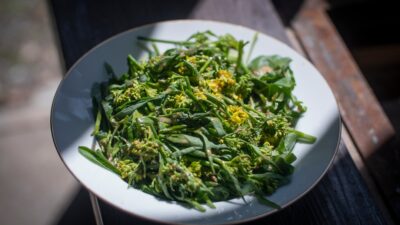
Watercress is among the most nutrient-dense vegetables available — the CDC’s Di Noia 2014 analysis ranked watercress #1 of 41 “powerhouse” fruits and vegetables based on nutrient density per calorie. One cup contains just 0.4 g carbohydrate, 0.2 g fiber, and 4 calories — essentially carb-free. As a cruciferous family member, watercress contains glucosinolates with potential anti-inflammatory and antioxidant effects. Provides exceptional vitamin K (106% DV per cup), vitamin C (24% DV), vitamin A (22% DV), and folate. The peppery flavor (similar to arugula) adds interest to salads, sandwiches, soups, and smoothies without adding carbs. Watercress is sometimes labeled “upland cress” or “garden cress” — closely related; similar nutrition. Applications include salad base (peppery flavor, pair with pear or citrus), sandwich green (turkey, smoked salmon, egg salad), classic watercress soup (potato-watercress with modified potato), smoothie addition (handful in green smoothies), sushi roll filling, pesto substitute, stir-fry addition (wilts quickly), Asian noodle bowls, garnish, and watercress-walnut salad. Selection: bright green leaves, no yellowing or wilting, firm stems. Available year-round; peak in spring. Storage: refrigerate in plastic bag with paper towels (absorb moisture); use within 3-5 days; stems in water extends life. Wash thoroughly before using (grows in water; may have grit). For adults with type 2 diabetes seeking maximum nutrient density at zero glycemic cost, watercress is a top choice — though typically more expensive than common greens.
Nutrition Profile
| Nutrient (1 cup raw, 34 g) | Amount | % DV |
|---|---|---|
| Calories | 4 | — |
| Carbohydrate | 0.4 g | — |
| Fiber | 0.2 g | 1% |
| Protein | 0.8 g | — |
| Vitamin K | 85 mcg | 106% |
| Vitamin C | 15 mg | 17% |
| Vitamin A | 1,085 IU | 22% |
| Folate | 3 mcg | 1% |
| Calcium | 41 mg | 3% |
CDC Powerhouse Vegetable Ranking
- Di Noia 2014 analysis published in Preventing Chronic Disease (CDC journal).
- Ranked 41 “powerhouse” fruits and vegetables.
- Methodology: nutrient density per calorie (17 essential nutrients).
- Watercress ranked #1 — highest nutrient density score.
- Top 10: watercress, Chinese cabbage, chard, beet greens, spinach, chicory, leaf lettuce, parsley, romaine lettuce, collards.
- Tomato, broccoli, kale, and other “superfoods” included but ranked lower than these tops.
- Score reflects vitamins, minerals, fiber per calorie.
- Powerhouses essential to plant-rich diet.
Diabetes-Friendly Recipe Ideas
- Watercress and pear salad with walnuts (small pear portion).
- Smoked salmon and watercress on rye crackers.
- Watercress soup with white beans and herbs.
- Watercress sandwich (English cucumber, butter, watercress).
- Watercress green smoothie with protein powder.
- Beef tenderloin with watercress salad.
- Watercress and grapefruit salad with vinaigrette.
- Asian noodle bowl with watercress (limit noodles).
- Watercress and egg salad on lettuce wraps.
- Pesto with watercress, almonds, parmesan, olive oil.
- Mediterranean salad with watercress, olives, feta, tomato.
- Watercress garnish on tom yum or other Asian soups.
Cooking Considerations
- Mostly used raw — preserves peppery flavor and nutrients.
- Wilts very quickly when heated.
- Add to soups at end of cooking.
- Sauté briefly (30-60 seconds) if cooking.
- Pesto: blend raw with olive oil and nuts.
- Don’t overcook — texture and flavor degrade.
- Stems can be tougher; remove if very thick.
- Older watercress has more pronounced pepper.
Flavor Pairings
- Pears, apples (small portions).
- Citrus: orange, grapefruit, lemon.
- Smoked fish — salmon especially.
- Eggs.
- Walnuts and other nuts.
- Aged cheeses (parmesan, manchego).
- Cream cheese, goat cheese.
- Mustard.
- Beets.
- Quinoa and grain bowls.
- Asian flavors (sesame, ginger, soy).
Watercress vs Arugula
| Aspect | Watercress | Arugula |
|---|---|---|
| Family | Brassicaceae (cruciferous) | Brassicaceae (cruciferous) |
| Flavor | Peppery, slightly bitter | Peppery, slightly nutty |
| Texture | Tender leaves; stems | Tender leaves |
| Carbs/cup raw | 0.4 g | 1 g |
| Vitamin K (% DV) | 106% | 50% |
| Habitat | Grows in water | Garden plant |
| Availability | Year-round, less common | Year-round, common |
| Cost | Higher | Lower |
Vitamin K Considerations
- Exceptional vitamin K content (106% DV per cup).
- Adults on warfarin need consistent vitamin K intake.
- Don’t avoid watercress — maintain similar amounts week to week.
- INR monitoring will guide anticoagulation adjustment.
- Direct oral anticoagulants (DOACs) — no vitamin K interaction.
- Discuss specifics with anticoagulation clinic.
The Bottom Line
Watercress is among the most nutrient-dense vegetables available — the CDC’s Di Noia 2014 analysis ranked watercress #1 of 41 “powerhouse” fruits and vegetables based on nutrient density per calorie. One cup contains just 0.4 g carbohydrate, 0.2 g fiber, and 4 calories — essentially carb-free. As a cruciferous family member, watercress contains glucosinolates with potential anti-inflammatory and antioxidant effects. Provides exceptional vitamin K (106% DV per cup), vitamin C (24% DV), vitamin A (22% DV), and folate. The peppery flavor (similar to arugula) adds interest to salads, sandwiches, soups, and smoothies without adding carbs. Watercress is sometimes labeled “upland cress” or “garden cress” — closely related. CDC Powerhouse top 10: watercress, Chinese cabbage, chard, beet greens, spinach, chicory, leaf lettuce, parsley, romaine, collards. Diabetes-friendly applications: watercress and pear salad with walnuts, smoked salmon and watercress on rye crackers, watercress soup with white beans, watercress sandwich (cucumber, butter, watercress), green smoothie with protein powder, beef tenderloin with watercress salad, watercress and grapefruit salad, Asian noodle bowl with watercress (limit noodles), egg salad on lettuce wraps, pesto with watercress and almonds, Mediterranean salad with olives and feta. Cooking: mostly used raw (preserves peppery flavor and nutrients); wilts very quickly when heated; add to soups at end; sauté briefly (30-60 seconds) if cooking; don’t overcook. Flavor pairings: pears, apples (small portions), citrus (orange, grapefruit, lemon), smoked fish (salmon especially), eggs, walnuts, aged cheeses (parmesan, manchego), goat cheese, mustard, beets, Asian flavors. Vitamin K consideration: adults on warfarin should maintain consistent intake; DOACs have no interaction. Selection: bright green leaves, no yellowing, firm stems. Storage: refrigerate in plastic bag with paper towels; use within 3-5 days; stems in water extends life. Wash thoroughly (grows in water; may have grit). For adults with type 2 diabetes seeking maximum nutrient density at zero glycemic cost, watercress is the top choice — though typically more expensive and less common than other greens. See our broader diabetes diet guide for context.