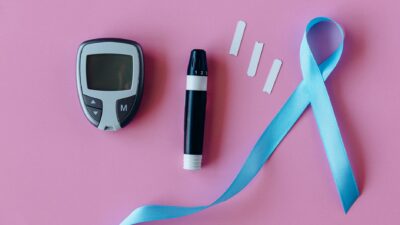
A 504 Plan for diabetes is a legally binding agreement between a family and a public school that lists the specific accommodations a student with diabetes needs to participate fully and safely in school. Common items include permission to monitor blood sugar in class, eat snacks anywhere, use the restroom freely, and receive insulin assistance.
What a 504 Plan Is and Why It Matters
Section 504 of the Rehabilitation Act of 1973 prohibits discrimination against students with disabilities in any program receiving federal funding. Diabetes qualifies because it substantially limits the major life activity of endocrine function. A 504 Plan turns that legal protection into specific, actionable accommodations.
Without a written plan, accommodations depend on the goodwill of individual teachers — which can change every school year. With a 504 Plan, the school is legally obligated to provide what is listed.
Core Accommodations: Real-World Examples
Blood glucose monitoring
- Student may check blood glucose in the classroom or any school location at any time.
- Student may carry diabetes supplies (meter, lancets, insulin, snacks, glucagon) at all times.
- If the student uses a continuous glucose monitor (CGM), the receiver or smartphone may be present in the classroom and during tests.
- Trained school staff will check blood glucose if the student is unable.
Insulin administration
- Student may self-administer insulin via pen, syringe, or pump in any location.
- If unable to self-administer, the school nurse or trained school staff will provide insulin per the Diabetes Medical Management Plan.
- Insulin pump troubleshooting will be supported; the parent will be contacted if a pump failure occurs.
Food, snacks, and water
- Student may eat snacks at any time, in any location, including during class and tests, to treat or prevent low blood sugar.
- Student will have unrestricted access to water and the restroom.
- Student will be allowed extra time at lunch as needed for blood sugar management.
- Schedules will accommodate consistent meal and snack times.
Treatment of high and low blood sugar
- Fast-acting carbohydrates (glucose tablets, juice) will be kept accessible in the classroom and main office.
- Glucagon (injection or nasal spray) will be stored in a known, accessible location and trained staff will administer it for severe hypoglycemia.
- Student will not be left alone if blood sugar is below 70 mg/dL or above the agreed-upon threshold.
- Parent or emergency contact will be notified per the agreed-upon protocol.
Testing and Academic Accommodations
| Situation | Accommodation |
|---|---|
| Blood sugar below 70 or above 300 during a test | Test will be rescheduled or extended after treatment |
| CGM alerts during test | Student may treat without penalty; time stopped |
| Fatigue or cognitive symptoms from highs/lows | Permission to take breaks; extended time for assignments |
| Missed instruction due to medical care | Opportunity to make up work without penalty |
| Standardized testing | Permission to test blood sugar, treat, eat snacks; breaks not counted against test time |
| Absences for medical appointments | Excused absences with no academic penalty |
Field Trips and Off-Campus Events
- Trained staff will accompany the student on all field trips.
- The student will not be excluded from any trip due to diabetes.
- Diabetes supplies and emergency contact information will travel with the group.
- Parents will be notified in advance about food, schedule, and physical activity to plan insulin and meals.
- For overnight trips, the school will identify and train an adult to provide insulin and respond to lows.
Physical Education and Sports
- Student may check blood sugar before, during, and after activity.
- PE teachers and coaches will be informed of symptoms and emergency procedures.
- Fast-acting carbs will be on the field, court, or pool deck.
- Student may sit out activity if blood sugar is too high or too low.
- Adjusted insulin or snacks may be needed before vigorous activity.
Bus, Drop-Off, and After-School Care
- Bus driver will be informed of the student’s diabetes and trained on basic emergency response.
- Student may carry and use diabetes supplies on the bus.
- Snacks will be allowed on the bus if needed for blood sugar management.
- After-school program staff will be trained and supplies will be transferred between settings.
Communication and Confidentiality
- Parents and the school will share contact methods for routine and emergency communication.
- Diabetes-related information will be shared only with staff who need to know.
- The student will not be identified or singled out in front of peers due to diabetes care.
- Substitute teachers will receive a written summary of the student’s needs.
Sample Daily Schedule Items
| Time of Day | Accommodation |
|---|---|
| Arrival | Blood sugar check before first class if not done at home |
| Mid-morning | Permitted snack (15g carbs) if needed |
| Before lunch | Blood sugar check; insulin dosing assistance if needed |
| Lunch | Extra time for eating; carbs in lunch communicated daily |
| Before PE | Blood sugar check; carb snack if below 100 mg/dL |
| After PE | Blood sugar check; treat hypo if needed |
| End of day | Blood sugar check before bus or pickup |
What to Include in the 504 Plan Document
- Student name, grade, and identifying information.
- Statement that the student has diabetes (Type 1 or Type 2).
- Reference to the Diabetes Medical Management Plan (DMMP) signed by the doctor.
- List of trained personnel and their roles.
- Specific accommodations (use the categories above as a checklist).
- Emergency procedures for hypoglycemia, hyperglycemia, ketones, and pump failure.
- Emergency contact information and chain of communication.
- Annual review date.
- Signatures of all team members.
How to Get a 504 Plan in Place
- Request a 504 evaluation in writing to the school principal or 504 coordinator. Keep a copy.
- Get the Diabetes Medical Management Plan from your child’s endocrinologist. ADA provides a free template.
- Attend the 504 meeting with proposed accommodations in hand. Bring your DMMP.
- Review the draft plan carefully before signing. Push back on vague language (“as needed”) and replace with specific protocols.
- Schedule annual reviews and request updates whenever the regimen changes.
Common Pitfalls to Avoid
- Vague language: “Student may have snacks” is weaker than “Student may eat snacks at any time and any location.”
- Putting too much on the school nurse: ensure backup trained staff exist for nurse absences.
- Forgetting field trips, after-school programs, and bus rides.
- Failing to plan for substitute teachers.
- Not updating the plan when the child starts using a CGM or insulin pump.
Legal Protections
According to the U.S. Department of Education Office for Civil Rights, schools that fail to provide a free appropriate public education to a student with a 504-eligible disability — including diabetes — can face complaint investigations and loss of federal funding. The American Diabetes Association’s Safe at School program offers free legal advocacy for families facing pushback.
For more on diabetes and disability law, see our guide on whether diabetes is considered a disability.
The Bottom Line
A well-written 504 Plan is one of the most powerful tools a parent of a child with diabetes can have. The strongest plans are specific, anticipate every part of the school day, and include backup plans for nurse absences and field trips. Use the examples above as a starting framework, customize them to your child’s regimen, and review every year. For broader context on supporting a child with diabetes, see our prediabetes in children resource and the prediabetes 101 hub.