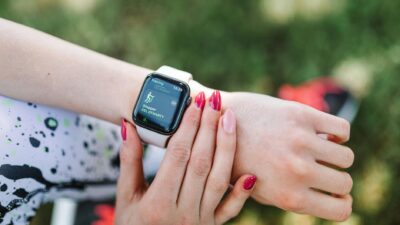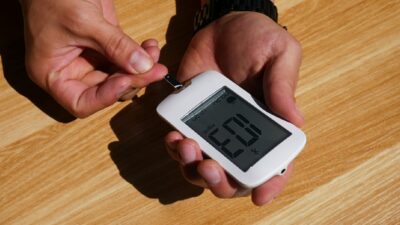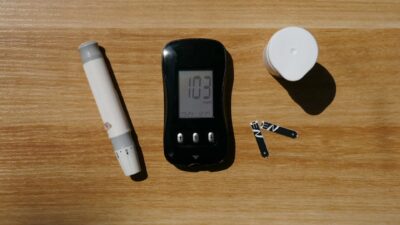
The best glucose monitors in 2026 fall into two categories: traditional fingerstick meters and continuous glucose monitors (CGMs). For fingerstick use, top picks include the Contour Next One, OneTouch Verio Reflect, Accu-Chek Guide Me, and ReliOn Premier. For continuous monitoring, Dexcom G7, Freestyle Libre 3 Plus, and the over-the-counter Stelo lead the field. The right choice depends on your diagnosis, insurance coverage, and how much data you actually want.
How to Choose the Right Type
Before comparing brands, decide whether you need a fingerstick meter or a CGM. The choice comes down to frequency of testing, insulin use, and budget.
- Fingerstick meter: Best for prediabetes spot-checking, type 2 diabetes without insulin, or as a backup device. Costs less upfront and per month.
- CGM: Best for insulin-dependent diabetes, active blood sugar management, or a time-limited educational experiment. Provides continuous trend data and alerts.
Top Fingerstick Meters Compared
| Meter | Meter Price | Strip Cost (100) | MARD Accuracy | Standout Feature |
|---|---|---|---|---|
| Contour Next One | 20 to 30 dollars | 35 to 55 dollars | 5.6 percent | Bluetooth sync to Contour Diabetes app |
| OneTouch Verio Reflect | 25 to 35 dollars | 40 to 60 dollars | 6.2 percent | On-screen coaching messages |
| Accu-Chek Guide Me | 20 to 30 dollars | 40 to 70 dollars | 6.4 percent | Spill-resistant SmartPack strips |
| ReliOn Premier Classic (Walmart) | 9 dollars | 18 to 25 dollars | 7.5 percent | Lowest total cost of ownership |
| Prodigy Voice | 25 to 40 dollars | 25 to 40 dollars | 8 percent | Audio readings for visually impaired |
MARD (mean absolute relative difference) is how device accuracy is reported versus a reference lab value. Under 7 percent is considered excellent; FDA requires under 15 percent. All five of the above meet modern accuracy standards.
Top Continuous Glucose Monitors Compared
| CGM | Prescription? | Monthly Cost (retail) | Sensor Life | MARD Accuracy | Standout Feature |
|---|---|---|---|---|---|
| Dexcom G7 | Yes | 300 to 400 dollars | 10 days | 8.2 percent | Real-time alerts, smartphone app, iOS/Watch |
| Freestyle Libre 3 Plus | Yes | 130 to 180 dollars | 15 days | 7.9 percent | Smallest sensor on market, no finger-stick calibration |
| Stelo by Dexcom | No (OTC) | 89 dollars per month | 15 days | 10 percent | First over-the-counter CGM, designed for non-insulin users |
| Libre Rio (OTC) | No (OTC) | Pending launch pricing | 15 days | Not yet published | Abbott’s OTC entry; expected 2025 to 2026 |
| Eversense 365 | Yes (implant) | Varies by insurance | 365 days | 9.1 percent | Year-long implanted sensor |
For insulin-dependent diabetes, the Dexcom G7 and Freestyle Libre 3 Plus dominate in the US market. Both integrate with smart insulin pumps and feature low-glucose alerts. For prediabetes, type 2 diabetes without insulin, or general metabolic curiosity, the OTC Stelo is often sufficient and much cheaper.
Accuracy: What MARD Actually Means
If a meter has a MARD of 7 percent and your true glucose is 100 mg/dL, the meter’s reading is typically within 7 mg/dL of that value (so 93 to 107). Most home devices, including CGMs, fall in the 7 to 10 percent range — similar enough that other factors (cost, sensor comfort, app usability) often drive the decision.
The FDA’s device clearance database lists accuracy specifications for every cleared device. For ongoing independent testing, the Diabetes Technology Society Surveillance Program publishes annual accuracy audits of leading meters and CGMs.
Hidden Costs to Budget For
The meter or starter kit is rarely the ongoing expense. Watch for:
- Test strips — can cost 30 cents to 1.50 dollars per strip. At 4 strips daily, that is 35 to 180 dollars per month.
- Lancets and control solution — small but recurring.
- Sensor replacements — CGM sensors last 10 to 15 days each; figure 2 to 3 sensors per month.
- Transmitter replacements — some CGMs (older Dexcom models) required separate transmitters; G7 and Libre 3 have integrated transmitters.
- App subscription — mostly free, but third-party integrations (e.g., Oura, Whoop) may have subscription fees.
Which Should You Buy?
A rough decision framework:
- Prediabetes, first-time user: Start with a budget-friendly fingerstick (ReliOn Premier or Contour Next One). Consider a one-month Stelo trial to learn your food responses.
- Type 2 diabetes on oral meds: Contour Next One or Accu-Chek Guide Me for daily checks. Discuss CGM coverage with your clinician.
- Insulin-using diabetes: CGM is the standard of care. Dexcom G7 or Libre 3 Plus depending on insurance and ecosystem preference.
- Athlete or metabolic-curiosity user: Stelo offers the cleanest OTC experience. Two weeks is usually enough for insight.
For context on what A1C and glucose numbers actually mean, see our A1C levels guide. For broader context on glucose testing, see the prediabetes 101 hub.
The Bottom Line
The best glucose monitor is the one that matches your needs, fits your budget, and you will actually use. For point-in-time testing, a quality fingerstick meter like the Contour Next One or ReliOn Premier delivers lab-grade accuracy for under 30 dollars plus strips. For continuous data, the Dexcom G7, Freestyle Libre 3 Plus, and the over-the-counter Stelo lead the field. Talk with your clinician about insurance coverage and clinical fit before investing in a CGM.
This article is for educational purposes and does not replace personalized advice from your healthcare provider. Device selection should involve your care team, especially if you use insulin or have other medical considerations.